
Last updated July 26, 2026
The Complete Guide to Roofing in Los Angeles
The San Fernando Valley routinely hits 110°F while coastal neighborhoods a dozen miles away rarely crack 85°F - yet most roofing guides treat all of Los Angeles as a single climate zone. That mistake costs homeowners thousands in premature failures, voided warranties, and energy bills that never should have climbed so high. In this guide, you’ll learn how Los Angeles’s five distinct microclimates should drive every decision about materials, ventilation, and code compliance, plus the hidden structural and regulatory traps that catch even experienced property owners. For related reading, see our Complete Roof Replacement & Installation Guide for Los Angeles Homeowners.
Quick Answer
Roofing in Los Angeles requires matching your home’s location to one of five microclimate zones, selecting materials rated for that zone’s specific UV exposure, humidity, and wind patterns, and verifying that any contractor understands Title 24 Cool Roof requirements, local fire codes for foothill areas, and the structural load limits of your existing roof framing. A properly specified roof in Los Angeles lasts 25-40 years; a generically specified one often fails in 12-15. See The Complete Roof Repair Guide for Los Angeles Homeowners for what to do when problems emerge.
Table of Contents
- How Los Angeles Microclimates Shape Your Roof
- Materials That Work (and Fail) by Neighborhood
- The Hidden Weight Problem With Clay Tile Roofs
- Title 24 Cool Roofs vs. Real-World Attic Heat
- Wildfire Ratings, Ember Resistance, and HOA Rules
- What Photo-Documented Inspections Actually Reveal
- What Roofing Costs in Los Angeles (2024-2025)
- Choosing a Contractor Who’ll Still Answer in 2035
How Los Angeles Microclimates Shape Your Roof
Los Angeles County contains five distinct roofing microclimates, and the material that thrives in one can degrade rapidly in another. Understanding your zone is the first step in any roofing decision.
Zone 1: Coastal Marine Layer (Santa Monica, Venice, Palos Verdes, San Pedro)
These neighborhoods spend mornings under persistent marine layer clouds that deposit salt aerosols and maintain 70-85% relative humidity until early afternoon. We’ve seen untreated galvanized flashing develop red rust in four years here, while the same detail lasts fifteen in Pasadena. Salt corrosion attacks fastener heads, vent pipe collars, and the cut edges of metal panels. For coastal Los Angeles homes, we specify stainless or zinc-coated fasteners, copper or lead-free synthetic pipe flashing, and avoid bare galvanized accessories entirely.
Zone 2: Westside Mild Mediterranean (Beverly Hills, Westwood, Culver City, Mid-City)
Moderate UV, occasional Santa Ana exposure, and stable temperatures make this the most forgiving zone. Asphalt composite shingles perform adequately here, though we still prefer reflective granule products from GAF or Owens Corning for Title 24 compliance. The primary risk is complacency - homeowners in this zone often inherit a roof spec from a hotter climate and over-engineer, or from a cooler zone and under-specify.
Zone 3: Basin Heat Island (Downtown, Koreatown, Echo Park, South Los Angeles)
Thermal mass from concrete and asphalt pushes peak roof temperatures 15-25°F above ambient air. We’ve measured 185°F surface temperatures on dark composite shingles in July. This accelerates thermal cycling, brittleness, and adhesive degradation. In these Los Angeles neighborhoods, cool roof ratings matter for material longevity, not just energy compliance. We specify minimum SRI (Solar Reflectance Index) of 29 for repairs and 16 for full replacements per Title 24, but often recommend products in the 35-40 SRI range for actual performance.
Zone 4: Valley Intensity (Van Nuys, North Hollywood, Woodland Hills, Chatsworth, Granada Hills)
The San Fernando Valley combines extreme UV, 110°F+ peak temperatures, and Santa Ana wind events that gust to 60+ mph. This is the harshest roofing environment in Los Angeles. Standard 3-tab shingles often fail in 10-12 years here versus 18-22 in the Westside. We specify architectural laminates with 130-mph wind warranties minimum, and strongly consider concrete or fired clay tile, metal, or composite slate for any home where the owner plans to stay twenty years.
Zone 5: Foothill Wildfire Interface (La Cañada Flintridge, Altadena, Topanga, Malibu Canyon, Santa Monica Mountains)
These Los Angeles communities face dual exposure: extreme UV and heat like the Valley, plus wildfire ember attack during Santa Ana events. Class A fire ratings are mandatory, but ember resistance (tested under IBHS standards) is what actually saves structures during wind-driven firestorms. Vent screening, eave closures, and non-combustible ridge details matter as much as the surface material.
Materials That Work (and Fail) by Neighborhood
After forty-two years on Los Angeles roofs, we’ve developed clear preferences by zone. Here’s what we install, what we avoid, and why. For drainage and protection details, see our Complete Gutters & Accessories Guide for Los Angeles Homeowners.
Asphalt Composite Shingles
The workhorse of Los Angeles roofing, but specification matters enormously. In the Valley, we use only architectural laminates with algae-resistant granules - the black streaking we see on north-facing Valley roofs isn’t dirt, it’s Gloeocapsa magma feeding on limestone filler in cheap shingles. On the coast, we verify fastener corrosion resistance and avoid products with high recycled content that can wick moisture.
Brands we install: GAF Timberline HDZ and Ultra HD, CertainTeed Landmark Pro, Owens Corning Duration. For budget-sensitive coastal jobs, Atlas StormMaster Slate and Tamko Heritage have performed well in our monitoring.
Clay and Concrete Tile
The signature look of Los Angeles Spanish and Mediterranean architecture, but with caveats we’ll detail in the next section. Fired clay (Terracotta) outperforms concrete in freeze-thaw, though that’s rarely relevant here. Concrete tile is more uniform, less expensive, and available in cool roof colors that meet strict Title 24 requirements. Boral’s Saxony and Villa lines are our go-to for historic compatibility with modern performance.
Metal Roofing
Gaining traction in Los Angeles for good reason: 50+ year lifespan, excellent ember resistance, and superior reflectivity. Standing seam systems perform well in all zones. The caveat is coastal salt - we specify aluminum-zinc alloy coatings (Galvalume) or painted finishes, never bare galvanized. In foothill zones, metal’s non-combustibility is a significant advantage, though some HOAs resist the aesthetic departure from tile.
Synthetic and Composite Alternatives
Composite slate and shake (DaVinci, CeDUR, EcoStar) offer Class A fire ratings and impact resistance with lighter weight. We’ve installed these increasingly in Los Angeles hillsides where fire insurance mandates non-combustible materials but the HOA requires a traditional profile. They perform well in all microclimates but carry premium pricing - typically 2.5-3x standard composite.
Materials we actively discourage in specific zones:
- Wood shake anywhere in the foothill wildfire interface - banned by code in many Los Angeles County unincorporated areas, and uninsurable regardless
- Bare galvanized metal within five miles of the coast - we’ve replaced prematurely failed panels in San Pedro and Playa del Rey
- Standard 3-tab shingles in the San Fernando Valley - the economics don’t work when replacement comes at year twelve
- Dark, non-reflective surfaces in Basin heat island zones - Title 24 non-compliance plus accelerated degradation
The Hidden Weight Problem With Clay Tile Roofs
Los Angeles’s clay tile legacy creates a structural trap that catches homeowners every year. Here’s how it unfolds.
A 1940s Spanish Colonial in Los Feliz carries original clay tile at 900-1,100 pounds per roofing square. The rafters were sized for that load, and they’ve carried it successfully for eighty years. When that tile nears replacement, the homeowner considers lighter options - concrete tile at 600-800 pounds, or composite at 250-350. The lighter load seems like an advantage.
But switching to clay tile on a home that wasn’t built for it is where problems arise. We’ve seen post-war tract homes in the Valley where owners installed imported clay tile over original 2×4 rafters at 24-inch spacing - a specification that predates modern engineering and can’t handle 1,000 pounds per square. The result: sagging rafters, cracked drywall, and in one Granada Hills case, a partial ceiling collapse during a rainstorm.
The reverse problem also exists. Removing heavy tile and installing lightweight composite changes the structural dynamics. Rafters that were pre-stressed by decades of load can spring upward, altering ridge alignment and creating gaps at valleys. We always inspect attic framing before any material change in Los Angeles clay tile replacements.
Three steps we follow:
- Document existing roof weight from original building permits where available, or calculate from tile type and thickness
- Inspect rafter size, spacing, and span against current California Building Code tables for the proposed new load
- Engineer supplemental framing where needed - typically sistering 2x6s to existing 2x4s, or adding collar ties to reduce effective span
Most Los Angeles roofing contractors skip step one. They assume a roof that held tile can hold tile, or that lighter is always safer. Both assumptions can cost a homeowner tens of thousands in structural repairs.
Title 24 Cool Roofs vs. Real-World Attic Heat
California’s Title 24 Building Energy Standards mandate minimum solar reflectance and thermal emittance for roofing materials in most Los Angeles climate zones. Compliance is mandatory for new construction and significant re-roofing. But compliance and performance are not the same thing.
Title 24’s prescriptive path requires:
- Low-slope roofs (less than 2:12 pitch): minimum 0.63 initial solar reflectance, 0.75 thermal emittance, or SRI of 75
- Steep-slope roofs (2:12 and greater): minimum 0.20 initial solar reflectance, 0.75 thermal emittance, or SRI of 16
These thresholds are surprisingly modest for steep-slope roofs. A standard gray architectural shingle often meets the 0.20 reflectance minimum. That doesn’t mean it’s actually keeping your attic cool in a Los Angeles August.
We’ve measured attic temperatures in Los Angeles homes with Title 24-compliant roofs versus high-performance cool roofs. The difference is substantial: a compliant dark brown shingle (SRI ~22) produces peak attic temperatures of 140-150°F in Valley conditions. A white or light tan cool roof (SRI 35-40) drops that to 110-120°F. The 30°F reduction translates directly to HVAC runtime, equipment longevity, and living space comfort.
Our recommendation for Los Angeles homeowners: treat Title 24 as the floor, not the ceiling. In the Basin and Valley zones, specify products with SRI 29+ even where 16 suffices. The incremental material cost - typically $8-15 per square - pays back in 2-3 years of reduced cooling load. GAF’s Timberline CS (Cool Series) and CertainTeed’s Landmark Solaris are proven performers we’ve tracked across multiple Los Angeles installations.
The other overlooked factor is ventilation. A cool roof surface helps, but without adequate intake and exhaust airflow, attic heat still accumulates. We specify 1:150 net free vent area to attic floor area minimum in Los Angeles, and often 1:100 in Valley applications. Ridge vent with soffit intake is our default; powered attic ventilators are rarely worth the complexity in our climate.
Wildfire Ratings, Ember Resistance, and HOA Rules
Los Angeles’s foothill communities occupy some of the most fire-prone wildland-urban interface in the United States. The 2025 Eaton and Palisades fires reinforced what structural fire researchers have documented for decades: in wind-driven fires, ember attack causes more home ignitions than direct flame contact.
California’s wildland-urban interface code (Chapter 7A of the California Building Code) mandates Class A fire rating for roof assemblies in designated fire hazard severity zones. Most of Los Angeles County’s mountain and foothill areas fall into “Very High” severity. Class A means the roof covering passes ASTM E108 testing: flame spread resistance, intermittent flame exposure, and burning brand exposure.
But Class A is a minimum. The Insurance Institute for Business and Home Safety (IBHS) developed the Wildfire Prepared standard, which adds ember resistance testing: ember-generating machines bombard roof assemblies with wind-driven glowing particles. Passing requires non-combustible ridge and eave details, screened vents, and no gaps where embers can lodge.
We’ve inspected too many Los Angeles foothill homes where the surface material is Class A tile or metal, but the installation details fail ember resistance: unscreened ridge vents, open eave gaps, plastic vent pipe flashing that melts and creates an entry point. The material rating is meaningless if the assembly has vulnerabilities.
The complication: many Los Angeles foothill HOAs enforce aesthetic guidelines that conflict with optimal fire performance. We’ve encountered HOAs in Pacific Palisades and Topanga that mandate wood-look materials, dark colors, or specific tile profiles that complicate cool roof and fire ratings. Navigating this requires:
- Confirming the property’s fire hazard severity zone through Los Angeles County’s online mapping tool
- Identifying HOA architectural requirements before material selection
- Specifying products that satisfy both - composite shake with Class A assembly rating, or concrete tile in HOA-required profiles with proper underlayment and vent screening
- Documenting compliance for both insurance and resale purposes
After the 2025 fires, we’re seeing more Los Angeles insurers require IBHS Wildfire Prepared or equivalent documentation. Homes without it face non-renewal or massive premium increases. The roof assembly is the first and most critical element.
What Photo-Documented Inspections Actually Reveal
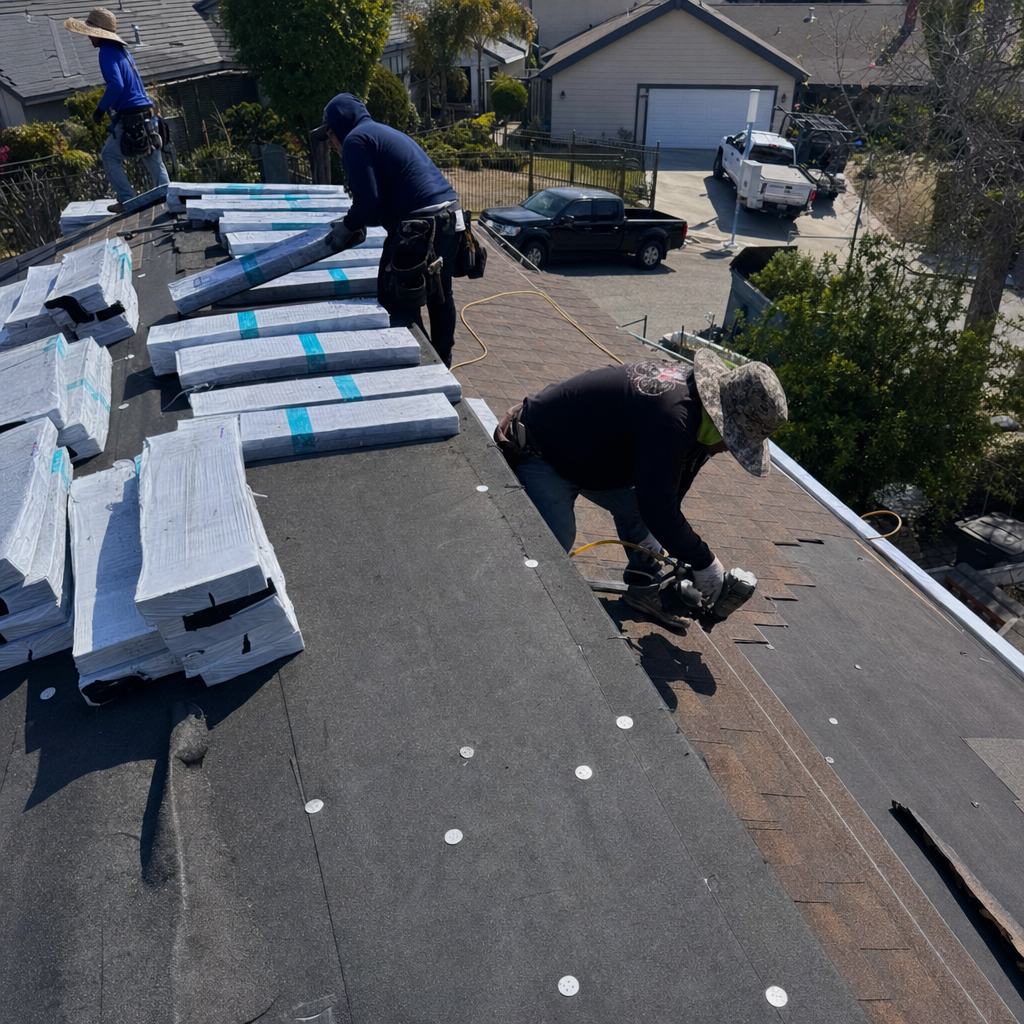
A 15-minute walkover tells you almost nothing useful about a roof’s condition. Yet that’s what many Los Angeles homeowners receive - a contractor circling the property, pointing at visible damage, then delivering a scope of work and price. We’ve inherited too many jobs where that approach missed the actual problems.
Our inspection protocol for Los Angeles homes includes 40-60 photographs from the roof surface, not the ground. Here’s what that documentation routinely reveals that walkovers miss:
Valley deterioration beneath intact shingles. In Los Angeles’s intermittent heavy rain pattern, valleys handle concentrated flow. We find cracked solder, separated W-metal, or degraded ice-and-water shield that won’t show until the next storm. A walkover sees intact shingles; our photos document the valley metal condition directly.
Chimney cricket flashing details. The upslope side of chimneys is the most leak-prone area on any Los Angeles roof. Step flashing, cricket construction, and counterflashing embedment are only visible from the roof surface and often only from specific angles. We’ve found crickets built backward (directing water toward the chimney), rusted step flashing concealed by stucco, and missing counterflashing that appeared intact from the driveway.
Ridge vent cut depth and structural integrity. Improper ridge vent installation - cutting too deep into rafters, or not cutting the full ridge beam - creates hidden structural compromise. We document the actual cut depth relative to rafter size. In one Los Angeles inspection, we found a previous contractor had cut 2×8 ridge beams to 1.5″ remaining depth across a 40-foot run. The roof was leaking at the ridge because the structure was sagging, not because the vent material had failed.
Fastener withdrawal and nail pops. Thermal cycling in Valley zones loosens fasteners. From the ground, a slightly lifted shingle tab might indicate one bad shingle. From the roof, we often find a pattern of withdrawn fasteners indicating deck movement, inadequate fastening, or underlying structural issues. The scope of work changes entirely.
Attic ventilation adequacy. We photograph intake and exhaust vent locations from the roof surface, then calculate net free area against attic volume. Many Los Angeles homes have adequate exhaust (ridge vent, turbines) but blocked or insufficient soffit intake. Without intake, exhaust vents pull conditioned air from the living space through ceiling penetrations. The fix isn’t more exhaust - it’s clearing soffit vents or adding intake.
This documentation becomes the basis for our scope of work, but also for the homeowner’s records. When we deliver a Roof Repair in Los Angeles proposal, it references specific photo numbers. There’s no ambiguity about what we found, what we recommend, and why. And if another contractor’s proposal doesn’t include similar documentation, that tells you something about what they might be missing.
What Roofing Costs in Los Angeles (2024-2025)
Los Angeles roofing costs vary by microclimate, access difficulty, material, and the structural condition we find beneath. These ranges reflect our actual pricing for typical Los Angeles homes; your specific job may fall outside them depending on what inspection reveals.
| Service | Typical Range | Factors Affecting Price |
|---|---|---|
| Minor repair (localized leak, few shingles, pipe flashing) | $350 - $850 | Height, pitch, material matching |
| Moderate repair (valley replacement, chimney flashing, partial decking) | $1,200 - $3,500 | Extent of decking damage, scaffolding needs |
| Full roof replacement, composite shingle, 2,000 sq ft | $12,000 - $22,000 | Material tier, ventilation upgrades, code compliance |
| Full replacement, concrete tile, 2,000 sq ft | $22,000 - $38,000 | Profile selection, structural reinforcement, underlayment type |
| Full replacement, standing seam metal, 2,000 sq ft | $28,000 - $45,000 | Coating type, panel width, complexity |
| Emergency tarp and temporary seal | $250 - $600 | Accessibility, storm timing, size |
| Photo-documented inspection with written report | $0 - $150 | Applied to project if Ridgeline performs work |
These figures include removal, disposal, permit fees for Los Angeles jurisdictions, and our standard ventilation assessment. They do not include structural repairs, which we quote separately after documentation.
Our standing offers: $50 off any repair over $250, free second opinion on any written estimate, $89 seasonal tune-up, and a permanent 5% senior and veteran discount. We don’t inflate prices to accommodate discounts - the number we quote is the number you pay.
Choosing a Contractor Who’ll Still Answer in 2035
The Los Angeles roofing market attracts operators who won’t be here next year. Storm chasers follow weather events, collect deposits, and vanish. Some legitimate contractors simply don’t survive the business cycle. For homeowners who plan to stay in their homes, contractor longevity matters as much as material specification.
We’ve been in Los Angeles since 1984. Not because we’re the biggest, but because we do what we say we’ll do, and we stand behind it. Here’s how we think about contractor selection:
Verify physical presence. A Los Angeles contractor should have a local address you can visit, not a PO box or virtual office. Ask how long they’ve operated from that location. We’ve been at our current facility since 1998.
Request manufacturer authorizations. GAF, CertainTeed, Owens Corning, and other major brands authorize installers who meet training and volume standards. These authorizations are verifiable directly with the manufacturer. We hold authorized status with seven brands including GAF, CertainTeed, Owens Corning, IKO, Atlas, Tamko, and Boral.
Ask about warranty structure. Manufacturer warranties cover material defects. Workmanship warranties cover installation errors. Many Los Angeles contractors offer one or two years on workmanship. Our 90-Day Done Right Promise is different - it’s a written guarantee that if anything about our work isn’t right, we come back and make it right. No paperwork to file, no argument about whether it’s covered, no runaround. We’ve honored it for forty-two years.
Test communication before you commit. Call at 8 PM on a Saturday. See who answers. Our phones are staffed by a live person 24 hours a day, seven days a week, including nights, weekends, and the middle of a storm. Not because emergencies only happen during business hours, but because homeowners shouldn’t be stranded when a tree limb punches through their roof.
Demand documentation. Any contractor who won’t photograph your roof from the surface and explain what they found is asking you to trust what you can’t verify. Our technicians are background-checked, uniformed, and trained to document every inspection with photos taken from your actual roof. The same standard we’d hold for work done in our own mother’s home.
We’re not the cheapest option in Los Angeles. We don’t try to be. We’re the option that shows up, does the work properly, and answers the phone if something needs attention. That’s the square deal our customers have relied on since 1984.
Common Mistakes to Avoid
- Matching a Pasadena roof spec to a Santa Monica home. The marine layer, salt exposure, and milder temperatures of coastal Los Angeles require different fasteners, flashing materials, and maintenance schedules than inland zones. A contractor who specifies identically across microclimates hasn’t done the geographic homework.
- Ignoring structural load when switching from or to clay tile. Los Angeles’s clay tile heritage creates assumptions about what a roof can carry. Verify rafter sizing and spacing before any material change, or risk sagging, cracking, or collapse.
- Treating Title 24 compliance as optimal performance. The code minimum for steep-slope reflectance (SRI 16) is easily met by mediocre products. In Los Angeles’s heat island and Valley zones, specify well above minimum for actual cooling benefit and material longevity.
- Prioritizing HOA aesthetics over fire assembly integrity. In foothill communities, a Class A surface material with vulnerable vents, unprotected eaves, or combustible flashing creates a false sense of security. Insist on full assembly ember resistance, not just surface rating.
- Accepting a verbal scope without photo documentation. Without images from the roof surface, you have no verification of what was actually found, no basis to compare competing proposals, and no record for insurance or resale. Demand written, photo-referenced assessments.
- Choosing on price alone in a high-turnover market. The lowest bid often reflects uninsured labor, skipped permits, or a contractor who won’t be available for warranty service. In Los Angeles, verify license status through CSLB, insurance directly with the carrier, and manufacturer authorization directly with the brand.
When to Call a Professional
Some roofing situations in Los Angeles demand immediate professional assessment. Water stains spreading across ceiling drywall, visible sagging in the roof plane, granule accumulation in gutters indicating shingle degradation, or any damage following Santa Ana wind events or seismic activity. After age 20, even well-maintained roofs in harsh Los Angeles zones should be inspected annually - the cost of documentation is minimal against the cost of undetected deterioration.
If you’re unsure whether your situation is urgent, call anyway. We’d rather assess and reassure than have a homeowner wait until a small repair becomes a full replacement. Roof Replacement & Installation in Los Angeles is a significant investment; catching needs early preserves options and reduces cost.
Ridgeline Roofing Co. offers free estimates in Los Angeles - call (844) 563-1816. A live person answers, any time, and we’ll schedule your photo-documented inspection at your convenience.
Frequently Asked Questions
A properly specified and installed roof in Los Angeles lasts 25-40 years depending on microclimate and material. Composite shingles in coastal zones often reach 25-30 years; the same product in the San Fernando Valley typically degrades in 15-20. Clay and concrete tile, metal, and synthetic materials can exceed 40 years with proper maintenance. Annual inspections after year 20 catch degradation before it becomes structural damage.
Composite shingle replacement for a typical 2,000 square foot Los Angeles home ranges $12,000-$22,000 in 2024-2025, including removal, disposal, permits, and standard ventilation. Concrete tile runs $22,000-$38,000; standing seam metal $28,000-$45,000. Structural repairs, steep pitch, difficult access, or premium materials add to these baselines. Call (844) 563-1816 for a free, photo-documented estimate specific to your home.
Title 24 is California’s Building Energy Efficiency Standards, mandatory for new construction and significant re-roofing in most Los Angeles climate zones. It sets minimum solar reflectance and thermal emittance for roofing materials. Compliance is verified through your city’s building permit process. We specify Title 24-compliant products as standard and document ratings for permit submission.
Los Angeles building code permits one overlay (new shingles over existing) in some circumstances, but we rarely recommend it. Overlay conceals deck condition, adds weight, voids many manufacturer warranties, and prevents proper underlayment installation. For the modest savings, you sacrifice inspection access and often shorten the new roof’s lifespan. We quote removal and replacement as our standard; overlay only by specific request after deck verification.
Individual cracked or slipped tiles are repairable indefinitely. Replacement becomes necessary when underlayment degrades (visible as leaks despite intact tile), when the mortar bed system fails extensively, or when structural movement has cracked multiple tiles in patterns indicating framing issues. Our photo-documented inspection distinguishes localized repair needs from systemic replacement requirements. Call (844) 563-1816 to schedule.
Yes. Our phones are answered by a live person 24 hours a day, seven days a week, including during Santa Ana wind events and winter rainstorms. We dispatch for emergency tarping, temporary sealing, and damage assessment as conditions permit. For Specialty Roofing in Los Angeles emergencies involving historic tile or custom metal, we maintain materials inventory to match existing installations.
The Bottom Line
Roofing in Los Angeles demands geographic specificity that generic guides ignore. Your home’s microclimate - coastal salt, basin heat, Valley intensity, or foothill fire exposure - should drive material selection, ventilation design, and maintenance frequency. Title 24 sets a floor for energy performance, but informed homeowners specify above it. Clay tile’s aesthetic legacy carries structural implications that must be verified before any material change. And in a market with high contractor turnover, the company that answers its phone in 2035 matters as much as the product installed today.
We’ve built Ridgeline Roofing Co. on showing up, documenting honestly, and standing behind our work without paperwork or argument. Named for the ridge - the line where a roof proves itself. If your Los Angeles home needs inspection, repair, or replacement, we’re here.
Call (844) 563-1816 for a free estimate. A live person answers, any time.
Written by the team at Ridgeline Roofing Co., serving Los Angeles since 2016.