
Last updated July 26, 2026
The Complete Roof Repair Guide for Los Angeles Homeowners
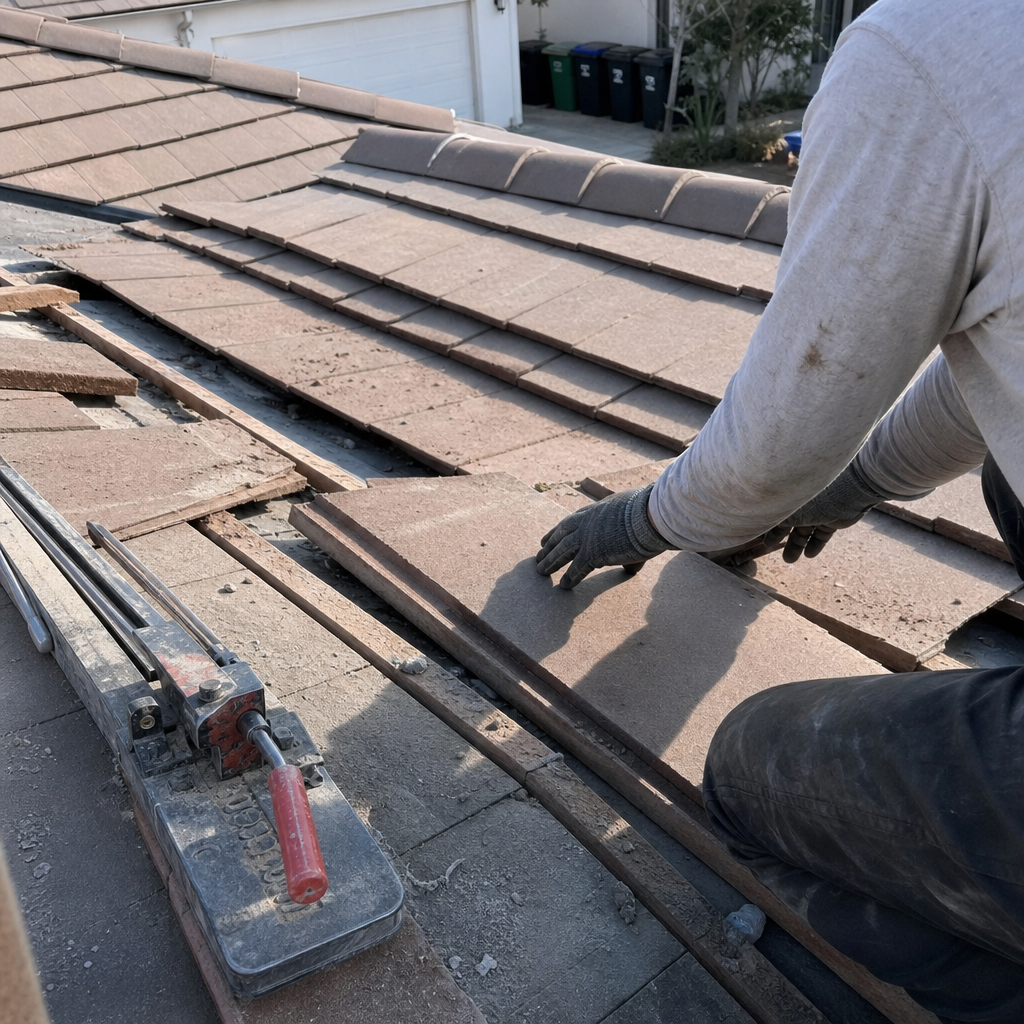
Los Angeles averages 284 sunny days a year, and that sunshine - not storms - is the number-one reason local roofs need repair before their warranty expires. Most homeowners here scan the forecast for rain and miss the slow, daily damage wrought by UV radiation, thermal cycling, and earthquake micro-movement. In this guide, we’ll walk you through how Los Angeles climate patterns actually break roofs down, what warning signs to watch for, when city permits enter the picture, and how to spot a repair that will hold up against conditions no national roofing guide ever mentions. For a deeper dive, see our Complete Roof Replacement & Installation Guide for Los Angeles Homeowners. By the end, you’ll know what your roof is up against and how to protect it without overpaying for work you don’t need.
Quick Answer
Roof repair in Los Angeles typically addresses UV-degraded shingles, wind-lifted edges, cracked flashing from seismic micro-movement, and clogged drainage systems overwhelmed by infrequent heavy rain. Most repairs cost between $350 and $1,200 depending on scope, material, and roof access, with permits required for any work exceeding 100 square feet or involving structural changes under LADBS rules. A thorough inspection should document photo evidence of damage, specify manufacturer-matching materials, and verify that your contractor carries a C-39 license and current workers’ compensation coverage.
Table of Contents
- Why Los Angeles Roofs Fail Differently Than Roofs Anywhere Else
- How UV Radiation Destroys Asphalt Shingles in LA’s Climate
- Earthquake Micro-Movement and Your Roof’s Hidden Vulnerabilities
- Neighborhood-by-Neighborhood: Venice Salt Air vs. Valley Heat vs. Hillside Fire Zones
- Why LA’s Rare Heavy Rains Cause More Damage Than Steady Drizzle
- Permits, Codes, and LADBS Requirements for Roof Repair
- Choosing a Roof Repair Contractor in Los Angeles
- What Roof Repair Costs in Los Angeles
Why Los Angeles Roofs Fail Differently Than Roofs Anywhere Else
Most roofing guides assume water is the enemy. In Los Angeles, water is merely the final blow. The real culprits are sun, wind, and ground movement - three forces that operate year-round while homeowners wait for a leak to tell them something’s wrong.
We’ve been up on Los Angeles roofs since 1984, and the pattern is consistent. A homeowner calls because they spotted a water stain after the first real rain of winter. But when we climb up, we find shingles that have been baking and brittling for eight years, flashing that cracked during a 3.2 magnitude quake nobody even felt, and drainage channels packed with jacaranda blossoms and palm fronds that should have been cleared last spring. The rain didn’t cause the problem. It simply found the openings that LA’s unique climate had already created.
Here’s what actually drives roof repair demand in this market:
- UV index 6+ for most of the year: Los Angeles receives more annual solar radiation than Phoenix in some measurements, and asphalt binders in standard shingles degrade measurably faster here than in cooler, cloudier markets.
- Santa Ana wind events: Sustained 40-60 mph winds with gusts to 80+ create uplift pressure at shingle edges and ridge lines that factory warranties don’t always cover.
- Seismic micro-movement: Southern California experiences thousands of minor quakes annually. Each one flexes roof-to-wall connections, flashing angles, and pipe penetrations.
- Thermal shock: A 100°F July day followed by a 55°F desert night creates expansion-contraction cycles that stress sealants and fasteners.
- Infrequent intense precipitation: When rain does come, it often arrives in concentrated bursts that overwhelm systems never tested by gradual moisture.
The takeaway: inspecting your Los Angeles roof only after a leak appears means you’re already behind. The damage started years earlier, invisibly, under conditions no other American city replicates in the same combination.
How UV Radiation Destroys Asphalt Shingles in LA’s Climate
Asphalt shingles are essentially a fiberglass mat coated with asphalt and surfaced with mineral granules. The granules exist primarily to block UV radiation from reaching the asphalt binder. In Los Angeles, that protection gets consumed faster than manufacturers’ standard projections assume.
The mechanism is straightforward but invisible from the ground. High-energy UV photons break hydrocarbon bonds in the asphalt. The shingle surface oxidizes, loses flexibility, and eventually cracks. Granules loosen and wash into gutters. Once the asphalt layer is directly exposed, degradation accelerates exponentially. A shingle that might last 22 years in Cleveland can show advanced deterioration at 14 in Los Angeles - even without a single leak.
What this looks like during inspection:
- Granule loss in gutters and downspout outlets: Check after your first rain each season. Heavy granule deposits mean the UV shield is thinning.
- Surface crazing or alligatoring: Fine crack patterns visible on shingle surfaces, especially on south and west exposures that receive peak afternoon radiation.
- Curling at tab edges: As asphalt shrinks and stiffens, the edges pull upward - creating wind uplift vulnerability even before leaks start.
- Color shift or mottling: Uniform fading is normal; patchy lightening suggests uneven granule loss and localized UV penetration.
In our experience, Los Angeles homes with unventilated attic spaces suffer faster UV degradation because rooftop temperatures climb 20-30°F higher than ambient. Proper ridge venting and soffit airflow aren’t energy-efficiency luxuries here. They’re shingle-life necessities. When we specify materials for Los Angeles repair work, we often recommend CertainTeed’s Solaris reflective lines or Owens Corning Duration COOL products for south-facing exposures - not for the energy rebate, but because the modified asphalt formulations resist UV oxidation longer than standard stock.
One more factor most homeowners miss: reflected UV from adjacent surfaces. A white concrete patio, a swimming pool deck, or even a neighbor’s light-colored stucco can bounce additional radiation onto lower roof slopes. We’ve replaced shingles on north-facing eaves in Beverly Hills that failed before south-facing field shingles because of pool-deck reflection. It’s the kind of local detail no national guide accounts for.
Earthquake Micro-Movement and Your Roof’s Hidden Vulnerabilities
Los Angeles sits on one of the most studied fault systems in the world, and most residents understand foundation and wall risks. Fewer consider what constant minor seismic activity does to a roof assembly.
Every magnitude 2.0 to 4.0 quake - and Southern California experiences dozens monthly - transmits energy through the structure. Roof decking shifts microscopically against rafters. Flashing angles flex at wall intersections. Pipe boots and vent seals experience shear stress. None of this produces immediate leaks. But it degrades the waterproofing system incrementally, opening pathways that water exploits years later.
The most earthquake-vulnerable roof components in Los Angeles homes:
- Chimney flashing: The interface between rigid masonry and flexible roofing material is a natural stress concentrator. After significant seismic events, we find cracked solder joints, separated step flashing, and gaps in counterflashing that have been developing for years.
- Skylight curbs and perimeters: The raised frame of a skylight creates a rigid island in a flexible field. Micro-movement works sealant loose at the curb base.
- HVAC penetrations and electrical mast flashings: Any roof penetration with a metal sleeve experiences differential movement between the sleeve and surrounding shingles.
- Ridge and hip lines: The structural ridge beam moves independently of rafter ends during ground motion, stressing cap shingles and ridge vents.
After the 2019 Ridgecrest sequence, we inspected twenty Los Angeles roofs that showed no visible damage from the ground. Fourteen had compromised flashing at chimney or wall intersections that would have passed a casual look. Three had developed leaks within eighteen months. The pattern is clear: seismic micro-movement creates repair needs that only a hands-on, photo-documented inspection reveals.
We document every Los Angeles roof inspection with photographs taken from the roof surface itself, not the driveway. Our technicians are trained to probe flashing seals gently, check for hairline cracks in solder and sealant, and compare current conditions to photos from prior visits when available. If your roof hasn’t been inspected since 2019, or if you purchased your home without a detailed roof assessment, the earthquake wear is likely already present.
Neighborhood-by-Neighborhood: Venice Salt Air vs. Valley Heat vs. Hillside Fire Zones
Los Angeles is not one climate. It’s a collection of microclimates separated by topography, ocean influence, and urban heat patterns. The roof repair appropriate for a Venice cottage differs materially from what’s needed in Woodland Hills or the Hollywood Hills.
Coastal zones: Venice, Santa Monica, Marina del Rey, San Pedro
Salt air within two miles of the Pacific accelerates corrosion on metal flashings, gutters, and fasteners. Galvanized steel components that might last 25 years inland show significant rust at 12-15 years coastally. We specify copper or stainless flashing in Venice repairs, and we avoid standard galvanized fasteners within a mile of the beach. Asphalt shingles also suffer: salt crystals hygroscopically attract moisture, keeping shingle surfaces damp longer and promoting algae growth that granule coatings aren’t designed to resist. IKO’s algae-resistant formulations perform better here than standard stock, though no shingle is maintenance-free in marine air.
San Fernando Valley: Van Nuys, Reseda, Woodland Hills, Northridge
The Valley records summer temperatures 15-20°F higher than coastal Los Angeles, with UV intensity to match. Attic temperatures in unventilated Valley homes regularly exceed 150°F. Thermal cycling is extreme: 105°F afternoon peaks, 65°F desert nights. Shingle life here is shorter than anywhere else in the city. We prioritize reflective or “cool roof” rated materials for Valley repairs, and we inspect attic ventilation as a standard part of every repair scope. A repair without ventilation assessment is incomplete in this zone.
Hillside fire zones: Hollywood Hills, Bel Air, Pacific Palisades, Topanga
Los Angeles City and County fire codes impose Class A fire ratings on roof assemblies in designated Very High Fire Hazard Severity Zones. This affects repair scope significantly. You cannot patch a Class A assembly with standard Class B or C materials, even for a small repair. The entire contiguous roof surface must maintain the rating. We carry Atlas StormMaster Slate and CertainTeed Presidential Shake in Class A specifications specifically for these zones, and we verify fire code compliance before quoting any hillside repair. For more on unique material requirements, see our Complete Specialty Roofing Guide for Los Angeles Homeowners. The wrong material choice doesn’t just risk your home - it risks permit rejection and redo work.
Basin and mid-city: Mid-Wilshire, Koreatown, Echo Park, Silver Lake
These areas combine moderate UV exposure with aging housing stock (much of it 1920s-1950s) and mature tree canopy. The repair profile here is often mixed: original wood shake or clay tile roofs with multiple prior repair layers, inadequate original ventilation, and organic debris accumulation from decades-old trees. Each repair requires historical assessment - what’s been done before, with what materials, and how compatible are they with current work?
Why LA’s Rare Heavy Rains Cause More Damage Than Steady Drizzle
Portland gets 36 inches of rain annually, spread across 155 days. Los Angeles gets 14 inches, concentrated in 30-35 days, often in atmospheric river events that drop 2-4 inches in 24 hours. This pattern creates a specific failure mode that steady-rain climates don’t replicate.
Roof drainage systems in Los Angeles are rarely tested. Gutters fill with leaves, downspouts clog with sediment, scuppers on flat roofs get blocked by debris, and nobody notices because there’s no regular flow to reveal the obstruction. Then an atmospheric river arrives. Water that should channel off the roof pools instead, backs up under shingles, overflows into fascia, and finds every opening that micro-movement and UV degradation have prepared.
The damage sequence we see repeatedly:
- Pre-storm: gutters 40% blocked, one downspout fully obstructed, flat roof drain covered with leaf mat.
- Storm peak: water overflows gutter front, saturates fascia and soffit, backs up to roof edge.
- Post-storm: homeowner sees interior stain, assumes roof is “leaking,” calls for repair.
- Inspection reveals: primary failure was drainage, not roofing material. But the overflow has now damaged decking edge, fascia, and possibly rafter tails.
The repair scope expands dramatically. What could have been a $200 gutter cleaning becomes a $1,800 edge repair with fascia replacement. In our experience, Los Angeles homeowners who schedule pre-season drainage inspection and clearing - ideally in October, before the first significant rain - avoid 60-70% of the emergency calls we receive between December and March.
One local factor: Santa Ana wind events often precede rain systems in Los Angeles. Wind strips loose granules, lifts vulnerable shingle edges, and deposits debris in valleys and drains. Then rain arrives within 48-72 hours, exploiting the fresh damage. The combination is uniquely destructive, and it’s why we always inspect drainage and wind-vulnerable areas together during fall maintenance visits.
Permits, Codes, and LADBS Requirements for Roof Repair
Los Angeles Department of Building and Safety (LADBS) permit requirements catch many homeowners by surprise. Not every repair needs a permit, but the threshold is lower than most assume, and the consequences of unpermitted work include failed real estate transactions, insurance disputes, and forced removal.
When you need a permit in Los Angeles:
- Any repair exceeding 100 square feet of roof area (roughly a 10×10 section).
- Any repair involving structural members: rafter replacement, decking replacement exceeding one sheet, or ridge beam work.
- Any change to roof pitch or drainage path.
- Any work in a designated fire zone requiring Class A rating verification.
- Any repair within 12 months of a prior permit for the same roof (LADBS tracks this).
When you typically do not:
- Minor shingle replacement under 100 square feet using matching materials.
- Flashing repair at a single penetration or wall intersection.
- Emergency tarping or temporary weatherproofing (must be followed by permitted permanent repair within 30 days).
The permit process in Los Angeles requires a C-39 Roofing Contractor license, current workers’ compensation insurance, and a $300-$600 permit fee depending on valuation. LADBS inspects for code compliance, including proper nailing patterns, underlayment installation, and flashing details. Work without required permits can be red-tagged, requiring exposed inspection and possible removal of completed work.
We pull permits for every Los Angeles repair that requires one, and we handle the LADBS scheduling and inspection coordination. Homeowners sometimes resist the cost and delay, but unpermitted work surfaces during disclosure when you sell. We’ve been called to re-do other contractors’ unpermitted repairs at full cost because a buyer’s inspector flagged missing permits. The upfront permit is cheaper.
One Los Angeles-specific code note: since 2016, the city requires cool roof compliance on steep-slope repairs exceeding 50% of total roof area in certain zones. This can trigger material specification requirements you wouldn’t anticipate. We verify cool roof applicability during our initial scope assessment.
Choosing a Roof Repair Contractor in Los Angeles
The Los Angeles roofing market includes established local companies, legitimate regional operators, and transient crews that follow weather events. After 42 years in this market, we’ve seen the damage the last category leaves behind.
Here’s what to verify before signing any roof repair agreement in Los Angeles:
- Active C-39 license through CSLB: Not a business license - a California Contractors State License Board roofing specialty license. Verify online; don’t accept a photocopy.
- Workers’ compensation and general liability insurance: Request certificates naming you as additional insured for the project duration. Uninsured worker injuries on your property can become your homeowner’s policy claim.
- Local physical address and history: A PO box or suite number with no yard or warehouse is a warning. We’ve maintained our Los Angeles-area facility since 1984; you can drive to it.
- Written scope and fixed price: Vague “time and materials” quotes for standard repairs invite escalation. Our estimates specify materials by manufacturer and line, labor hours, and total - the number on the estimate is the number on the invoice.
- Photo documentation: Any contractor who won’t show you photos of your actual roof damage, taken from the roof, is asking for trust they haven’t earned.
- Workmanship guarantee in writing: Verbal promises evaporate when callbacks arise. Our 90-Day Done Right Promise is written, plain-language, and requires no paperwork or argument if something needs attention.
Red flags specific to the Los Angeles market: contractors who appear after Santa Ana wind events with out-of-state plates, crews who can’t name the LADBS district office for your neighborhood, estimates that don’t mention permit requirements when scope clearly triggers them, and pressure to sign immediately for a “storm damage special.” The 1994 Northridge earthquake taught this market hard lessons about transient repair crews. The pattern repeats after every significant wind or fire event.
For more guides & resources, visit our blog. We background-check and uniform every technician we send to a Los Angeles home. We answer our phones with a live person, 24 hours a day, including the middle of a storm. And we train apprentices into journeymen rather than cycling through day labor - the same crew that repairs your roof this year will be available to service it in five years, because we plan to be here.
What Roof Repair Costs in Los Angeles
Pricing roof repair without inspection is imprecise, but Los Angeles homeowners deserve realistic ranges based on actual market conditions. These figures reflect our 2024-2025 repair pricing for standard access, single-story to two-story residential structures in the Los Angeles basin and Valley. Steep pitches, tile roofs, and hillside access add 15-40%.
| Repair Type | Typical Range | Factors Affecting Price |
|---|---|---|
| Minor shingle replacement (under 100 sq ft) | $350 - $650 | Material match, access difficulty, layer count |
| Flashing repair (single penetration or wall) | $450 - $850 | Metal type, masonry condition, height |
| Chimney flashing rebuild | $800 - $1,800 | Chimney size, scaffold need, counterflashing detail |
| Skylight reflash or replace | $600 - $1,500 | Unit size, curb condition, interior finish protection |
| Valley repair (open or closed) | $700 - $1,400 | Length, underlayment condition, adjacent shingle integration |
| Flat roof patch (modified bitumen/TPO) | $500 - $1,200 | Substrate condition, insulation involvement, warranty term |
| Fascia/soffit repair (water damage) | $400 - $1,000 | Extent of rot, gutter removal/reinstall, painting |
| Drainage system clearing and repair | $200 - $500 | Gutter linear footage, downspout count, guard removal |
| Emergency tarping (temporary) | $250 - $500 | Roof pitch, weather conditions, follow-up scheduling |
These ranges assume no structural repair, no permit-triggering scope, and standard working conditions. Material costs for premium lines (CertainTeed Grand Manor, Owens Corning Berkshire, Atlas Pinnacle Pristine) run 25-35% above standard architectural laminate. Fire zone materials add 15-20%.
Our standing offers: $50 off any repair over $250, free second opinion on any written estimate, $89 seasonal tune-up including drainage clearing and fastener check, and a permanent 5% senior and veteran discount. We don’t negotiate downward from these - they’re the square deal we offer everyone.
Call (844) 563-1816 for an exact quote on your specific repair. Estimates are free, and we bring the photo documentation to show you exactly what we found.
Common Mistakes to Avoid
- Waiting for a leak to inspect: By the time water stains appear inside, decking, insulation, and possibly framing have been compromised. In Los Angeles, schedule inspection every 3-4 years regardless of visible symptoms.
- Matching new shingles to faded existing ones by eye: UV-faded shingles on your roof won’t match factory-fresh stock. We source from the same production lot when possible, or we recommend replacing the entire elevation for uniform appearance.
- Ignoring permit requirements for “minor” repairs: LADBS calculates by contiguous area and structural involvement, not your intuition. Unpermitted work complicates sale and insurance claims.
- Hiring based on lowest bid alone: In our experience, the lowest Los Angeles roof repair bid often excludes permit costs, uses non-matching materials, or carries no callback guarantee. The second-lowest bid is frequently the better value.
- Neglecting attic ventilation during repair: A beautiful new shingle repair over an unventilated attic will fail prematurely. We assess ventilation as standard scope, not an upsell.
- DIY repairs on steep or high roofs: Falls from residential roofs account for significant home improvement injuries annually. Los Angeles tile roofs are particularly treacherous when dew- or algae-slick. This work warrants trained, equipped professionals.
- Assuming all contractors carry proper insurance: Verify active workers’ compensation and general liability. An uninsured worker injured on your Los Angeles property can create liability that your homeowner’s policy may not fully cover.
When to Call a Professional
Call a licensed roofing contractor when you notice granule accumulation in gutters, shingle edges curling or lifting, daylight visible through roof boards in your attic, water stains on ceilings or walls, or any sagging in roof planes. After any Santa Ana wind event or earthquake over magnitude 4.0, schedule inspection even if no interior damage is visible. And if your roof is more than fifteen years old and has never had a professional assessment, you’re operating on borrowed time in Los Angeles conditions.
Ridgeline Roofing Co. offers free estimates throughout Los Angeles - call (844) 563-1816. A live person answers, day or night, and we’ll schedule photo-documented inspection at your convenience. Most repairs are completed in a single visit once scope is approved.
Frequently Asked Questions
Most residential roof repairs in Los Angeles range from $350 to $1,200, with minor shingle replacement starting around $350 and chimney flashing rebuilds reaching $1,800 for complex configurations. Steep pitches, tile roofs, and hillside access increase costs. Call (844) 563-1816 for a free estimate with exact pricing for your specific repair.
You need an LADBS permit for any repair exceeding 100 square feet, any work involving structural members like rafters or decking, any change to roof pitch or drainage, and any work in a designated fire zone requiring Class A rating verification. Minor shingle replacement under 100 square feet and single-point flashing repair typically do not require permits. We determine permit requirements during our free estimate and handle all LADBS coordination.
Most standard repairs are completed in one working day once materials are on hand. Complex chimney rebuilds, extensive flashing work, or repairs requiring permit inspection scheduling may extend to two days. We specify timeline in our written estimate and arrive when we say we will.
Active rain prevents proper sealant curing and creates unsafe working conditions. We perform emergency tarping during weather events to prevent interior damage, then schedule permanent repair during dry conditions. Los Angeles’s dry season pattern typically allows prompt scheduling nine months of the year.
UV damage shows as surface crazing, granule loss, and uniform curling on sun-exposed slopes. Wind damage concentrates at edges, ridges, and corners with lifted or missing shingles. Earthquake damage appears at rigid interfaces - cracked chimney flashing, separated step flashing, gaps at vent penetrations - without corresponding shingle degradation. Our photo-documented inspection identifies the specific cause, which determines the correct repair approach.
Repair is more economical when damage is localized to under 20% of roof area, the underlying structure is sound, and remaining shingles have sufficient service life. Replacement becomes the better value when repairs would exceed 30-40% of replacement cost, when multiple failure modes are present, or when remaining shingle life is under five years. We provide both repair and replacement estimates when the choice is genuinely unclear, with no pressure toward either option. Call (844) 563-1816 for assessment.
Every three to four years for standard asphalt shingle roofs, every two to three years for tile or wood shake, and annually after age 20 or if your home is in a fire zone, coastal salt-air exposure, or hillside seismic zone. Pre-season inspection each October, before the first significant rain, prevents most winter emergency calls we receive.
The Bottom Line
Los Angeles roofs face a unique combination of UV degradation, seismic micro-movement, Santa Ana wind uplift, and drainage systems untested by regular rain. The homeowners who protect their investment are those who inspect proactively, understand their neighborhood’s specific climate stressors, verify contractor credentials and insurance, and demand written workmanship guarantees. Repair done right - with proper materials, permits when required, and attention to ventilation and drainage - lasts. Repair done cheap, or delayed until leaks appear, costs multiples more in the long run. We’ve been standing behind Los Angeles roofs since 1984, and we’re not going anywhere.
Ready to know exactly what your roof needs? Call (844) 563-1816 any time - a live person answers, 24/7. We’ll schedule your free, photo-documented inspection and provide upfront pricing with no surprises. Ridgeline Roofing Co.: named for the ridge, the line where a roof proves itself.
Written by the team at Ridgeline Roofing Co., serving Los Angeles since 2016.