
Last updated July 26, 2026
The Complete Roof Replacement & Installation Guide for Los Angeles Homeowners
If your Los Angeles home sits in a Very High Fire Hazard Severity Zone, and nearly 30% of the city’s residential parcels do, your roofing material options are legally narrower than your neighbor two miles away. Most homeowners don’t discover this until they’re mid-project, staring at a plan-check rejection from the LA Department of Building and Safety. This guide covers what we have learned in over 42 years on Los Angeles roofs: the fire-assembly ratings, permit pathways, climate-driven material choices, and contract protections that national buying guides never mention because they are not written for this jurisdiction.
Quick Answer
A complete roof replacement in Los Angeles typically costs between $12,000 and $28,000 for a single-family home, depending on size, pitch, and material. The project requires a permit from the LA Department of Building and Safety, must comply with California Building Code Title 24 fire-assembly requirements, and usually takes 3 to 5 days once materials arrive. Most homeowners in fire hazard zones must use Class A rated assemblies, which narrows material choices before a contractor ever sets foot on the property.
Table of Contents
- Fire Hazard Zones and What They Mean for Your Roof
- The LA Permit Process: Plan Check vs. Over-the-Counter
- How LA’s Split Climate Dictates Material Choice
- The Tear-Off Decision: Code Rules and Hidden Decking Damage
- What Your Replacement Contract Must Include
- Realistic Cost Breakdown for Los Angeles Homes
- Choosing a Contractor Who Will Still Answer the Phone in Five Years
- What to Expect: Timeline from First Call to Final Inspection
Fire Hazard Zones and What They Mean for Your Roof
California maps every residential parcel into one of four fire hazard severity zones: Moderate, High, Very High, and non-WUI (Wildland-Urban Interface). In Los Angeles, the distinction matters because it is not advisory. It is code.
Under California Building Code Title 24, homes in Very High Fire Hazard Severity Zones must install Class A fire-rated roof assemblies. This is the highest rating under ASTM E108 testing, meaning the assembly can withstand severe fire exposure without producing flying embers or allowing flame penetration. Class B and C materials are legally prohibited in these zones, regardless of what a homeowner prefers or what a contractor has in the warehouse.
Here is where it gets specific to Los Angeles. The city’s Very High zones cluster in the Santa Monica Mountains foothills, Pacific Palisades, Topanga, parts of the San Fernando Valley rim, and sections of the Angeles National Forest interface. A home in Brentwood may fall in a Very High zone while a home in Westwood, two miles south, does not. The only way to know is to check the Cal Fire hazard severity zone map with your specific parcel number.
For homeowners in these zones, the practical impact is this: your material palette shrinks. Most asphalt shingles qualify for Class A only when installed with specific underlayment systems, usually a minimum of two layers of Type II felt or a synthetic underlayment meeting ASTM D226 Type II. Some natural materials, including untreated wood shakes, are effectively eliminated. Concrete and clay tiles, metal roofing, and certain composite products generally qualify without modification. In our experience on roofs from Pacific Palisades to Tujunga, the most common mistake is a contractor quoting a standard shingle package without verifying the zone classification, then scrambling to upgrade mid-project when the permit gets flagged. For a deeper look at unique roofing solutions in this region, see The Complete Specialty Roofing Guide for Los Angeles Homeowners.
The code also requires ignition-resistant eave and soffit construction in these zones, which affects how the roof edge is detailed. A replacement that stops at the shingles without addressing the eave assembly is an incomplete job, and a permit inspector in Los Angeles will catch it.
The LA Permit Process: Plan Check vs. Over-the-Counter
Every full roof replacement in Los Angeles requires a building permit. No exceptions. The LA Department of Building and Safety (LADBS) issues two types, and knowing which applies to your job determines your timeline.
Over-the-counter permits apply to straightforward replacements where the roof pitch, structure, and footprint do not change. You or your contractor submits the application, pays the fee, and receives the permit the same day. In our experience, this covers roughly 70% of residential replacements in Los Angeles. The fee scales with project valuation, typically running $400 to $800 for most single-family homes.
Plan check permits trigger when structural changes are involved: raising a low-slope section to shed water better, adding dormers, converting from shingle to tile (which increases dead load), or any modification to the roofline. Plan check requires submission of engineered drawings, structural calculations if load changes, and a minimum 15-business-day review cycle. In practice, with LADBS backlogs, we have seen plan check stretch to 4 to 6 weeks during peak season.
Here is the sequence that works:
- Verify your fire hazard zone before material selection. This determines your assembly rating requirement.
- Submit permit application with the correct assembly specification. Using the wrong rating here causes a rejection that costs weeks.
- Schedule the required inspections: typically a pre-roof inspection (decking exposed), a mid-roof inspection (underlayment in place), and a final inspection. LADBS requires 24-hour notice for inspection scheduling.
- Obtain final sign-off before making final payment. An open permit becomes a title issue when you sell.
One Los Angeles-specific wrinkle: homes in Historic Preservation Overlay Zones (HPOZs) or designated historic-cultural monuments require additional review by the Office of Historic Resources. We have worked on replacements in Angelino Heights and West Adams where material color and profile required HPOZ approval, adding 2 to 4 weeks. Your contractor should identify this in the first site visit, not after the permit is submitted.
How LA’s Split Climate Dictates Material Choice
Los Angeles does not have one climate. It has several, sometimes on the same roof.
A west-facing shingle roof in the San Fernando Valley, where summer surface temperatures regularly hit 160°F, degrades through thermal cycling and UV embrittlement. The same shingle on a north-facing slope in San Pedro, cooled by marine layer moisture, may last years longer. A roof in the Hollywood Hills deals with both: intense sun exposure plus winter rain concentration from orographic lift against the Santa Monica Mountains.
This matters because manufacturer warranties are national, but performance is local. A shingle rated for 30 years in Florida, where the primary stress is wind and humidity, may show granule loss and cracking in Los Angeles within 15 years if it lacks adequate UV stabilizers and thermal-flexibility formulation.
Our material recommendations, based on what we have observed on Los Angeles roofs over four decades:
- Standard architectural asphalt shingles: Cost-effective, widely available. In Valley conditions, we specify lines with enhanced UV resistance, such as GAF Timberline HDZ with Stainguard Plus or Atlas StormMaster Slate with Scotchgard. Budget $4.50 to $7.50 per square foot installed.
- Concrete or clay tile: Excellent for fire zones and thermal mass, but heavy. Requires structural verification. Common in Spanish Colonial and Mediterranean neighborhoods from Hancock Park to Pasadena. Budget $10 to $18 per square foot.
- Metal roofing: Standing seam or stone-coated steel. Reflects heat, qualifies for Class A, performs well in marine-influenced areas where salt air corrodes lesser materials. Tamko and Boral both produce stone-coated steel lines we have installed from Venice to Altadena. Budget $12 to $22 per square foot.
- Composite/synthetic products: Emerging category. Some achieve Class A with lighter weight than tile. We evaluate these case by case; not all perform as advertised in high-UV environments.
The solar reflectance index (SRI) also matters under Title 24’s cool roof requirements. For low-slope roofs (less than 2:12 pitch), Los Angeles requires minimum SRI values unless the project qualifies for an exception. Most steep-slope replacements are exempt, but we verify on every job because code interpretations evolve.
The Tear-Off Decision: Code Rules and Hidden Decking Damage
California Building Code allows re-roofing over one existing layer of shingles. It prohibits roofing over two layers or over any existing wood shake, tile, or metal. In Los Angeles, we see the temptation: a homeowner wants to save $2,000 to $4,000 on tear-off labor and disposal, and a contractor agrees to cap over the old roof.
Here is why we do not do it, and why the code’s minimum allowance is not the same as good practice.
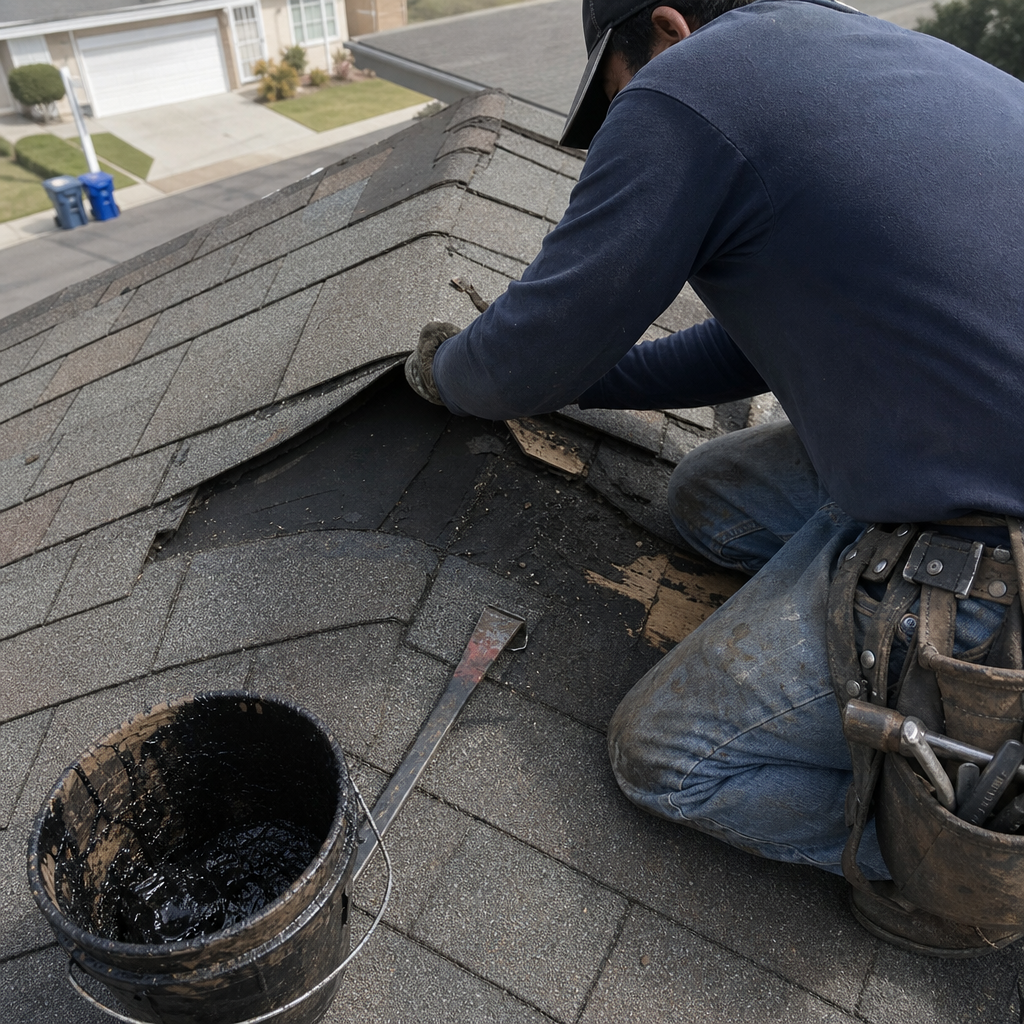
First, you cannot inspect the roof deck without removing the shingles. In Los Angeles, we regularly find compromised decking from past leaks, termite damage in eave areas, or delaminated plywood from decades of heat cycling. In Valley Village last spring, we stripped a roof that looked sound from the exterior and found 340 square feet of rotted OSB beneath the shingles, hidden by a previous patch job. Capping over that would have trapped moisture and guaranteed a tear-out within two years.
Second, the additional layer adds dead load. A typical architectural shingle weighs 2.3 to 2.8 pounds per square foot. Two layers plus underlayment approach 6 pounds per square foot before you account for any future water absorption. Los Angeles seismic codes are designed around specific structural loads; unnecessary roof mass is poor practice in earthquake country.
Third, manufacturer warranties often require installation on clean, sound decking. A cap-over can void the material warranty you are paying for.
Our standard on every Roof Replacement & Installation in Los Angeles is full tear-off, deck inspection with photo documentation, replacement of any compromised sheathing, and fresh underlayment. The cost difference is real, but so is the difference between a roof that lasts 25 years and one that fails at year 8.
What Your Replacement Contract Must Include
Most homeowners have never read a roofing contract before they need one. In a market like Los Angeles, where contractors range from multi-generation family operations to crews that follow hailstorms from Texas, the contract is your protection. Here is what it should contain, and what we include in every Ridgeline Roofing Co. agreement.
Photo documentation of decking condition. Before the new roof goes on, you should see what the old one hid. We photograph the full deck surface, any damaged areas, and the repairs made. This becomes part of your project record.
Written disposal plan. Los Angeles has strict waste regulations. Your contract should specify that debris will be hauled to a permitted facility, not dumped on vacant land or down a hillside. The disposal cost should be itemized, not buried.
Permit responsibility. The contractor should pull the permit, not the homeowner. The contract should state this explicitly, include the permit fee, and specify that final inspection sign-off is required before project completion.
Material specification by brand and line. Not “30-year shingles.” GAF Timberline HDZ in Barkwood, or Boral Saxony 900 concrete tile in Terracotta. Specificity prevents substitution.
Start and completion windows. Los Angeles has a defined dry season, roughly April through November, when roofing proceeds without weather delays. Winter jobs are possible but slower. The contract should state realistic dates, not “ASAP.”
Written workmanship guarantee. Our 90-Day Done Right Promise is exactly this: if anything is not right, we come back and make it right. No paperwork to file, no argument about whether the issue is “covered.” The contract should state the guarantee period and the process for invoking it.
Final walkthrough requirement. You and the contractor inspect together. Magnet sweep for nails. Gutter check. Vent verification. Photo documentation of completed work. Payment only after your satisfaction and permit sign-off.
Realistic Cost Breakdown for Los Angeles Homes
Roof replacement costs in Los Angeles run higher than national averages due to permit fees, disposal costs, labor rates, and the prevalence of tile and specialty materials. These figures reflect what we have quoted and completed in the 2023 to 2025 period.
| Component | Typical Range | Notes |
|---|---|---|
| Tear-off and disposal | $2,500 - $5,500 | Varies with layers, access difficulty, haul distance |
| Decking repair/replacement | $1,500 - $4,000 | Per-sheet pricing; unknown until tear-off |
| Underlayment system | $1,200 - $2,800 | Synthetic vs. felt; fire-zone requirements |
| Asphalt shingles (architectural) | $6,000 - $14,000 | Material and labor for 2,000-3,500 sq ft roof |
| Concrete or clay tile | $14,000 - $28,000 | Includes structural verification if needed |
| Metal roofing | $16,000 - $32,000 | Standing seam at higher end; stone-coated at lower |
| Permit and inspection fees | $400 - $1,200 | LADBS fees; plan check at higher end |
| Total typical replacement | $12,000 - $28,000 | Asphalt on standard home; tile or complex geometry higher |
These are installed prices for professional work with proper permits and warranties. Quotes significantly below this range should prompt questions about insurance, licensing, permit inclusion, and whether tear-off is actually included or presented as a surprise add-on.
Our standing offers apply where relevant: $50 off any repair over $250, a free second opinion on any written estimate, our $89 seasonal tune-up, and a permanent 5% senior and veteran discount. For full replacements, we provide no-hassle upfront pricing: the number on the estimate is the number on the invoice.
Choosing a Contractor Who Will Still Answer the Phone in Five Years
Los Angeles has no shortage of roofing contractors. It has a shortage of roofing contractors who will be in business when the roof needs service.
Storm chasers operate in every major market, but Los Angeles presents a specific variant: the crew that chases Santa Ana wind damage, signs dozens of homeowners in a weekend, completes rushed work, and is unreachable when the leaks start. Before attempting any emergency repairs yourself, read DIY vs Professional Emergency & Storm Damage: What’s Safe to Do Yourself. We have been called to fix their work in Granada Hills, Porter Ranch, and the Hollywood Hills.
Here is what to verify before you sign:
- California contractor license (C-39 Roofing). Verify active status at cslb.ca.gov. Check for suspensions or disciplinary actions.
- Workers’ compensation and general liability insurance. Request certificates of insurance naming you as additional insured for the project duration.
- Local physical address, not a PO box or suite number. A contractor with roots in the community has incentive to protect their reputation. We have operated from our Los Angeles location since 1984.
- Willingness to provide local references from completed jobs in the past 12 months. Not a generic testimonial page. Actual addresses you can drive past.
- Written estimate with line-item detail. Not a single number on a business card. Scope, materials, labor, permits, disposal, timeline.
At Ridgeline Roofing Co., we answer every call with a live person, 24 hours a day. Our technicians are background-checked and uniformed. We document every inspection with photos from your actual roof, not a generic report. And we have been here for over 42 years, training apprentices into journeymen, planning to be here in thirty more. That is the difference between a contractor and a company.
What to Expect: Timeline from First Call to Final Inspection
A typical Los Angeles roof replacement, from first contact to permit sign-off, spans 4 to 8 weeks. Here is how that breaks down:
| Phase | Duration | Key Actions |
|---|---|---|
| Initial consultation and estimate | 1-3 days | Site visit, measurements, material discussion, written estimate |
| Material selection and contract | 3-7 days | Finalize specifications, sign agreement, deposit if required |
| Permit application | 1 day to 6 weeks | Over-the-counter: same day. Plan check: 15+ business days. HPOZ: additional 2-4 weeks. |
| Material delivery | 3-10 days | Standard shingles: quick. Specialty tile or metal: longer lead times. |
| Tear-off and installation | 3-5 days | Weather-dependent; winter rain can pause work |
| Inspections and final sign-off | 2-5 days | LADBS scheduling; corrections if needed |
| Final walkthrough and payment | Same day | Magnet sweep, gutter check, photo review, invoice |
The longest variable is permit type. We advise Los Angeles homeowners to start the process in late winter or early spring, aiming for dry-season installation. Waiting until October to begin planning a November job risks weather delays and LADBS end-of-year backlog.
Common Mistakes to Avoid
- Assuming your neighborhood’s fire zone. We have seen homeowners in Bel-Air and Rustic Canyon surprised to learn their parcel is Very High. Verify before you select materials.
- Accepting a verbal estimate. In California, contracts over $500 must be in writing. A handshake and a number on a napkin is unenforceable and often signals an unlicensed operator.
- Ignoring the decking. A contractor who will not discuss deck condition before quoting is a contractor planning to hide problems. Insist on tear-off and inspection.
- Paying in full before final inspection. Standard practice is progress payments: deposit at contract, second payment at material delivery, final payment after permit sign-off and your walkthrough satisfaction.
- Selecting material by appearance alone. That dark slate-look shingle may be perfect for a Boston colonial. On a west-facing Los Angeles roof, it absorbs heat, accelerates aging, and may violate cool-roof requirements if your pitch is low.
- Neglecting gutter and ventilation integration. A new roof with clogged gutters or inadequate attic ventilation fails prematurely. The replacement scope should address the system, not just the shingles.
- Hiring based on lowest bid alone. In roofing, the low bid often excludes tear-off, underlayment upgrade, permit fees, or proper insurance. Compare line items, not bottom lines.
When to Call a Professional
Some roof conditions demand immediate professional assessment. Active leaks during rain, visible sagging of the roof deck, daylight visible through the attic, or shingles missing in patches after wind events all require prompt attention. In Los Angeles, the dry season can mask leaks that become catastrophic during the first winter storm.
If your roof is more than 20 years old and has never been replaced, schedule an inspection even if no symptoms are visible. Materials degrade invisibly. Thermal cycling in the Valley, marine moisture in coastal zones, and UV exposure everywhere shorten functional life below manufacturer projections.
Ridgeline Roofing Co. offers free estimates in Los Angeles. Our phones are staffed by a live person 24 hours a day, including nights, weekends, and the middle of a storm. Call (844) 563-1816 to schedule a photo-documented inspection with a background-checked, uniformed technician.
Frequently Asked Questions
Most complete roof replacements in Los Angeles range from $12,000 to $28,000 for single-family homes, with asphalt architectural shingles at the lower end and tile or metal at the higher end. For more guides & resources on protecting your home, explore our blog. The specific price depends on roof size, pitch, access difficulty, decking condition, and material selection. Call (844) 563-1816 for a free, itemized estimate with no surprises.
The physical installation typically takes 3 to 5 days for a standard home once materials are on-site. The full process, including permits and inspections, usually spans 4 to 8 weeks. Plan check permits or Historic Preservation Overlay Zone review can extend this timeline. We provide a written schedule with every contract.
Yes. Every full roof replacement requires a permit from the LA Department of Building and Safety. Your contractor should pull the permit, include the fee in the estimate, and schedule all required inspections. An open permit becomes a title issue when you sell the home.
California code allows one overlay, but we do not recommend it. You cannot inspect the decking for hidden damage, the added weight stresses structure in seismic country, and manufacturer warranties often require clean decking. A legitimate contractor will show you the decking condition before closing it up. For our standard on this, see our Roof Repair in Los Angeles and replacement services.
Homes in Very High Fire Hazard Severity Zones, which include nearly 30% of Los Angeles residential parcels, must use Class A fire-rated assemblies. Concrete and clay tile, metal roofing, and most premium asphalt shingles with proper underlayment qualify. Untreated wood shakes do not. Verify your zone at the Cal Fire website before selecting materials.
Repairs make sense for isolated damage on a roof with significant remaining life. When a roof is past 20 years, has widespread granular loss, or shows deck sagging, replacement is more economical than serial repairs that never address systemic failure. Our $89 seasonal tune-up can help assess remaining life. For major work, our free second opinion on any written estimate gives you clarity before you commit.
The Bottom Line
A roof replacement in Los Angeles is not a commodity purchase. It is a jurisdiction-specific project governed by fire-zone classifications, Title 24 assembly requirements, and a permit process that rewards preparation and punishes assumptions. The right material for a west-facing Valley roof differs from the right material for a coastal Santa Monica home. The right contract includes photo documentation, disposal plans, and a workmanship guarantee with teeth. And the right contractor has a local address, a verifiable license, and a history of answering the phone when the job is done. We have been that contractor for Los Angeles homeowners since 1984. Done right, and if it is not, we make it right.
Written by the team at Ridgeline Roofing Co., serving Los Angeles since 2016.