
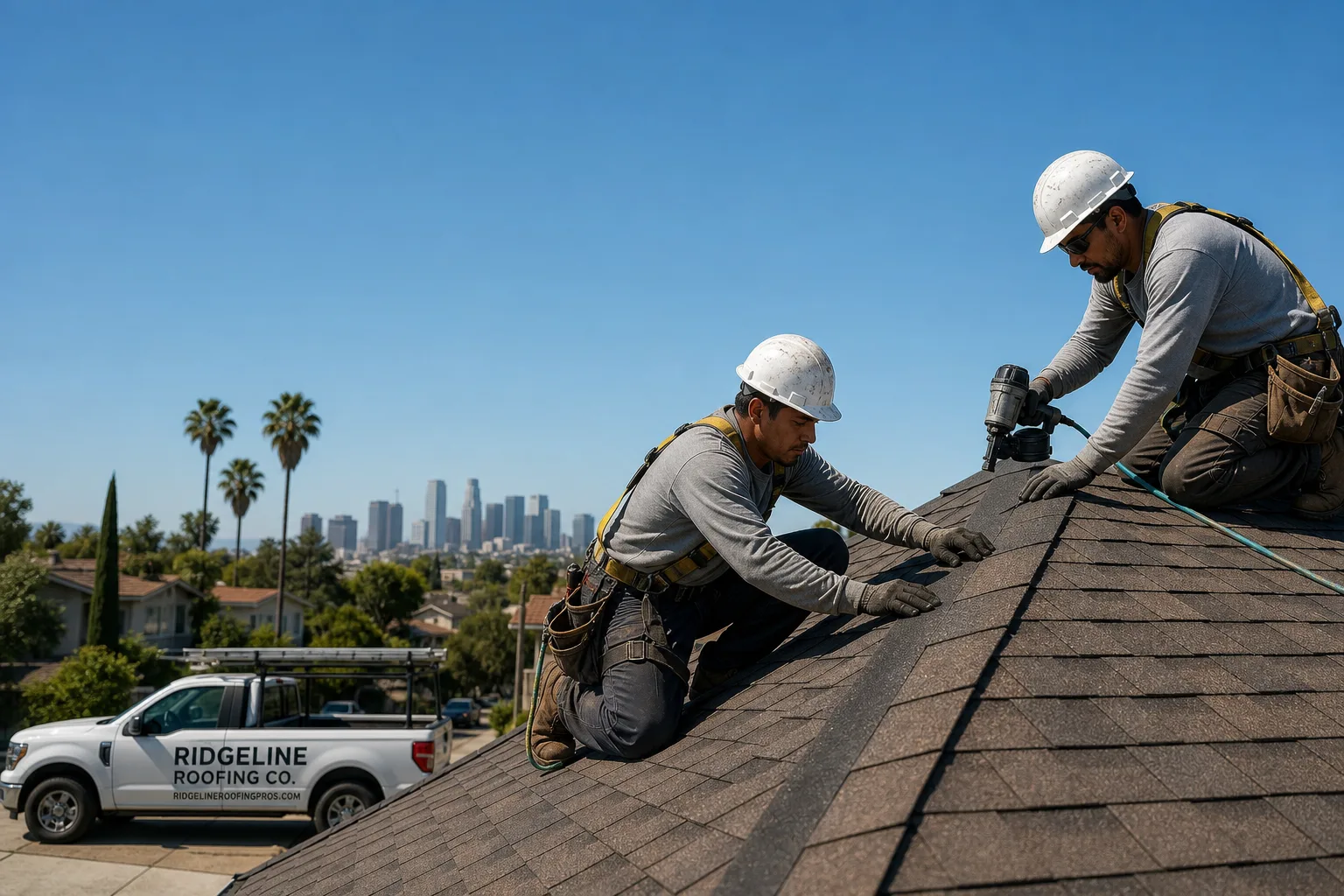
Fast, Reliable Emergency & Storm Damage Across Manhattan
When a nor’easter drives horizontal rain against your parapet wall or wind lifts a section of modified bitumen off your flat roof, you need a crew that understands Manhattan’s unique constraints, not a suburban roofer with a pickup truck. Emergency tarping and storm damage repair in Manhattan typically runs $450-$1,800 depending on access complexity, and our Emergency & Storm Damage team aims to have boots on your roof within 2-4 hours of your call. We know the alley-load logistics, the DOT permit requirements for sidewalk bridging, and the interior hoists that move materials into buildings where no crane can reach. Call (844) 563-1816 any hour - a live person answers, including the middle of the storm.
Why Ridgeline Roofing Co. Is Manhattan’s Preferred Emergency & Storm Damage Company
We’ve been standing behind roofs since 2016. That’s over 10 years of learning what holds and what fails, and in Manhattan specifically, we’ve learned that emergency work here is as much about permits and access as it is about membranes and flashing. Our Manhattan customers know we don’t chase storms out of town - we’re here year-round, hiring local crews, training apprentices into journeymen, and planning to be in this market for decades to come.
Our response time to Manhattan averages 2-4 hours because we stage materials and crew in the metro area, not three states away. When you call (844) 563-1816, you reach a live person, 24/7 - no voicemail trees, no callback windows, no leaving you stranded with water coming through your ceiling. Our technicians are background-checked, uniformed, and arrive with photo-documented inspection protocols. We show you what we found on your actual roof, not deliver a scary speech in your driveway.
The 90-Day Done Right Promise backs every job: if it’s not right, we come back and make it right. No paperwork runaround, no arguing. That’s a written guarantee, not a handshake and a prayer. And the price we quote is the price you pay - no surprises on the invoice.
Our Emergency & Storm Damage Services in Manhattan
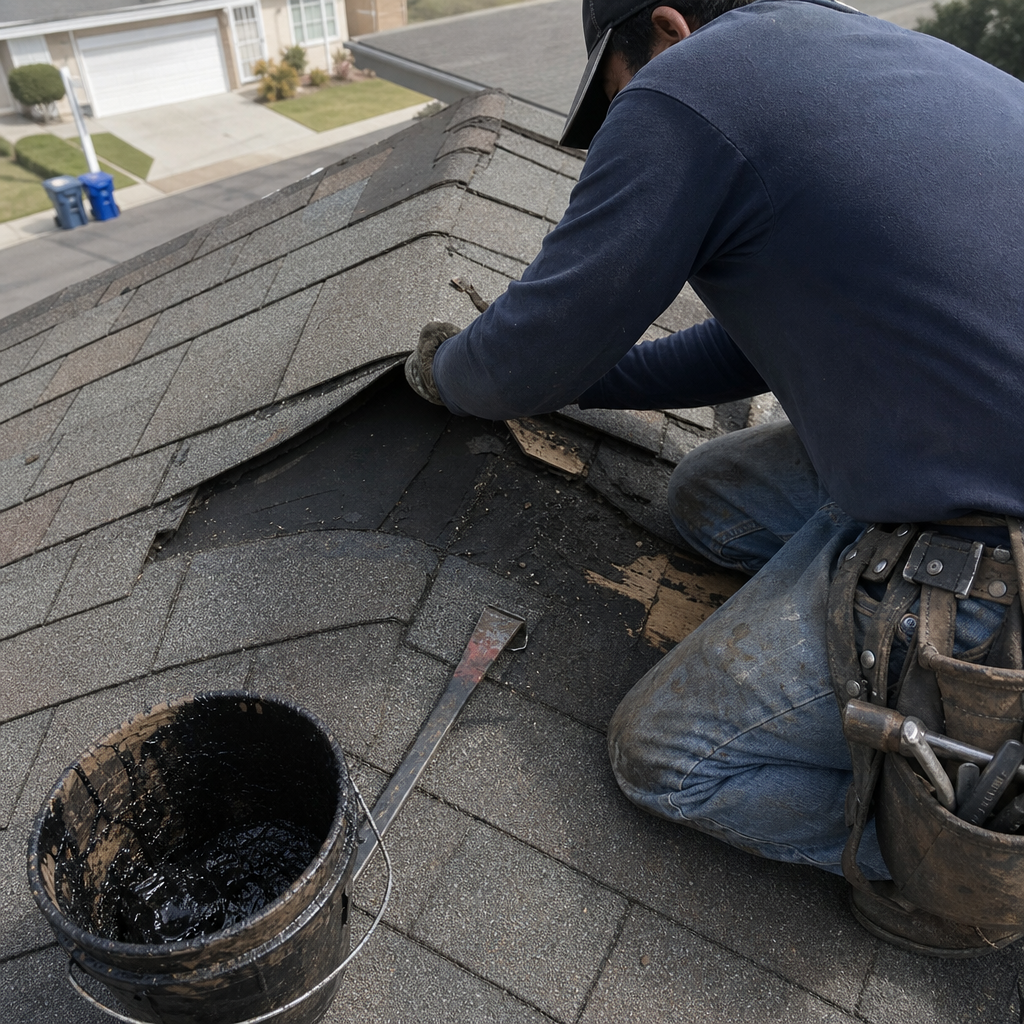
Storm Damage Repair
Manhattan’s flat-roof housing stock - pre-war tenements, brownstones, and high-rise co-ops - takes storm damage differently than pitched-roof suburbs. Modified bitumen and EPDM membranes can delaminate under sustained wind. Coal-tar built-up roofs, common on 1880s-1930s buildings, crack under thermal cycling driven by the urban heat island effect. We repair these systems with materials matched to your existing roof, including GAF Liberty SBS-modified bitumen and Atlas membranes, and we coordinate DOT permits for sidewalk bridging when exterior access is required. For larger projects, explore Roof Replacement & Installation - Manhattan. Most storm damage repairs in Manhattan are completed in a single visit once access is secured.
Emergency Tarp
Emergency tarping in Manhattan faces constraints no suburban roofer encounters. Sidewalk bridges require NYC DOT permits that can’t always be expedited overnight, which can delay exterior access and leave interiors exposed longer than in less dense areas. When interior hoists or crane lifts are available, we move fast - our crew once tarped a wall-to-roof junction on West 43rd Street in Hell’s Kitchen within hours of a nor’easter, using a narrow interior hoist to deliver GAF Liberty membrane and new counterflashing through a single-lane alley. We return to remove the tarp and complete permanent repairs, coordinating with your building’s schedule and access limitations.
Insurance Claims
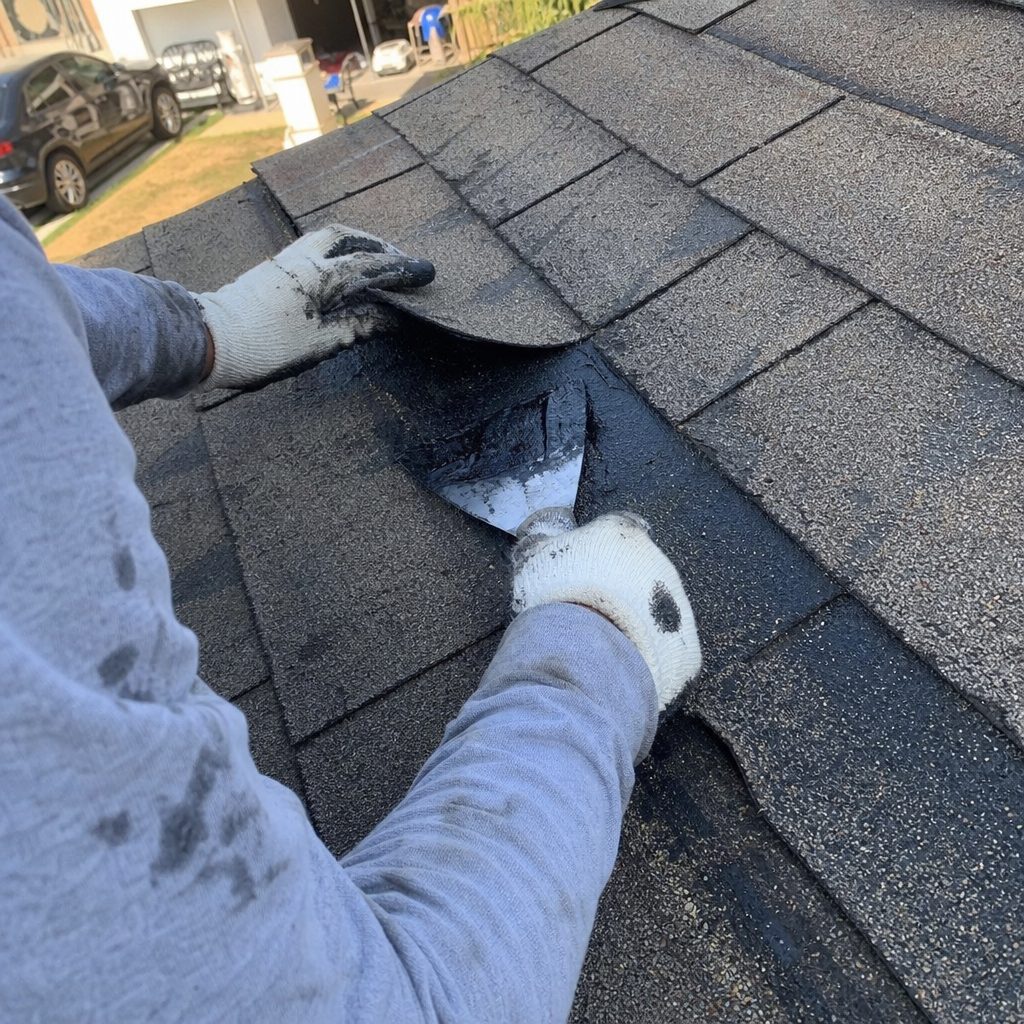
Storm damage claims in Manhattan involve documentation that suburban adjusters rarely see: crane lift receipts, DOT permit costs, FISP-related parapet repairs, and interior hoist fees. We document every inspection with photos from your actual roof, provide line-item estimates with no-hassle upfront pricing, and work directly with your carrier to ensure coverage reflects true Manhattan restoration costs, not suburban benchmarks. The number on our estimate is the number on the invoice - no surprises when the check arrives.
Wind Damage
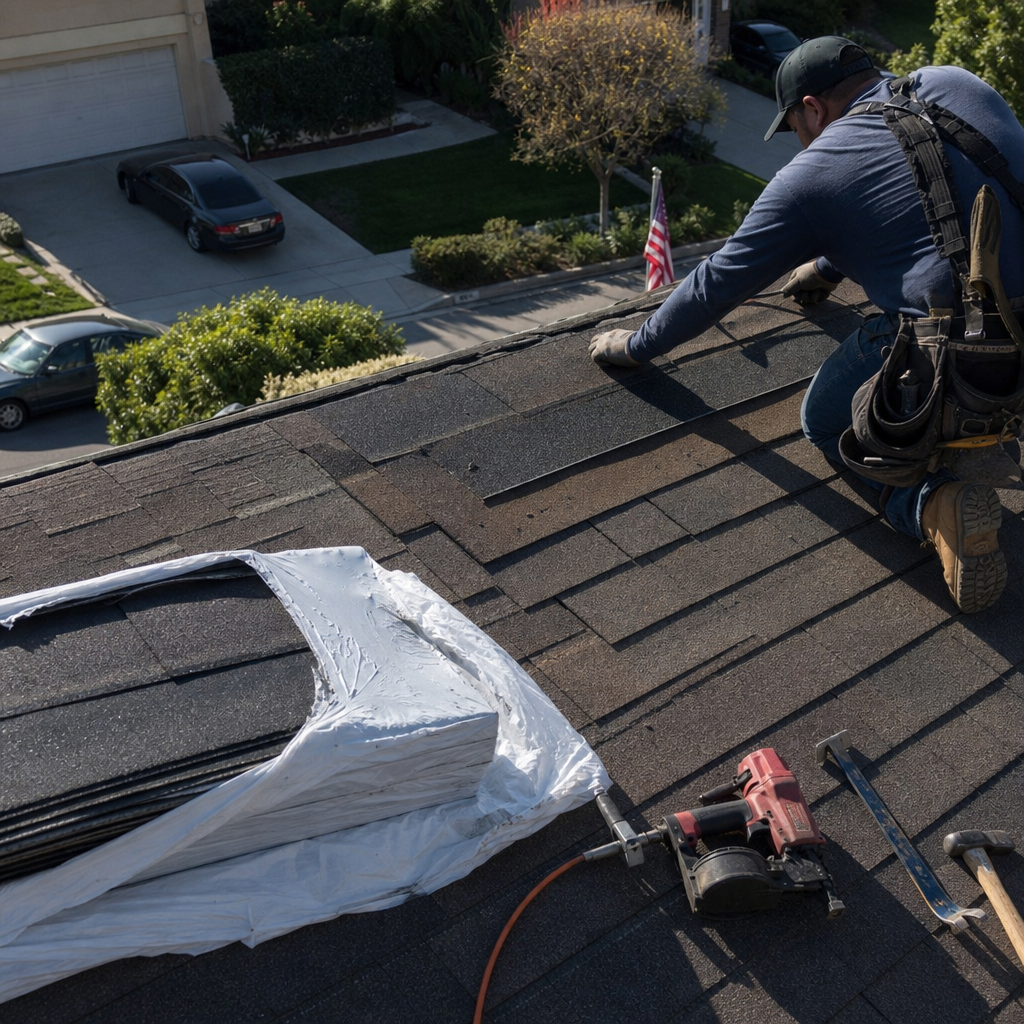
Manhattan’s wind patterns are distorted by the canyon effect of high-rise buildings, creating turbulent eddies that lift membrane edges and peel flashing from parapet walls. Wind damage on flat roofs often hides at the wall-to-roof junction, where counterflashing failure lets water saturate masonry that’s invisible from the roof deck. We inspect these chronic failure points systematically, not just the obvious blow-offs. Our repairs account for the layered dead load common on aging Manhattan roofs - decades of coal-tar and modified bitumen torched over original built-up roofing - which can prevent proper patch adhesion and require staged tear-offs.
What happens when you call
- 1
A real person answersNo phone trees - you reach a local pro.
- 2
You get an upfront price rangeHonest numbers before anyone is dispatched.
- 3
A background-checked tech heads outLicensed & insured, dispatched right away.
- 4
You approve before work beginsNothing starts until you say go.
Trusted Brands We Service in Manhattan
We are authorized installers for GAF, CertainTeed, Owens Corning, Atlas, Tamko, and Boral - and we stock membranes, flashing, and our Gutters & Accessories in Manhattan specific to flat-roof and low-slope systems dominant in Manhattan. For emergency work, this means we don’t substitute materials or wait on special orders. GAF Liberty SBS-modified bitumen, Atlas TPO, and Tamko modified systems are on our trucks and ready for deployment. Fast turnaround matters when your interior is exposed, and matching manufacturer specifications matters when you’re filing an insurance claim or satisfying a co-op board’s requirements.
Common Emergency & Storm Damage Problems We See in Manhattan Homes
- Parapet cap counterflashing failure after nor’easters. Sustained lateral-driven rain attacks brick parapet walls across Manhattan’s older building stock, making the wall-to-roof junction a chronic leak point. Emergency tarping must address both the roof membrane and the masonry interface, or water returns with the next storm.
- Hidden dead load preventing emergency patch adhesion. Decades of layered coal-tar and modified bitumen on pre-war tenements add significant weight and create uneven surfaces. Emergency patches may fail to bond properly, requiring unplanned staged tear-offs that extend the timeline and scope.
- Delayed tarping due to DOT permit and sidewalk bridge constraints. Unlike suburban markets where a ladder and a truck suffice, Manhattan exterior access often requires permitted sidewalk bridging that can’t be expedited overnight. Interior hoists and crane lifts offer alternatives but depend on building logistics and weather conditions.
- FISP-triggered parapet repairs discovered during emergency work. When a damaged parapet cap or cracked masonry is uncovered during emergency tarping, building owners must remediate within the inspection period or face facade violations. We cross-reference your building’s FISP cycle and coordinate repairs to satisfy both the emergency leak and compliance requirements.
Roofing in Manhattan Built on the Ridge
The ridgeline is where a roof proves itself, and in New York City Metro, that line takes a beating. Hot summers warp shingles. Sudden hail dents what you cannot see from the yard. Most roofs here were not built for the storms they have already weathered. We send our own journeymen, take our own photos, and hand you the evidence, not a scare. If your adjuster needs clarity, we speak that language without the hustle.
Our K.E.Y.S. code means your home gets the care we would give our mother’s: done right, no shortcuts, no surprises on the bill. The Keystone Standard backs it, 90 days in writing. we coordinate through our New York City Metro service area. Mention our $50 repair offer when you call.
Roofing in Manhattan Done Right
The ridge is where a roof proves itself, and it’s where we start every inspection. Our crews photograph what they find up there, then walk you through it on the ground. No scary speeches, no pressure. Just the truth about your shingles, flashing, and whether that last nor’easter left something behind that’ll cost you later.
We hire local, train apprentices into journeymen, and answer the phone with a person. The Keystone Standard applies to every job: 90 days, in writing, no arguing. we coordinate through our New York City Metro service area We’ll be there when we say, and you’ll get a square deal with no surprises on the bill.
Roofing in Manhattan Done Right
The ridge is where a roof proves itself, and it’s where we start every inspection. Our crews photograph what they find up there, then walk you through it on the ground. No scary speeches, no pressure. Just the truth about your shingles, flashing, and whether that last nor’easter left something behind that’ll cost you later.
We hire local, train apprentices into journeymen, and answer the phone with a person. The Keystone Standard applies to every job: 90 days, in writing, no arguing. we coordinate through our New York City Metro service area We’ll be there when we say, and you’ll get a square deal with no surprises on the bill.
Pricing for Emergency & Storm Damage in Manhattan, NY
Manhattan’s flat-roof, high-density market carries pricing distinct from suburban or even outer-borough benchmarks. Here’s what we typically see:
| Service | Typical Range in Manhattan |
|---|---|
| Emergency tarp (interior hoist or crane access) | $450 - $950 |
| Emergency tarp (DOT sidewalk bridge required) | $850 - $1,800 |
| Storm damage repair, localized membrane patch | $650 - $1,400 |
| Storm damage repair, parapet cap and counterflashing | $1,200 - $2,800 |
| Full storm restoration, tenement/brownstone flat roof | $8,500 - $22,000 |
| Insurance claim documentation and coordination | No additional charge |
What drives cost: access method (interior hoist vs. crane vs. sidewalk bridge), building height, membrane type and layers of existing material, extent of parapet or masonry damage, and whether FISP-coordinated repairs are required. We provide no-hassle upfront pricing before any work begins - the number on the estimate is the number on the invoice. Call (844) 563-1816 for a free estimate; estimates are free, and a live person answers.
We Also Serve Cities Near Manhattan
Our emergency response radius extends to homeowners throughout the metro area. We regularly dispatch to Manhattan and surrounding communities including New York City, Jersey City, Brooklyn, and East Flatbush. Same standards apply: live phones, background-checked uniformed technicians, photo-documented inspections, and the 90-Day Done Right Promise on every job.
Serving Manhattan, NY - Our Local Coverage Area
We’re based in the Manhattan area and know this community well. Use the map below to see our service coverage - if you’re nearby, we can almost certainly help.
FAQs - Emergency & Storm Damage in Manhattan
Yes, if the work requires accessing the roof from the sidewalk or street level and the building is more than one story, NYC DOT typically requires a permitted sidewalk bridge or scaffolding. We handle permit applications as part of our emergency response, though expedited approval isn’t guaranteed - which is why we also coordinate interior hoists or crane lifts when building logistics allow faster access. Call (844) 563-1816 and we’ll assess your building’s access options within minutes.
Yes, and this is critical in Manhattan. If emergency tarping reveals a damaged parapet cap, cracked coping, or deteriorated masonry at the roof line, your building’s Facade Inspection Safety Program cycle may require remediation within the same inspection period to avoid violations. We cross-reference FISP filings before completing emergency repairs and coordinate parapet waterproofing to satisfy both the leak and compliance. This Manhattan-specific workflow prevents emergency fixes from triggering secondary regulatory headaches.
Yes - it’s standard practice here. Manhattan mid-rise and high-rise roofs are crowded with mechanical equipment, and our crews are trained to navigate these constraints safely. We don’t move building systems; we work around them, using proper fall protection and coordinating with building engineers when isolation of equipment is required. For unique architectural systems, see our Specialty Roofing in Manhattan. Background-checked, uniformed technicians on every job - the same standard we’d hold for work done in our own mother’s home.
Most emergency tarps remain in place 3-10 days, depending on weather, permit status for permanent access, and building scheduling. In Manhattan, DOT permit delays for sidewalk bridges can extend this timeline, which is why we prioritize interior hoist or crane access when available. We schedule permanent repairs before removing the tarp, and we never leave a roof exposed. If access constraints threaten to extend tarp duration, we communicate that upfront - no surprises.
We stage repairs based on your budget and urgency. Emergency tarping stops immediate water intrusion. A phased repair plan - addressing the active leak first, then scheduling membrane replacement or parapet restoration when funds are available - is common in Manhattan’s co-op and rental market. We provide line-item estimates so you know exactly what each phase costs, and we never pressure for work you don’t need. The 90-Day Done Right Promise applies to whatever we do, whenever we do it. Call (844) 563-1816 to discuss phased options - estimates are free.
Written by Pete Navarro, Owner at Ridgeline Roofing Co., serving Manhattan and communities since 2016.