
Roof Leak After Heavy Rain
What’s Happening
A roof leak that shows up during or right after heavy rain almost always means water is getting past a point where two surfaces meet – a flashing joint, a damaged shingle, or a failed seal around a penetration like a vent or chimney. The roof itself may be years away from needing full replacement, or this could be the sign that deferred wear has finally caught up. Either way, the water is in your home right now, and every hour it sits, it’s doing more damage than the original breach.
What you’re seeing on the ceiling or wall is rarely where the problem starts. Water enters at one spot on the roof, travels along a rafter or roof deck, and drips somewhere else entirely. That’s why the wet patch in your hallway might trace back to a flashing failure above your bedroom window. The good news is that a trained eye on the actual roof – not a guess from the driveway – can usually pinpoint the source within a single inspection.
Why It Happens
Failed or Lifted Flashing
Flashing is the metal that seals every joint on your roof: where the chimney meets the field, where a dormer wall steps down, where a valley channels runoff. It’s almost always the first thing to fail – metal moves with temperature, sealant dries out, and a nail works itself loose over years of expansion and contraction. You can sometimes spot the problem from a ladder at the gutter line: look for flashing that’s visibly separated from the chimney or wall, or sealant that’s cracked and pulling away. If the leak only happens in heavy rain and not light rain, a flashing gap is the most likely culprit, because it takes real water volume to back up behind a partial separation.
Cracked or Missing Shingles
Shingles take the direct hit from hail, wind, and UV year after year. A shingle that’s cracked, curling at the edges, or missing entirely leaves the underlayment exposed – and underlayment alone won’t hold up to driven rain for long. From the ground with binoculars, look for patches where the surface texture looks different from surrounding shingles, dark spots where granules have worn away, or an obvious gap where a shingle has blown off. If you’re seeing these signs in multiple areas across the roof, the problem may be systemic age rather than isolated damage.
Clogged or Damaged Pipe Boots and Vent Seals
Every pipe that exits your roof – plumbing vents, bathroom exhaust, attic ventilation – is covered by a rubber or lead boot that seals it to the surrounding shingles. Rubber boots crack as they age, especially after a few seasons of freeze-thaw cycles. The leak this produces tends to be small but consistent, appearing near the center of the house rather than at the edges, often directly below a bathroom or laundry room. If you’re getting a drip from what seems like the middle of a structurally sound roof, a failed pipe boot is a strong first suspect.
Compromised Valleys
A valley is where two roof planes meet and funnel water down toward the gutters. It carries more volume than any other section of the roof, which means wear there happens faster. Open metal valleys can rust or develop pinholes; closed-cut valleys can crack along the seam where two shingle edges were overlapped. Leaks from a valley tend to track a long distance before they appear inside the home, which makes them harder to locate without getting on the roof. The telltale sign from the ground is a dark discoloration running along the valley line, or shingles in the valley that look compressed or cracked compared to the surrounding field.
What to Do Right Now
- Contain the water inside. Put a bucket or towels under the drip. If there’s a visible bulge in the ceiling drywall holding pooled water, carefully puncture it at the lowest point with a screwdriver to release it in a controlled spot – a ceiling that lets go on its own does more damage.
- Move what you can. Get furniture, rugs, and electronics out from under the active drip or any area where water might spread. Water migrates further than it looks like it should.
- Photograph everything before you clean it up. Take pictures of the interior damage – ceiling stains, wet drywall, pooled water – before you dry it. Your insurance company will want documentation, and so will our technician.
- Check your attic if you can do so safely. Look for wet insulation, water staining on rafters, or daylight coming through. Note where it is in relation to the roof above. Don’t reach into wet insulation or touch any wiring. If there’s any question about electrical safety, stay out and call.
- Do not attempt to get on the roof during or right after rain. A wet roof is one of the most dangerous surfaces a homeowner can step onto, and the risk is not proportional to the repair. Call your local Ridgeline Roofing Co. team and let a background-checked technician with proper footing and fall protection do the inspection. That’s what we’re here for.
How We Fix It
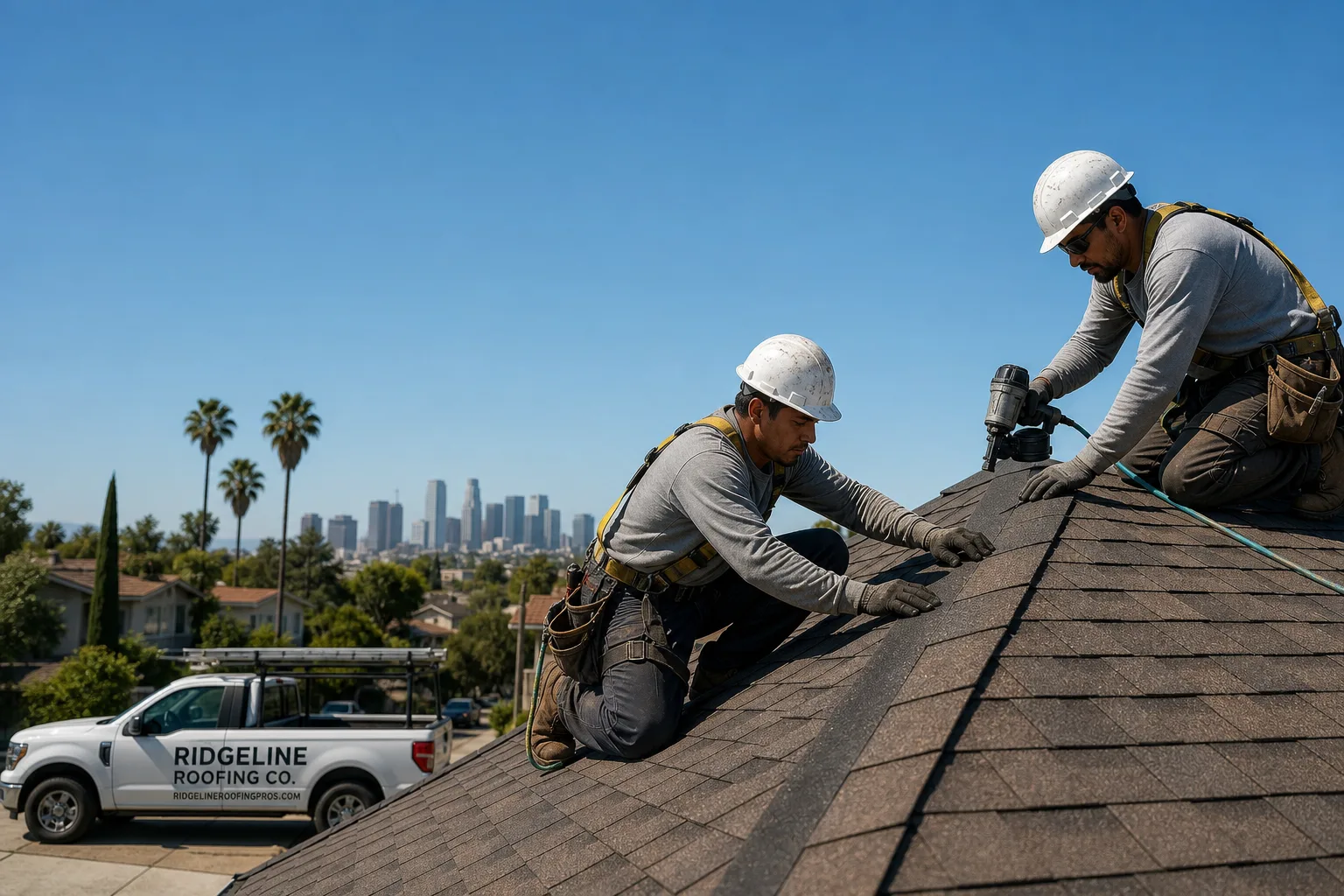
When your local Ridgeline Roofing Co. team arrives, the first thing the technician does is get on the actual roof – not stand in the driveway with a clipboard. Every inspection is documented with photographs taken from your roof, so you can see exactly what we saw and understand what we’re recommending and why.
From there, the repair path depends on what we find. Most rain leaks fall under our Roof Repair service: reflashing a chimney or step joint, replacing cracked or missing shingles with matched material from our authorized manufacturer lines, or reseating and resealing a failed pipe boot. Where we find that the damage is more widespread – significant deck rot under failed shingles, or deterioration across multiple areas – we’ll walk you through whether Roof Replacement and Installation is the honest recommendation.
You’ll have a written estimate with a firm number before anything starts. No surprises on the bill. Most repairs are completed in a single visit, and every bit of the work is backed by the 90-Day Done Right Promise: if it’s not right, we come back and make it right – no paperwork, no arguing.
Frequently Asked Questions
A roof leak during active rain is urgent – waiting even a few days can turn a straightforward flashing repair into a project that involves rotted decking and mold remediation. Water doesn’t stay where it lands; it moves into insulation, along joists, and behind wall cavities while you’re watching it. If you’re seeing a drip, the damage behind the ceiling is already further along than the stain suggests. Call (844) 563-1816 now – a live person answers every call, including nights and weekends.
A leak after heavy rain doesn’t automatically mean the whole roof needs to go. Many rain leaks trace back to a single failed flashing joint or a few damaged shingles – problems that fall well within the scope of a repair, even on a roof that’s seen some years. We’ll tell you honestly what we find, and if a repair is the right answer, that’s what we’ll recommend. If the roof is at the end of its serviceable life and replacement is the better value, we’ll show you the evidence and explain why.
Yes – your local Ridgeline Roofing Co. team prioritizes active leaks, especially when rain is in the forecast. We staff a live person on the phones 24 hours a day, seven days a week, because a homeowner with water coming in shouldn’t have to leave a message and wait. Call (844) 563-1816 and we’ll get someone out as soon as possible.
The number on the written estimate is the number on the invoice. We use upfront pricing, so there are no add-ons, no change orders for things we “discovered” mid-job, and no surprises when it’s time to pay. If we open something up and find additional damage that wasn’t visible during inspection, we stop, show you what we found, and give you a revised estimate in writing before we proceed. You’re always in control of what gets approved.
Get It Fixed
Water in the house doesn’t wait for a convenient time, and neither do we. Call (844) 563-1816 right now – a live person will answer and get your local Ridgeline Roofing Co. team on the schedule. Prefer to book online? You can do that too. Either way, the estimate is free, it’s in writing, and the price won’t change once work begins.
Written by Pete Navarro, Owner at Ridgeline Roofing Co., proudly serving local communities since 1984.