
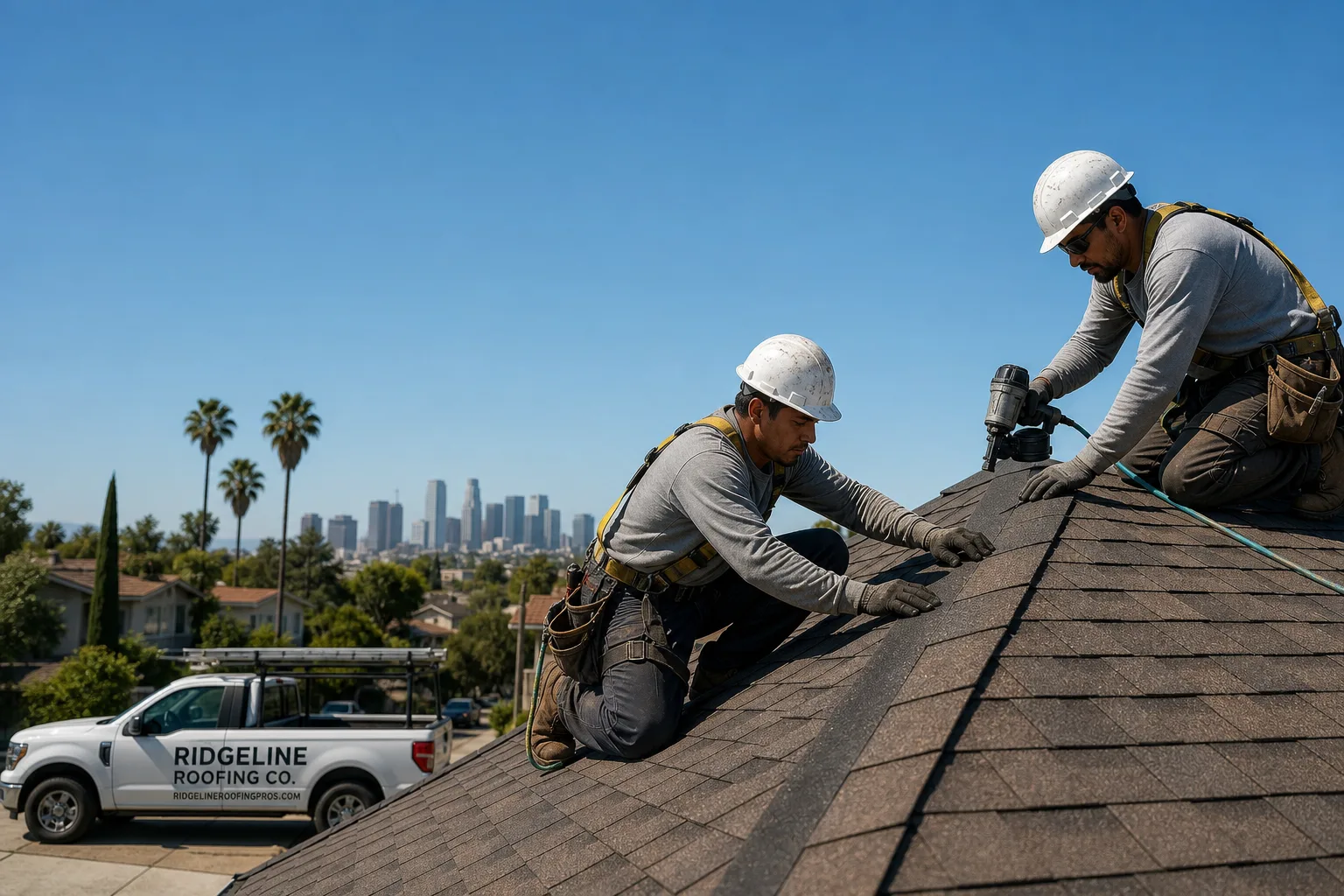
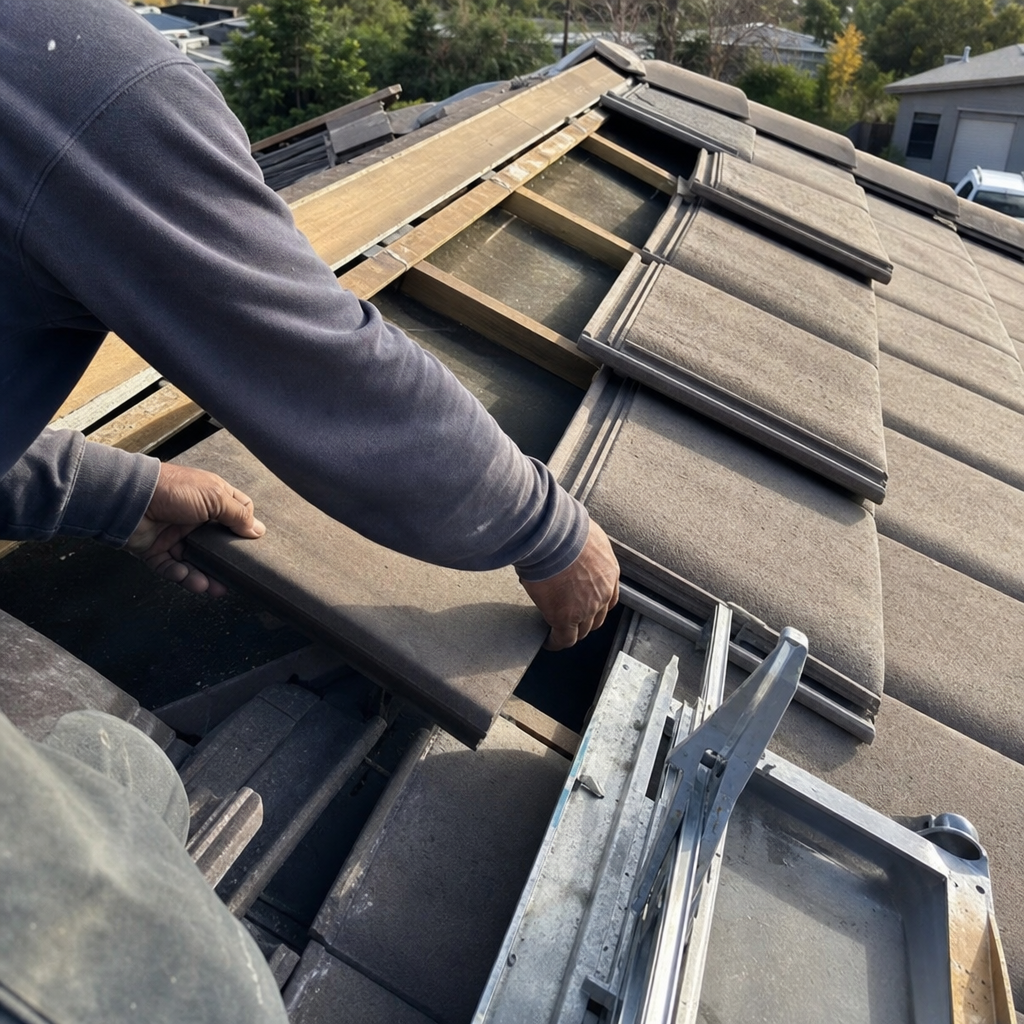
Fast, Reliable Emergency & Storm Damage Across Phoenix
When a monsoon cell rolls over Camelback Mountain and your ceiling starts dripping at 2 a.m., you need a roofer who knows Phoenix flat roofs, not a dispatcher three states away reading from a script. We answer our phones live, 24 hours a day, and our crews are on Phoenix roads within the hour for true emergencies. We’ve worked on roofs in Encanto, Alhambra, Central City, and Maryvale since 1984, and we understand how a 1960s built-up roof in the Garfield district fails differently than a 1990s tile roof in North Central. Call (844) 563-1816 and a real person picks up. No voicemail trees. No “we’ll call you back tomorrow.”
Why Ridgeline Roofing Co. Is Phoenix’s Preferred Emergency & Storm Damage Company
We’ve been standing behind Phoenix roofs for over 42 years, and we plan to be here when the next generation needs us. That’s not a slogan. It’s how we’ve built this company since 1984.
Our customers in the 85016, 85017, 85018, and 85019 ZIPs know our trucks. They know our technicians arrive in uniform, background-checked, with photo-documented inspections. When Mrs. Deluca on Monte Vista Road had a parapet flashing fail during the 2023 monsoon, we showed her time-stamped photos from her actual roof, not stock images from a training manual. She called us back this spring for her sister’s house in Coronado.
Our response time to central Phoenix averages under 60 minutes for emergency calls during monsoon season. We keep modified bitumen, SPF coating, and emergency tarp stock on our trucks because Phoenix’s flat-roof emergencies don’t wait for a supplier run to Mesa.
We are not storm chasers. We hire local crews, train apprentices into journeymen, and our 90-Day Done Right Promise is written on every invoice. If it’s not right, we make it right. No paperwork, no arguing.
Our Emergency & Storm Damage Services in Phoenix
Storm Damage Repair
Phoenix storms punish roofs in ways that surprise newcomers. The rapid temperature drop when a 115°F afternoon gives way to a monsoon downpour creates thermal shock at seams and penetrations. Aged elastomeric coatings that looked fine in June are cracked and leaking by August. We repair these failures with materials suited to Phoenix’s UV load: modified bitumen systems rated for 160°F+ surface temperatures, not standard-grade products that will cook off in two summers. In central Phoenix, many original flat-roof homes from the 1950s-1970s still have original built-up roofing or multiple stacked spray foam layers, so during monsoon storms we routinely encounter hidden moisture pockets under aged foam that suddenly blow out, requiring complete tear-off rather than simple patch. Our Emergency & Storm Damage team carries moisture meters on every truck because guessing on a Phoenix flat roof costs homeowners thousands.
Emergency Tarp
When wind peels back a section of roofing on a Sunday night, water doesn’t wait for business hours. Our emergency tarp service covers the breach immediately and properly. On Phoenix flat roofs, this means securing tarps to parapet walls and mechanical anchors that can handle the next gust, not just throwing a blue sheet and hoping. We’ve tarped roofs on Bethany Home Road at midnight and on McDowell during dust storms. The tarp buys time for a proper repair. We document every emergency tarp with photos for your insurance adjuster.
Insurance Claims
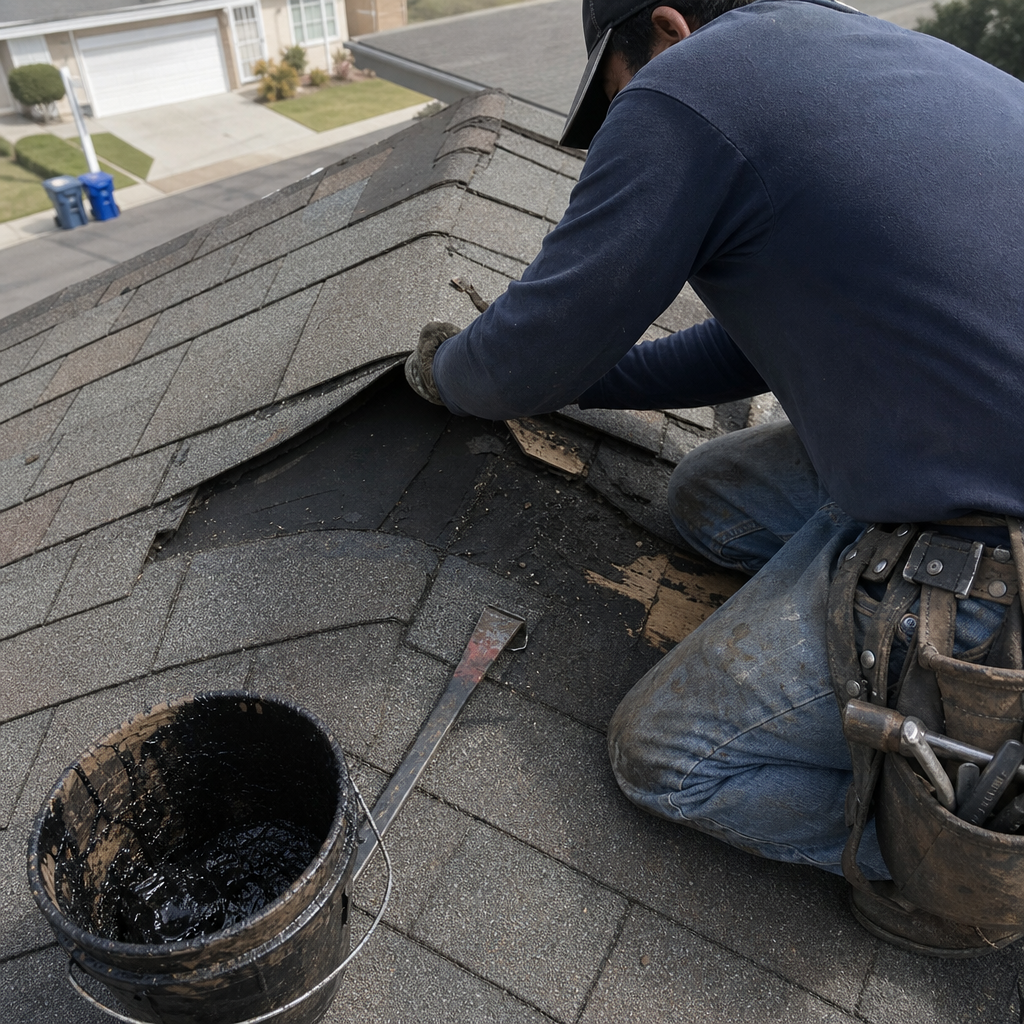
Insurance companies know Phoenix weather patterns, and they know which contractors document thoroughly and which don’t. We provide photo evidence, written damage assessments, and line-item repair scopes that match what adjusters need to see. Our estimates use Xactimate pricing calibrated to Maricopa County labor rates, not national averages that lowball Phoenix costs. We’ve worked with adjusters on hail-damaged tile roofs in Maryvale and wind-lifted foam systems in Alhambra. We don’t inflate claims. We don’t let insurers undervalue them either.
Wind Damage
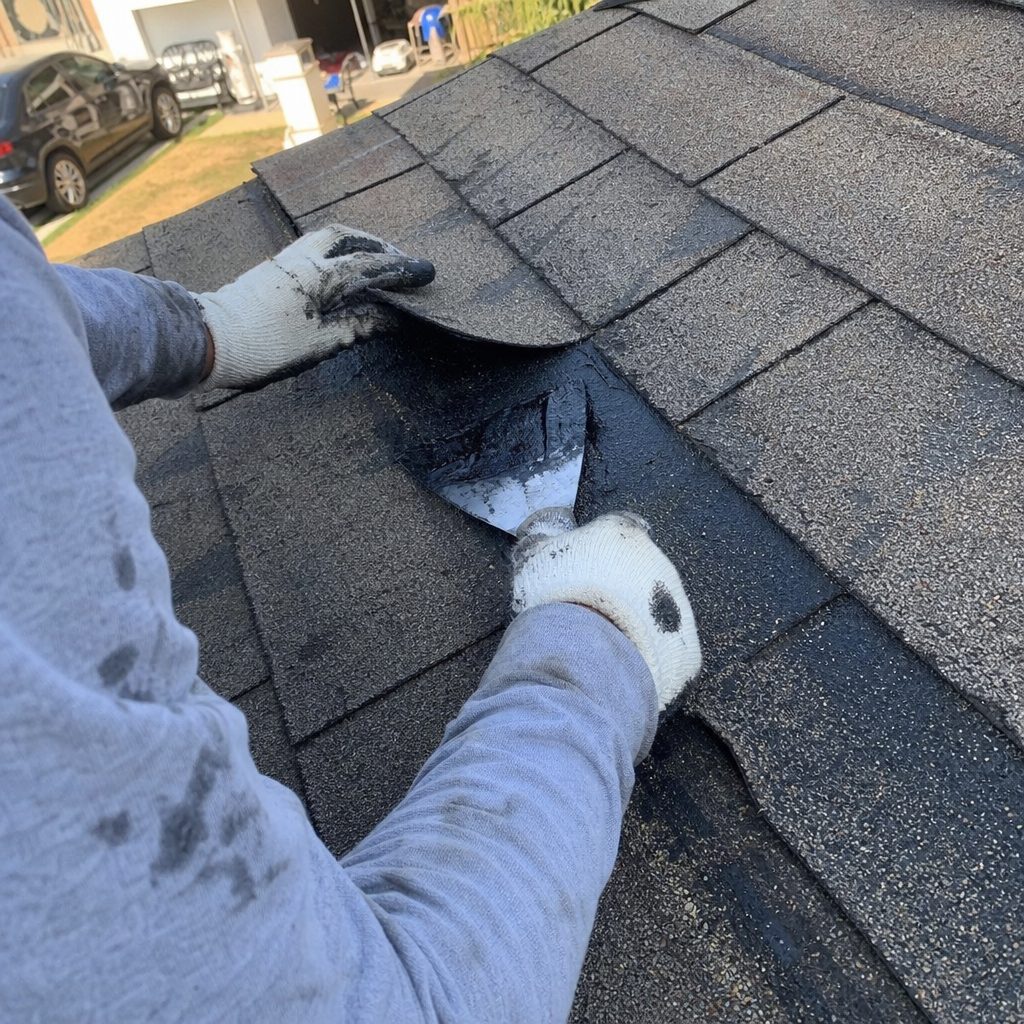
Phoenix wind damage is often invisible from the ground. Microbursts during monsoon season can lift flashing, shift gravel ballast on built-up roofs, and drive rain under edges where parapet flashings have loosened over decades of sun exposure. This leads to hidden leaks in eaves and interior walls that homeowners discover days later as water stains bloom on ceilings. We inspect with lift equipment, not binoculars from the driveway. Upward roof surface degradation from 160°F+ surface temperatures makes asphalt shingles brittle and prone to granule loss that clogs gutters and accelerates water ponding. If your gutters filled with granules after a wind event, your shingles are telling you something.
What happens when you call
- 1
A real person answersNo phone trees - you reach a local pro.
- 2
You get an upfront price rangeHonest numbers before anyone is dispatched.
- 3
A background-checked tech heads outLicensed & insured, dispatched right away.
- 4
You approve before work beginsNothing starts until you say go.
Trusted Brands We Service in Phoenix
We are authorized installers for GAF, CertainTeed, and Owens Corning, and we maintain stock of repair materials for all three brands at our Phoenix warehouse. For flat-roof emergencies, we carry IKO modified bitumen and SPF coating systems. This matters when a monsoon is forecast for tomorrow and your roof is leaking today. We don’t substitute materials without telling you. The brand on your estimate is the brand on your roof. Fast turnaround starts with having the right product on the shelf, not on a truck somewhere between here and Tucson.
Common Emergency & Storm Damage Problems We See in Phoenix Homes
- Thermal shock cracking in aged elastomeric coatings. Phoenix’s UV index is among the highest of any major U.S. city, and sustained ambient temperatures above 160°F on a dark roof surface are routine in July and August. When monsoon rain hits that overheated surface, the rapid contraction cracks coatings that have already chalked from UV degradation. We see this failure mode constantly in Encanto and Coronado, where 1980s foam recoats are reaching end of life.
- Hidden moisture in stacked SPF layers. Spray polyurethane foam re-coating is a routine maintenance service in central Phoenix in a way it is nowhere else in the country. Many original flat-roofed homes in the Garfield, Coronado, and Encanto-area neighborhoods have received multiple foam applications over 40-50 years. An experienced local roofer must probe existing foam layers with a moisture meter before recoating, because trapped water inside degraded foam cannot be sealed over and will eventually blow the new coating off entirely.
- Parapet flashing failure on postwar flat roofs. The 85001-85010 ZIPs cover the postwar core of Phoenix, where the dominant stock is 1950s-1970s ranch homes and mid-century flat-roof construction originally built with gravel-and-tar built-up roofing. Decades of expansion and contraction loosen flashings that were never designed for 110°F+ daily cycles. Storm-driven rain exploits these gaps and runs down interior wall cavities.
- Tile roof damage from hail and wind-borne debris. Tile roofs became the dominant new-construction system by the 1990s and are now common on remodeled or rebuilt homes throughout the central city. Hail larger than 1 inch fractures concrete and clay tiles, and monsoon winds drive tree limbs and debris that crack or dislodge them. The damage is often spotty, which tempts homeowners to patch. We assess whether the underlayment is intact or if water has compromised the decking beneath.
Pricing for Emergency & Storm Damage in Phoenix, AZ
Emergency tarp service in Phoenix typically runs $350-$650, including after-hours deployment and secure fastening to parapet walls or mechanical anchors. Storm damage repair on flat roofs ranges from $800-$2,400 for localized membrane or coating work, and $4,500-$9,000 for full tear-off and replacement of failed built-up or foam systems with multiple saturated layers. Tile roof hail damage repair averages $1,200-$3,800 depending on underlayment condition and tile availability. Insurance claims assistance is included with any repair estimate; we do not charge separately for documentation or adjuster meetings.
What drives cost: accessibility (steep pitches or limited yard access add labor), layer count on flat roofs (each additional layer of old felt, foam, or coating adds removal time), and material grade (standard vs. high-heat-rated products). We quote upfront. The number on the estimate is the number on the invoice. Call (844) 563-1816 for a free, no-pressure assessment.
We Also Serve Cities Near Phoenix
Our emergency crews respond throughout the central valley, including Phoenix neighborhoods and adjacent communities: Encanto, Alhambra, Central City, and Maryvale. Same live-answer phones, same 90-Day Done Right Promise, same local crews who know these streets.
Serving Phoenix, AZ - Our Local Coverage Area
We’re based in the Phoenix area and know this community well. Use the map below to see our service coverage - if you’re nearby, we can almost certainly help.
FAQs - Emergency & Storm Damage in Phoenix
We probe every layer with a moisture meter before deciding on repair scope. If the foam is dry and adherent, we can spot-repair and recoat. If we find trapped moisture, which is common in Phoenix homes with 30-40 years of stacked applications, we strip to the deck and start fresh. Sealing over wet foam guarantees failure within 18 months. Call (844) 563-1816 and we’ll test it properly.
Maybe one more season, maybe not. Gravel-and-tar BUR in Phoenix typically reaches end of life at 20-25 years, and many central Phoenix systems are on their third or fourth layer. The question is whether the underlying layers are dry and whether the parapet flashings are still sealed. We inspect with a moisture meter and provide an honest assessment of repair vs. replacement. Estimates are free.
Ponding beyond 48 hours indicates inadequate slope or blocked drains, and in Phoenix’s heat it accelerates membrane degradation and invites algae growth that further traps moisture. Call us immediately. We clear drains, check slope, and assess whether the ponding caused subsurface saturation. Delay turns a $600 drain fix into a $6,000 deck replacement.
Yes, if the hail was 1 inch or larger and the damage is documented within the timeframe your policy specifies, typically 12 months from the storm date. We photograph every cracked or displaced tile, assess underlayment condition, and provide a written scope that meets adjuster requirements. Most Phoenix-area policies cover hail damage to tile roofs, though some carry cosmetic exclusion riders. We review your policy language with you.
Phoenix requires permits for roof replacements and for repairs exceeding 200 square feet or involving structural decking. Emergency tarping and minor membrane patching typically do not require permits. We handle all permit applications as part of our repair service, and we know the Phoenix Planning and Development Department’s requirements for flat-roof work in historic districts like Garfield and Coronado. Call (844) 563-1816 and we’ll tell you exactly what your job requires.
During a July monsoon, we responded to a 1960s ranch home in the Garfield neighborhood where a delaminated SPF seam had lifted, pouring 2 inches of rain into the attic. We probed the built-up roofing layers with a moisture meter, found trapped water from a previous coating failure, and stripped the entire flat roof down to the deck, then installed a new modified bitumen system. The homeowner’s insurance covered the replacement. She referred us to her neighbor two weeks later.
We’re here when Phoenix storms hit. Live person on the phone, 24 hours a day. Background-checked, uniformed technicians. Photo-documented inspections. Upfront pricing. And the 90-Day Done Right Promise on every job. If it’s not right, we make it right. No paperwork, no arguing.
Call (844) 563-1816 now for a free estimate. Or save the number for when you need it. We’ll be here.
Written by Pete Navarro, Owner at Ridgeline Roofing Co., serving Phoenix since 1984.