
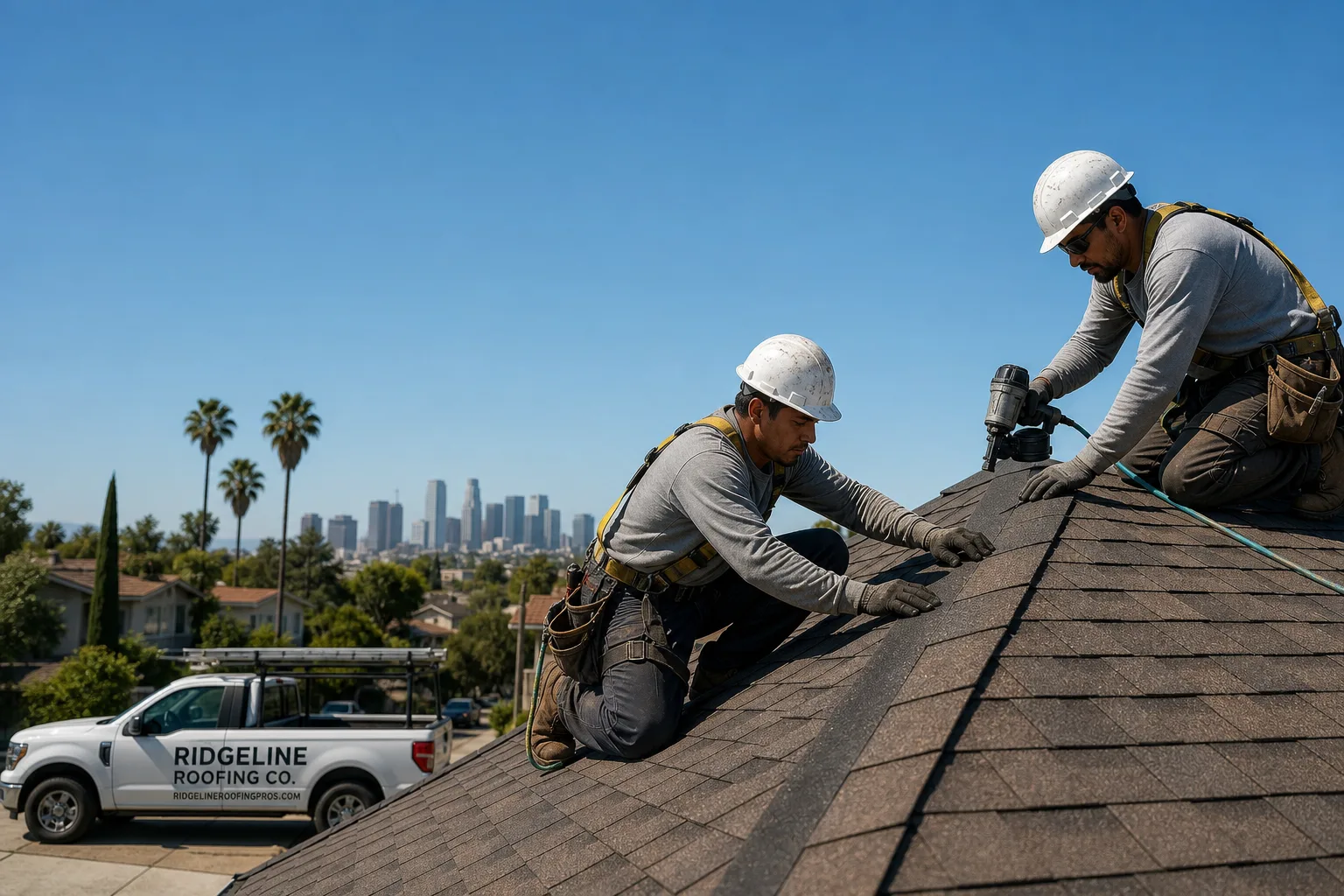
Fast, Reliable Roof Replacement & Installation Across Denver
A full roof replacement in Denver typically costs between $8,500 and $18,000 for most single-family homes, with asphalt shingle jobs on standard pitches landing in the $8,500-$14,500 range and metal or tile systems running $14,000-$28,000 depending on size and decking condition. Most Denver homeowners who call us in the morning have a crew on their roof within 24 to 48 hours during storm season, and we complete the majority of full replacements in one to two days once materials arrive. If you’re seeing bare spots, cracked shingles, or water stains after the last hailstorm, call (844) 563-1816 - a live person answers, even at midnight.
We’ve been climbing Denver roofs since 1984. We know the difference between a Congress Park bungalow with original 1×6 board sheathing and a post-war ranch in Glendale with modern OSB decking. That matters because the job underneath the shingles determines whether your new roof lasts 25 years or starts failing at the ridges in year eight. Our Roof Replacement & Installation team doesn’t guess - we photograph every square foot of decking before we quote, so the price we give is the price you pay.
Why Ridgeline Roofing Co. Is Denver’s Preferred Roof Replacement & Installation Company
Denver homeowners have long memories, and so do we. After 42 years in this business, our reputation in neighborhoods like Baker, Curtis Park, and Washington Park rests on one thing: we show up when we say, we do what we promised, and if something’s not right, we make it right. No paperwork gauntlet, no voicemail black hole, no arguing about whether that lifted ridge cap was our fault.
Our reviews from Denver customers consistently mention the same details - the uniformed technician who actually walked the roof with a camera, the estimate that matched the final invoice, the follow-up call after the first hard rain. We’re not chasing storms out of Texas. We hire local crews, train apprentices into journeymen, and plan to be here when your next roof needs work in 2049.
Response time to Denver is same-day or next-day for inspections during hail season, and emergency tarping happens within hours when a storm has opened your roof to the sky. We keep GAF, CertainTeed, and Owens Corning materials stocked regionally so we’re not waiting three weeks for shingles while your plywood warps.
Local knowledge builds trust in specific ways. We know Denver’s 5,280-foot elevation accelerates UV degradation of asphalt shingles by up to 30% compared to lower-altitude Front Range cities, creating a dual failure mode - storm impact plus UV oxidation - that uniquely drives full roof replacements here. We know the city inspector’s office on Speer Boulevard and what they’ll flag on a tear-off permit. We know which blocks in Capitol Hill still have clay tile from the 1920s that needs matching. That kind of knowledge doesn’t come from a manual.
Our Roof Replacement & Installation Services in Denver
Full Roof Replacement
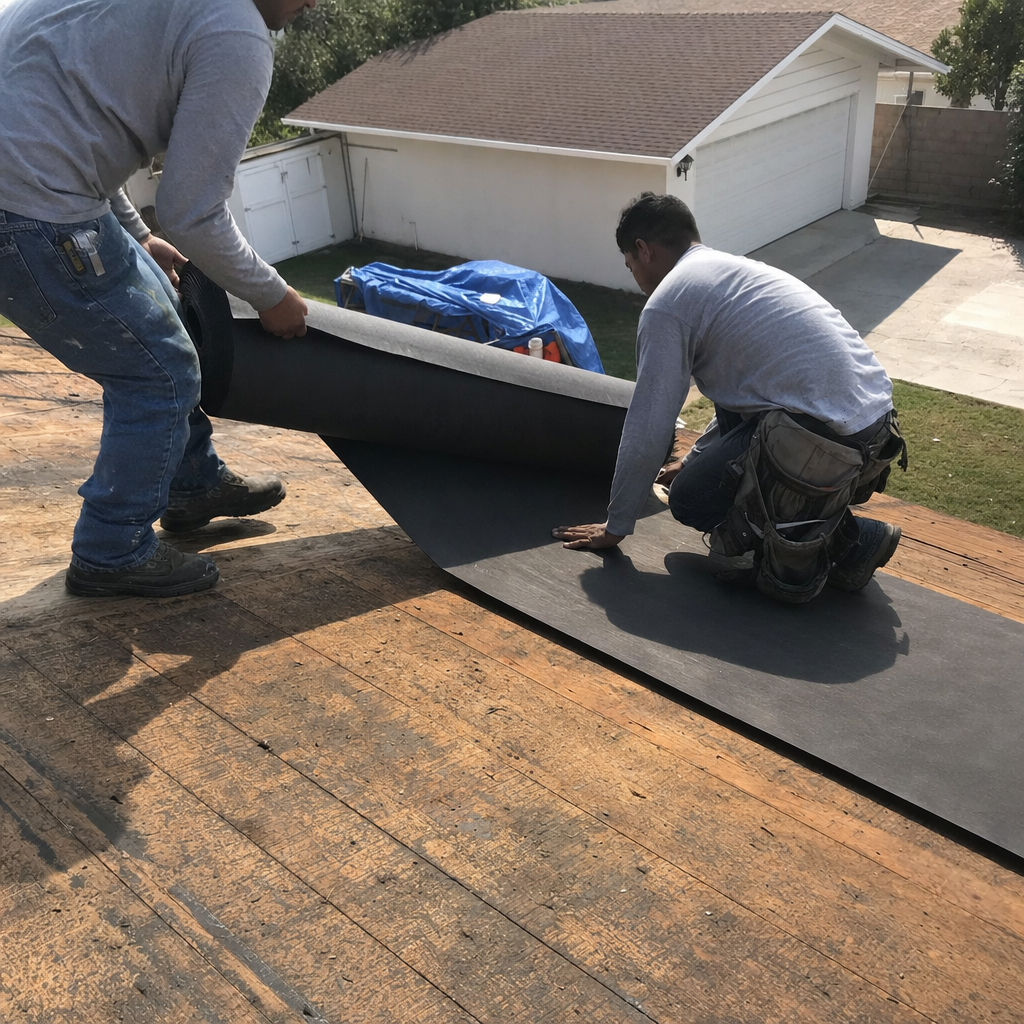
Most full replacements we do in Denver start with hail damage, but the real work is what we find once the old shingles come off. In the older brick bungalows of Baker and Curtis Park, we routinely pull back shingles to find three-plus layers over original 1×6 board sheathing that has gone soft from decades of trapped moisture - a direct legacy of quick post-hail overlay jobs done on the cheap after the major storm years. Jobs that quote as simple re-roofs almost always become full decking replacements once the first layer comes off. We tear off everything to the rafters, replace compromised decking to meet current Denver building code, and install a proper system: synthetic underlayment, ice-and-water shield at valleys and eaves, and shingles rated for the conditions they’ll face.
Asphalt Shingles
Asphalt shingles remain the choice for most Denver homeowners, but not all shingles handle this climate equally. Standard three-tab products often fail prematurely here between hail impacts and UV embrittlement at elevation. We typically recommend Class 4 impact-resistant shingles - Owens Corning Duration STORM, GAF Timberline AS, or CertainTeed NorthGate - which qualify for insurance discounts with most carriers and survive hailstorms that would shred conventional laminates. Last spring, we replaced a hail-damaged roof on a Craftsman bungalow in Capitol Hill; the two layers of outdated asphalt shingles had trapped moisture, rotting the original 1×6 board sheathing. We tore off all layers, installed Owens Corning Duration STORM shingles with Class 4 impact resistance, and replaced decking to meet current code. The homeowner’s insurance adjuster had initially called for a patch. We documented the full damage, got the full replacement approved, and the job was done in two days.
Flat Roofing
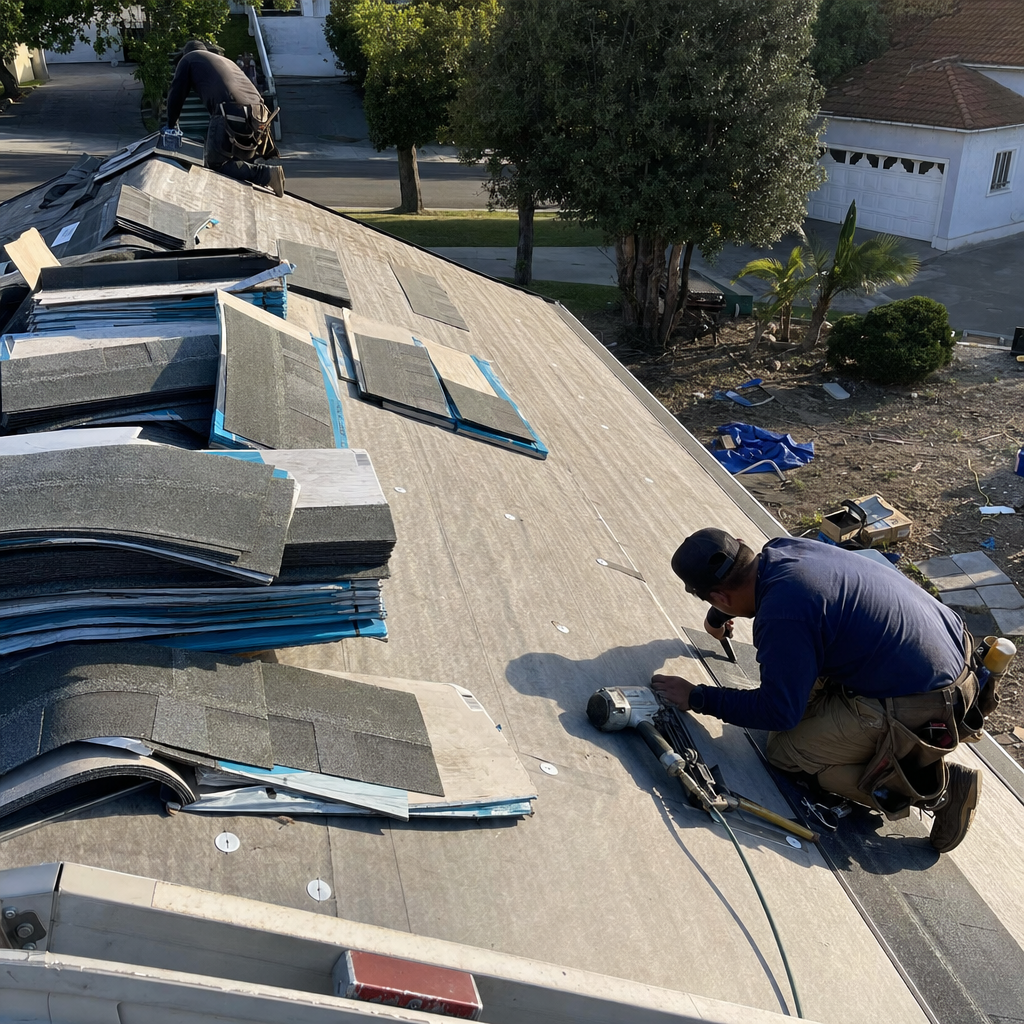
Denver’s commercial buildings, mid-century moderns, and the occasional converted carriage house in LoHi or Five Points need flat or low-slope systems that can handle ponding after heavy snowmelt and the thermal shock of Chinook wind events. We install TPO, modified bitumen, and standing-seam metal flat systems with proper tapered insulation to move water to drains. The key detail most crews miss: Denver’s code requires specific fastening patterns at perimeters and corners where wind uplift concentrates. We don’t miss it. We’ve seen too many flat roofs peeled back by Chinook gusts because someone saved two hours on fastening.
New Construction
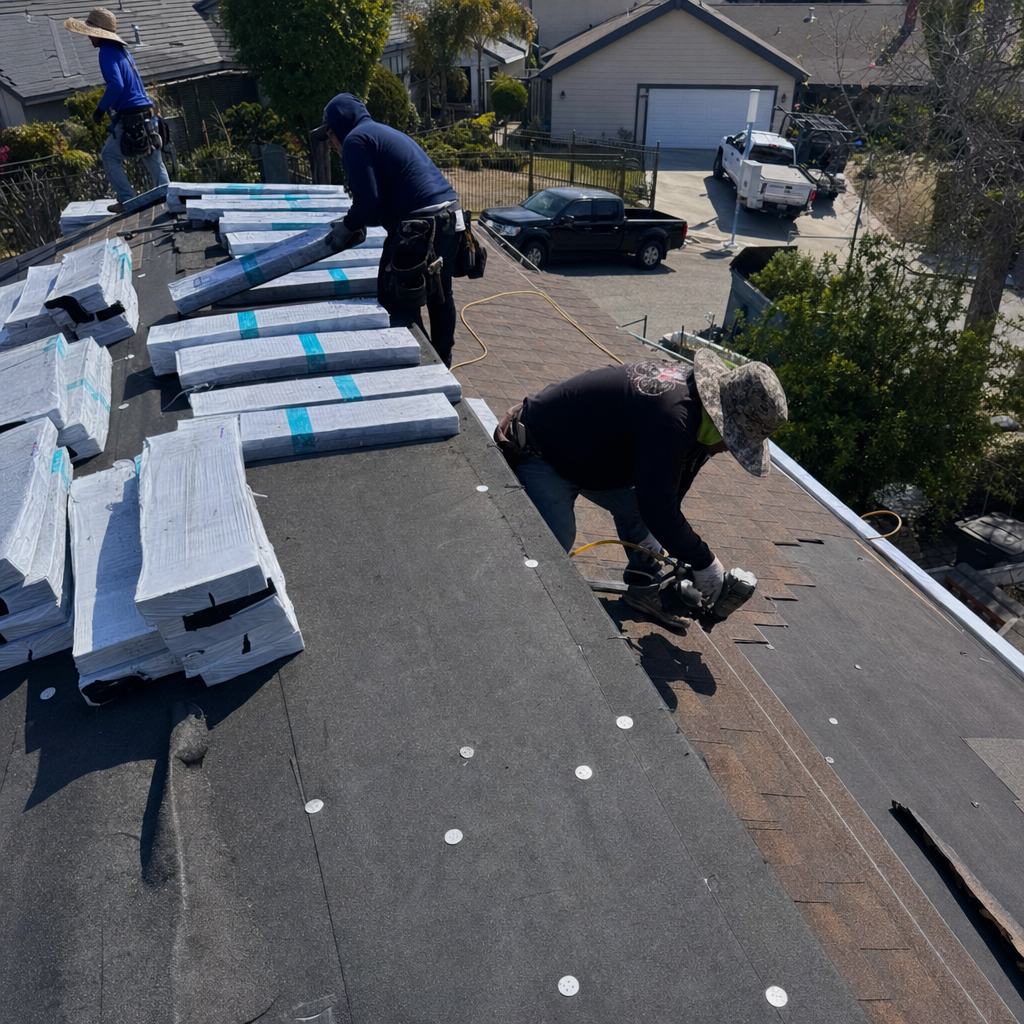
For new builds in Denver’s infill neighborhoods or expanding suburbs, we spec the roof system from the framing up. That means proper ventilation calculations for attic assemblies at 5,280 feet - where thinner air moves heat differently than at sea level - and decking rated for the snow loads Denver’s code requires. We coordinate directly with your builder or architect, pull permits through the Denver Community Planning and Development office, and schedule our crew to keep your framing dry and your project on track.
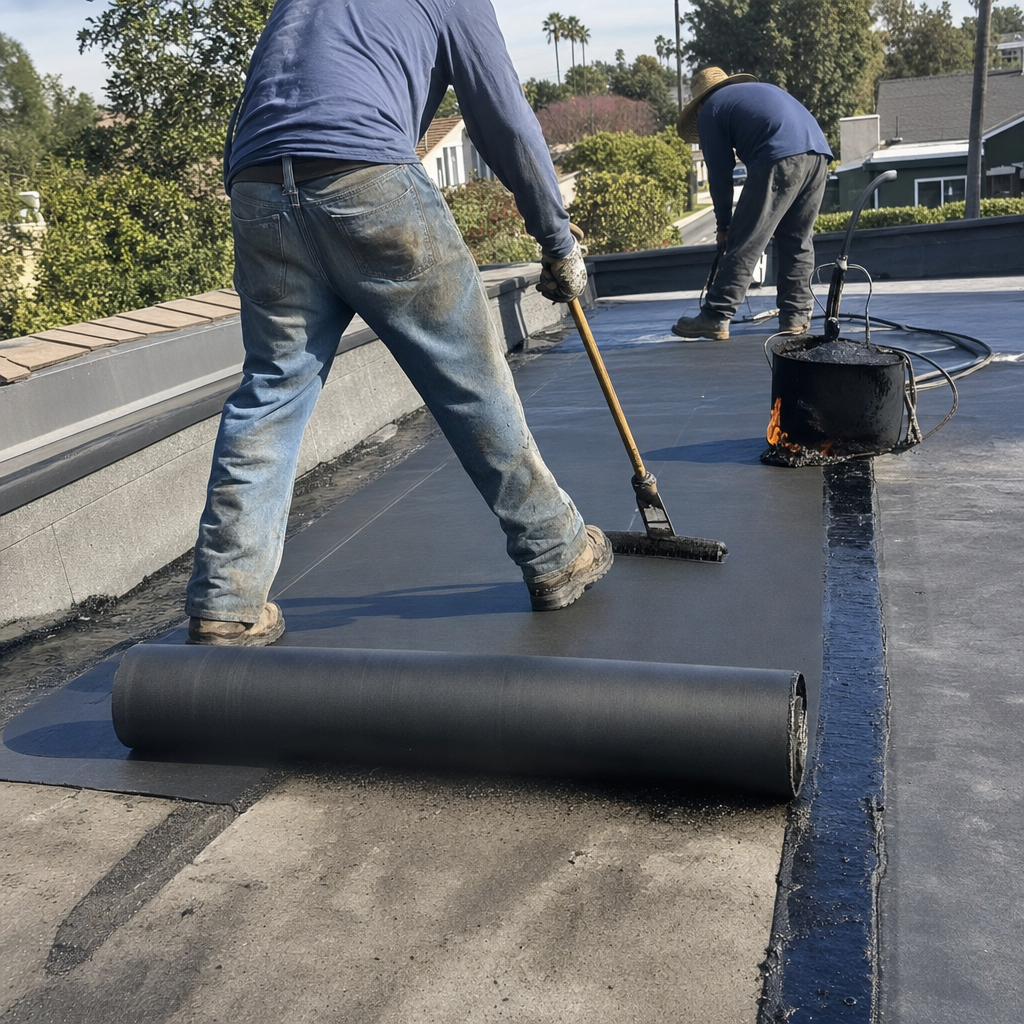
Metal Roofing
Metal roofing costs more upfront but pays back in longevity, especially for Denver homeowners who’ve replaced asphalt twice in twenty years due to hail. Standing-seam steel or aluminum systems laugh off golf-ball hail and don’t degrade under UV the way organic materials do. We install metal over solid decking with proper underlayment and expansion clips that account for the temperature swings this city throws at a roof. Not every house suits metal aesthetically or structurally - we’ll tell you straight if yours doesn’t.
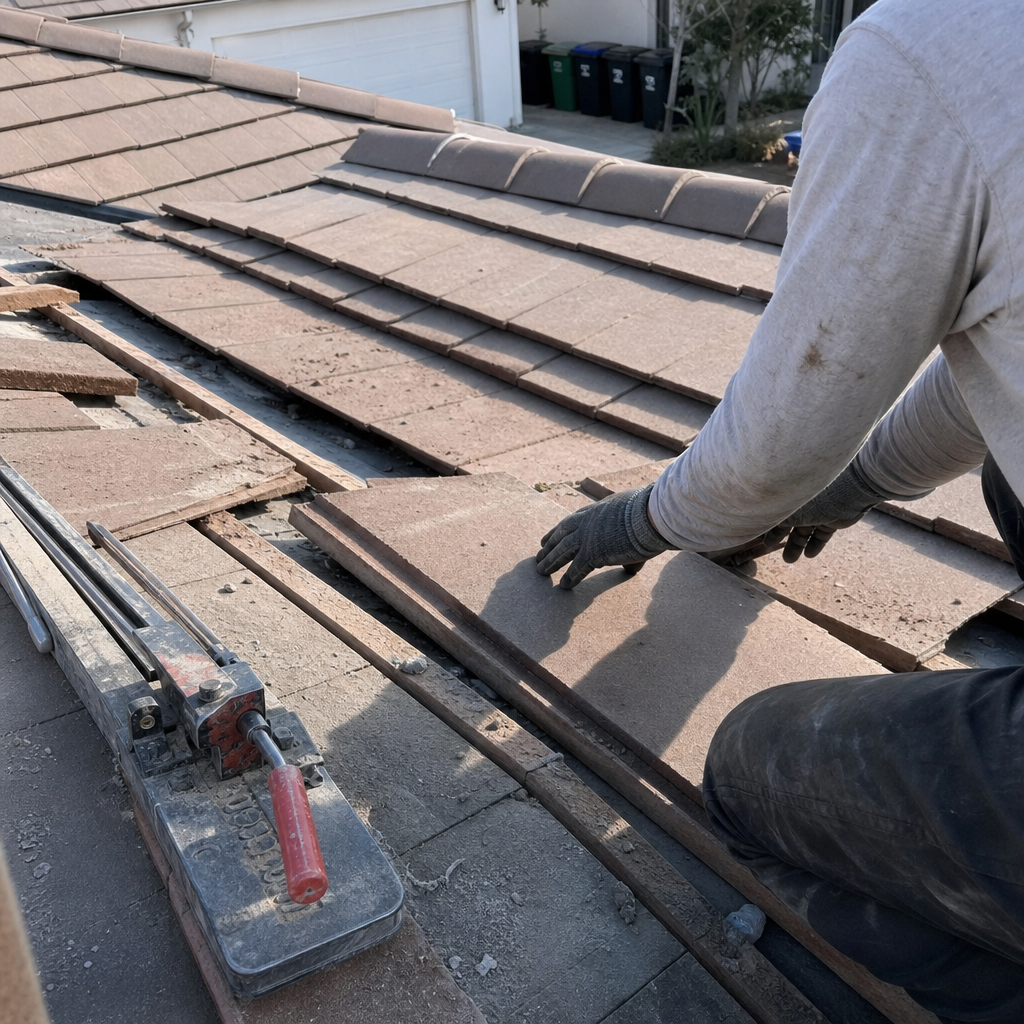
Tile Roofing
Clay and concrete tile roofs appear on Denver’s older Spanish Revival and Mediterranean-influenced homes, particularly in Hilltop, Crestmoor, and pockets of Cherry Creek. Matching existing tile color and profile requires sourcing from specific manufacturers, sometimes with lead times. We maintain relationships with Boral and other tile suppliers to minimize delays, and our crews understand the specialized fastening and underlayment systems tile demands in a freeze-thaw climate.
What happens when you call
- 1
A real person answersNo phone trees - you reach a local pro.
- 2
You get an upfront price rangeHonest numbers before anyone is dispatched.
- 3
A background-checked tech heads outLicensed & insured, dispatched right away.
- 4
You approve before work beginsNothing starts until you say go.
Trusted Brands We Service in Denver
We are authorized installers for GAF, CertainTeed, Owens Corning, IKO, Atlas, Tamko, and Boral - seven manufacturer lines, not whatever’s cheapest at the supply house this week. For Denver’s climate, we most often specify GAF Timberline HDZ or AS impact-rated shingles, Owens Corning Duration STORM with SureNail technology, and Atlas StormMaster Slate when homeowners want the look of natural slate with synthetic resilience. We stock common colors and accessories regionally, so most Denver jobs aren’t waiting on a truck from Kansas City. When a hailstorm drops on Washington Park and half the block needs new roofs simultaneously, that supply chain relationship means our customers get scheduled while the storm-chasers are still cold-calling from motel rooms.
Common Roof Replacement & Installation Problems We See in Denver Homes
- Hail impact shatters asphalt shingles, exposing underlayment and causing leaks within weeks. Denver’s position in “hail alley” means central neighborhoods like Capitol Hill, Congress Park, and Washington Park get hit repeatedly. We inspect hundreds of these roofs each spring; the damage is often invisible from the ground but obvious once you’re on the deck.
- UV oxidation at 5,280 ft embrittles shingles, leading to granule loss and cracking before storm season. The same elevation that makes Denver’s air crisp cooks the asphalt binder out of standard shingles years faster than in Pueblo or Fort Collins. We see 12-year-old roofs that look 20, with granules filling gutters and bare mat showing at ridges.
- Chinook wind events stress ridge caps and flashing, causing lifting and sealant failure that accelerates leaks. Those rapid 40-50°F temperature swings aren’t just uncomfortable - they flex roofing materials through aggressive expansion-contraction cycles. Ridge caps pop. Sealant beads crack. Flashing pulls away from chimneys. We check these details on every inspection because they’re the first failure point.
- Multiple overlay layers on vintage homes trap moisture and hide rotted decking. Denver’s building code now prohibits more than two roofing layers, but many pre-war homes in 80211 and 80212 carry the archaeological record of three or four past storms. Full tear-off is the only honest approach, and it’s what we quote.
Pricing for Roof Replacement & Installation in Denver, CO
Here’s what Denver homeowners can expect in 2024, based on actual jobs we’ve completed in ZIP codes 80211, 80212, 80214, and 80215:
| Service | Typical Range |
|---|---|
| Asphalt shingle replacement, standard pitch, full tear-off | $8,500 - $14,500 |
| Asphalt shingle replacement with decking replacement | $11,000 - $18,000 |
| Class 4 impact-resistant asphalt shingle upgrade | $12,500 - $19,500 |
| Standing-seam metal roof | $18,000 - $28,000 |
| Flat/low-slope TPO or modified bitumen | $10,000 - $17,000 |
| Tile roof (clay or concrete) | $22,000 - $35,000+ |
| Emergency tarping and temporary weatherproofing | $350 - $850 |
What moves you within these ranges: roof square footage, pitch steepness (steeper = more labor), whether decking needs replacement, accessibility for material delivery, and whether you choose standard or impact-rated shingles. We don’t bait-and-switch. The number on our written estimate is the number on your invoice. We also honor a permanent 5% Senior and Veteran discount, and we offer $50 off any repair over $250. Call (844) 563-1816 for a free, no-obligation inspection and exact quote.
We Also Serve Cities Near Denver
Our crews work throughout the metro, including Denver proper and the surrounding communities of Lakewood, Wheat Ridge, Commerce City, and Englewood. Same standards, same live-answer phones, same written 90-Day Done Right Promise whether you’re off Colfax in the city center or out near the foothills.
Serving Denver, CO - Our Local Coverage Area
We’re based in the Denver area and know this community well. Use the map below to see our service coverage - if you’re nearby, we can almost certainly help.
FAQs - Roof Replacement & Installation in Denver
You should schedule an inspection within 48 to 72 hours of any hailstorm that drops stones larger than a quarter. Waiting longer than two weeks risks water infiltration through cracked shingles that may not leak immediately but will once the next storm hits, and insurance claims become harder to justify if damage isn’t documented promptly. Call (844) 563-1816 - we’ll photograph everything from the roof and help you file if replacement is warranted.
Yes, Denver requires roofing materials and fastening patterns to meet ASCE 7 wind load standards for the metro area, generally 90 mph for residential construction with higher requirements in exposed locations. We pull all permits through Denver Community Planning and Development and specify materials rated accordingly; our crews are trained on the enhanced nailing patterns and starter strip requirements that code inspectors verify. You don’t need to navigate this - we handle permit, inspection scheduling, and code compliance as part of every job.
Metal roofing is worth considering if you plan to stay in your home 20-plus years and have already replaced asphalt once or twice due to hail. Standing-seam steel or aluminum won’t crack under impact the way asphalt does, and it doesn’t suffer UV degradation at Denver’s elevation. The upfront cost runs 50-100% higher than premium asphalt, but lifecycle cost often favors metal. We won’t upsell you if your structure, neighborhood aesthetics, or budget don’t suit it - we’ll walk you through the numbers honestly.
A full tear-off removes all existing roofing layers down to the original decking, allowing inspection and replacement of compromised wood before new materials go on. On older Denver homes, especially in Baker, Curtis Park, and Capitol Hill, we regularly find three or four layers of past overlays hiding moisture-damaged 1×6 board sheathing that won’t support a new roof or meet current code. Starting fresh with solid decking is the only way to get a manufacturer’s full warranty and a roof that won’t fail prematurely at the fasteners.
Denver’s 5,280-foot elevation exposes asphalt shingles to roughly 25-30% more UV radiation than the same products receive at lower altitudes, accelerating the oxidation of asphalt binders and causing earlier granule loss, surface cracking, and brittleness. This means a 25-year shingle in Denver often performs like an 18-year shingle in Kansas City. We account for this by recommending UV-stabilized products, proper attic ventilation to reduce thermal cycling, and in some cases reflective or lighter-colored shingles that absorb less solar energy.
Written by Pete Navarro, Owner at Ridgeline Roofing Co., serving Denver since 1984.