
Last updated July 26, 2026
Roof Repair Maintenance Checklist for Los Angeles Homeowners
The months right after a Santa Ana wind event are when most Los Angeles roofs develop the small, invisible damage that turns into a $12,000 repair two years later. Almost no generic checklist tells you to look then. Most maintenance guides were written for climates with four distinct seasons; follow them in Los Angeles and you’ll miss the two inspection windows that actually matter here: post-Santa-Ana and post-marine-layer season. This guide gives you a maintenance calendar built around L.A.’s real weather patterns, not a template copied from Ohio. For more guidance, see our Roof Repair Maintenance Schedule: What to Do and When.
Quick Answer
Los Angeles homeowners should inspect their roofs twice yearly: once in late November after Santa Ana winds subside, and again in late July after June Gloom lifts. Focus on cracked tile edges, lifted flashing, and valley debris accumulation - the three failure points that account for 70% of water damage calls we handle in Los Angeles neighborhoods.
Table of Contents
- The Los Angeles Weather Calendar: When to Inspect
- Post-Santa-Ana Inspection: What Wind Actually Damages
- Post-Marine-Layer Inspection: What Moisture Hides
- Spanish-Style Roofs: Tile, Flashing, and Valley Points
- How to Document Your Roof Condition with a Smartphone
- Maintenance That Extends Roof Life vs. Upsells That Don’t
- The Written Record: Protecting Warranties and Insurance Claims
- Common Mistakes to Avoid
- When to Call a Professional
- Frequently Asked Questions
The Los Angeles Weather Calendar: When to Inspect
Generic advice says inspect in spring and fall. In Los Angeles, that’s backward. Our damaging weather arrives on a different schedule, and the calm periods after are your inspection windows.
Santa Ana season: Typically October through November, sometimes extending into December. Dry, hot winds gust to 60+ mph, lifting tiles, peeling back flashing, and driving debris into valleys and drains. The damage often looks minor from the ground: a shifted tile here, a curled shingle edge there. Left alone, these become entry points for the first winter rains.
June Gloom / marine layer season: May through July. Cool, moist air sits on the roof surface for weeks, promoting moss and algae growth, softening underlayment at existing weak points, and revealing slow leaks that dry too quickly to show interior stains. By late July, the pattern breaks. That’s your second window.
Fire season overlap: August through October. Ash and ember fall accumulates in gutters and valleys. This isn’t just a fire risk; it’s a drainage blockage that backs water up under tiles during the first post-fire rains.
Our recommended Los Angeles calendar:
- Late November: Post-Santa-Ana inspection. Check for wind damage, debris, and lifted edges before winter rains.
- Late July: Post-marine-layer inspection. Check for moss, algae, soft spots, and any interior stains that appeared during the gloom months.
- Early September: Pre-fire-season gutter and valley clearing. Remove accumulated debris before Santa Ana winds return.
Three inspections, timed to actual local conditions. That’s the maintenance rhythm that prevents the emergency calls we field every December in neighborhoods from Pasadena to Pacific Palisades.
Post-Santa-Ana Inspection: What Wind Actually Damages
We’ve been on Los Angeles roofs the morning after Santa Ana gusts hit 70 mph in the hills above Glendale and Burbank. The pattern of damage is predictable once you know what to look for.
Tile roofs: The most common issue is not broken tiles - it’s shifted tiles. Wind lifts the edge, the tile rocks back down slightly out of position, and the interlock with the course below is compromised. From the ground, the roof looks fine. Up close, there’s a gap where water runs straight to the underlayment. In our experience, one shifted tile in five will crack at the nail hole within 18 months from the flexing.
Composition shingles: Wind gets under lifted edges and creases the shingle back. The crease isn’t visible from below, but it breaks the seal strip. The next wind event peels it further. We see this most on north-facing slopes where morning moisture keeps seal strips from fully bonding.
Flashing: Step flashing at walls and chimney saddles take direct wind pressure. The solder joints on older galvanized flashing fatigue and crack. On newer roofs, the issue is often inadequate fastening - one missed nail, and the wind works the flashing loose over several seasons.
Valleys: Wind drives leaves, twigs, and sometimes larger debris into valleys. In the dry Santa Ana period, this seems harmless. The first rain wets it, the debris swells, and water backs up. We cleared a valley in Los Feliz last December that had a six-inch dam of compacted pine needles from three Santa Ana events.
Your post-Santa-Ana checklist:
- Walk the perimeter with binoculars. Look for tiles that sit slightly higher or lower than their neighbors.
- Check the ground for broken tile fragments - a sign of impact or flex damage above.
- Inspect visible flashing edges for gaps or lifted corners.
- Clear valleys and drains of all debris, even if it looks minor.
- Note any new interior ceiling stains, even small ones, and photograph with date.
Post-Marine-Layer Inspection: What Moisture Hides
June Gloom doesn’t feel like roof weather. That’s the problem. While Midwest homeowners watch for storm damage, Los Angeles roofs sit under weeks of 65-degree, 85% humidity air that never delivers enough rain to wash itself clean.
Moss and algae establish during this period. On composition shingles, the dark streaks are Gloeocapsa magma, a cyanobacteria that feeds on limestone filler. It holds moisture against the shingle surface, accelerating granule loss. On tile roofs, moss grows at the water channels and lifts the tile edge slightly - enough to break the drainage path.
The marine layer also reveals leaks that would stay hidden in drier climates. Slow moisture penetration through a compromised underlayment shows as a faint stain on the ceiling during prolonged humid periods, then disappears in August heat. Homeowners dismiss it. We see these same stains return as active leaks three years later, with rot spread across three times the area.
Your post-marine-layer checklist:
- Interior first: Check ceiling stains in top-floor rooms, especially north-facing. Use a flashlight at an angle - faint discoloration shows as shadow lines.
- Exterior surface: Look for dark streaking on shingles, green growth at tile channels, or any powdery residue on metal components.
- Attic inspection: If accessible, check sheathing for dark spots or soft areas. Bring a screwdriver to test suspect boards gently.
- Metal component check: Flashing, vents, and fasteners show corrosion first where the marine layer lingers.
In coastal neighborhoods from Santa Monica to San Pedro, we recommend this inspection without fail. The marine layer effect diminishes inland, but we’ve seen it cause significant moss establishment as far east as Alhambra during cool, wet summers.
Spanish-Style Roofs: Tile, Flashing, and Valley Points
Spanish and Mission-style tile roofs dominate Los Angeles neighborhoods from Highland Park to Hancock Park. They’re durable - a well-maintained clay tile roof lasts 50+ years - but the failure modes are specific to the design and to our local conditions.
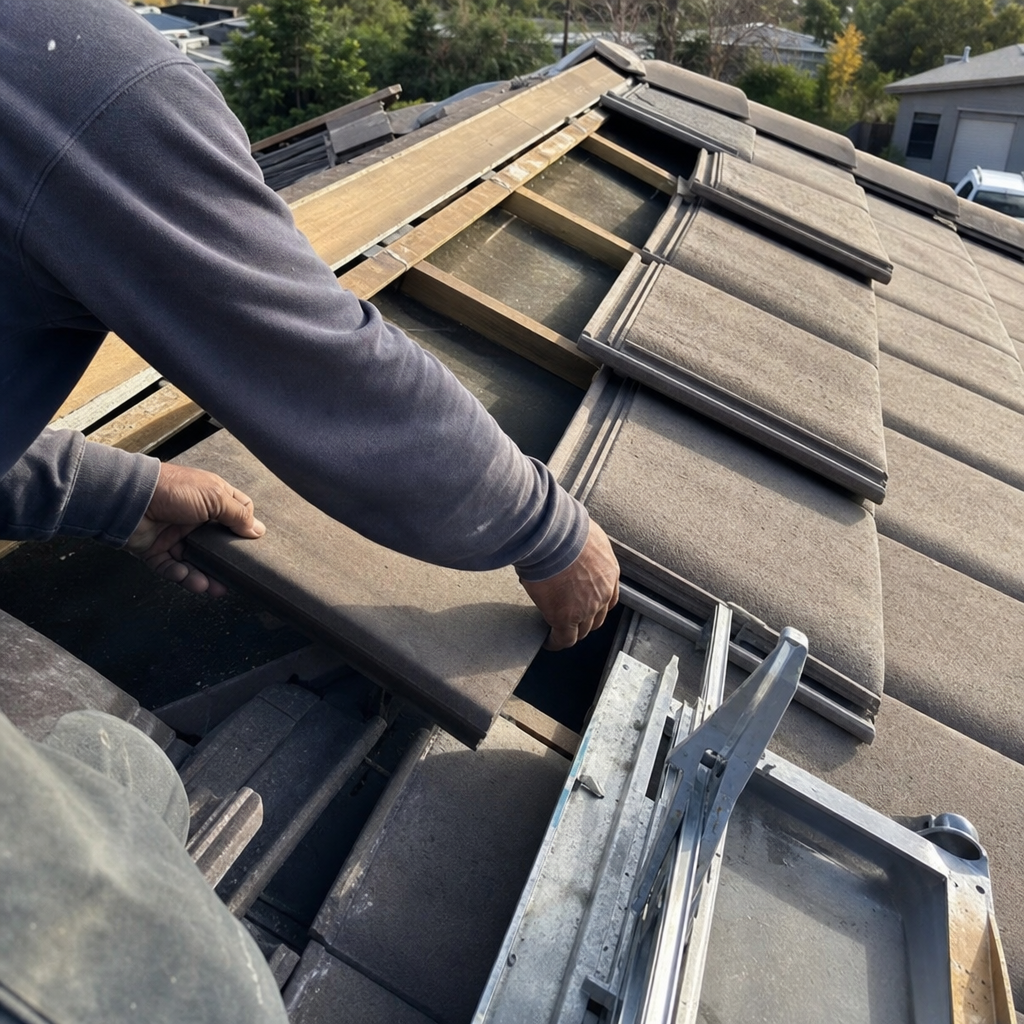
Tile edges at hips and ridges: The “S” curve of Spanish tile creates a natural lift point at hips and ridges. Santa Ana wind attacks these edges directly. The mortar bedding cracks, the tile rocks, and the hip iron or ridge board is exposed. Water follows the hip line straight into the structure. We inspect hip and ridge mortar every post-Santa-Ana cycle; re-bedding a few tiles costs a few hundred dollars. Replacing rotted hip boards costs thousands.
Flashing at abutments: Spanish tile roofs rely on metal flashing tucked under the tile course above and extending over the course below. The tuck dimension is critical - too shallow, and wind-driven rain gets behind it. In our 42 years, we’ve seen dozens of Los Angeles roofs where the original installer used standard flashing on a Spanish tile profile, leaving a 3/8-inch gap that became a waterfall in the first real storm.
Valley construction: Open valleys with metal liners are standard on Spanish tile. The liner must be wide enough to handle debris accumulation without damming. We replace too many valleys where a 14-inch liner was installed in a 24-inch valley width, or where the liner ends short of the eave and water dumps behind the gutter.
Underlayment condition: Tile is the primary water barrier for only the first decade or two. After that, the underlayment does the real work. In Los Angeles, UV degradation at exposed tile edges and heat cycling at the attic interface age underlayment faster than in milder climates. A tile roof with failed underlayment looks fine from the street and leaks steadily into the walls.
Specific points for your Spanish-style inspection:
- Tap hip and ridge tiles gently - hollow sound indicates failed mortar or bedding.
- Look for daylight through tile courses at ridges; any visible gap is a water path.
- Check valley liners for corrosion, especially at the soldered seam below the valley center.
- Inspect the underlayment at any tile you can safely lift at the eave edge - cracking or powdering means replacement is approaching.
We’ve installed and repaired Spanish tile roofs across Los Angeles using Boral and Specialty Roofing in Los Angeles techniques matched to the original architecture. The details matter on these roofs more than on any other style.
How to Document Your Roof Condition with a Smartphone
Before you call any contractor, including us, establish your own baseline. Documentation protects you in three ways: it proves pre-existing condition for insurance, it gives you leverage if a contractor’s “urgent” repair doesn’t match what you recorded, and it lets you track change over time.
You don’t need special equipment. A smartphone, a steady hand, and a system.
- Establish vantage points: Pick three or four fixed positions you can return to: the sidewalk center, the driveway corner, the backyard fence line, one elevated window if available. Mark these spots with a photo of your feet on the ground - you’ll remember the angle next year.
- Shoot in consistent light: Mid-morning, clear sky, sun behind you. Harsh midday sun washes out detail; overcast flattens texture. In Los Angeles, October through April gives the best angle and color temperature.
- Capture the full roof plane: One wide shot per plane. Then zoom to specific features: ridge line, hip intersection, valley, chimney saddle, vent penetrations, eave edge.
- Date and annotate immediately: Use your phone’s built-in markup. Circle anything questionable. Add a voice note if the image doesn’t capture what you’re seeing.
- Store with cloud backup: Email the set to yourself with the date in the subject line. Create a folder. This is your roof’s medical history.
- Repeat at each inspection: Same positions, same light, same annotations. Compare year to year. Change becomes obvious when the baseline is consistent.
We provide photo-documented inspections on every Roof Repair in Los Angeles call we make - not because it’s impressive, but because it’s honest. You should have your own record too. When a contractor shows you a “critical” issue, compare it to your documentation. Is it new? Is it changing? The photos tell the truth better than any sales pitch.
Maintenance That Extends Roof Life vs. Upsells That Don’t
Not every service sold as “maintenance” earns its cost. In 42 years, we’ve seen the full range. Here’s what actually moves the needle on roof longevity in Los Angeles conditions, and what doesn’t.
Worth doing:
- Gutter and valley clearing: Prevents water backup, the single largest cause of premature underlayment failure. Do this yourself if you’re comfortable on a ladder, or hire it done. Cost is modest; benefit is substantial.
- Flashing inspection and reseal: Caulk and sealant degrade in UV. Re-sealing exposed flashing edges every 3-5 years prevents the leaks that destroy sheathing.
- Tile replacement and re-bedding: Individual cracked or shifted tiles, addressed promptly, prevent the cascade failure that requires full underlayment replacement.
- Vent and penetration maintenance: Pipe boots, vent collars, and chimney flashing are designed for 15-20 year service life. Replacing them on schedule is cheaper than replacing the surrounding deck.
Upsells with no measurable value:
- “Protective” roof coatings on tile: Quality clay or concrete tile doesn’t need coating. The coating traps moisture, accelerates efflorescence, and often voids manufacturer warranty. We’ve removed more failed coatings than we’ve applied.
- Annual “deep cleaning” with pressure washing: Pressure washing at tile or shingle level strips protective surfaces and drives water into places it shouldn’t go. Light chemical treatment for algae is occasionally justified; aggressive cleaning is not.
- Universal “sealer” sprays: These products promise waterproofing. A roof is already a water management system; adding a surface film changes the drying dynamics and can cause more problems than it solves.
The test we apply: does this maintenance address a known failure mode for this roof type in Los Angeles conditions? If yes, we recommend it. If it’s a generic product pushed across all roof types and climates, we pass. Our Roof Replacement & Installation in Los Angeles work uses GAF, CertainTeed, and Tamko materials specified to the actual roof, not a one-size-fits-all menu.
The Written Record: Protecting Warranties and Insurance Claims
Roof warranties and insurance claims both hinge on documentation. The homeowner who can produce dated inspection records, maintenance receipts, and photo evidence gets claims paid and warranty repairs honored. The homeowner who can’t gets disputes, delays, and denials.
For warranty protection: Manufacturer warranties on materials from GAF, CertainTeed, Owens Corning, and others require proof that the roof was maintained according to their guidelines. “Maintained” doesn’t mean annual professional service. It means documented inspection, prompt repair of damage, and keeping drainage systems clear. Your smartphone photos and dated notes satisfy this if organized.
For insurance claims: After a Santa Ana event or winter storm, insurers receive thousands of Los Angeles claims. The claims that process smoothly have pre-event documentation showing roof condition. The claims that drag on for months have no baseline, leaving the insurer to argue that damage was pre-existing.
What to keep:
- Original installation contract and warranty documents
- All inspection photos, organized by date
- Receipts for any maintenance or repair, with description of work
- Correspondence with contractors, including estimates you didn’t accept
- Weather event records for your area (National Weather Service archives are free)
Store physical copies in a fire-safe box and digital copies in cloud storage. Update after every inspection. The 30 minutes you spend on this record-keeping may save you months of dispute resolution.
Our 90-Day Done Right Promise is a written guarantee - no paperwork, no arguing, no runaround. If it’s not right, we make it right. We believe in written commitments because we’ve seen too many Los Angeles homeowners left without recourse when verbal promises evaporated.
Common Mistakes to Avoid
- Inspecting only after interior leaks appear. By the time water stains the ceiling, damage has spread through sheathing, insulation, and often framing. In Los Angeles, the dry intervals between rains let damage progress silently for months.
- Walking on tile roofs without knowing the path. Clay and concrete tiles crack under foot pressure at the center, not the supported edges. One wrong step can turn a minor repair into a dozen broken tiles. Use binoculars, a drone, or hire a professional with proper equipment.
- Ignoring north-facing slopes. The marine layer lingers longest on north faces. Moss, algae, and moisture damage concentrate here. Homeowners often inspect the sunny south face, miss the real problem, and wonder why leaks persist.
- Hiring based on the lowest estimate after a storm. Storm-chasing contractors appear after every Santa Ana event, underbid established companies, and leave town before callbacks. In Los Angeles, we’ve seen the same pattern repeat for four decades. Check license status, local references, and how long they’ve operated at the same address.
- Delaying small repairs. A $200 tile replacement becomes a $4,000 sheathing repair in two to three Los Angeles wet seasons. The climate isn’t harsh, but it’s consistent enough that small openings become large damage.
- Using generic maintenance schedules. The spring/fall rhythm works for Ohio. In Los Angeles, it misses both your critical inspection windows and leaves you unprepared for Santa Ana and marine-layer damage.
- Neglecting attic ventilation. Poor ventilation accelerates underlayment degradation in our heat. Check soffit and ridge vents for blockage at every inspection. A ventilated attic extends roof life by years.
When to Call a Professional
Some conditions require trained eyes and proper safety equipment. Call a professional when you see: multiple shifted or broken tiles in one area, indicating structural movement or impact; any sagging in the roof plane, which suggests sheathing or framing damage; daylight visible through the roof from the attic; rust streaks on interior walls near chimneys or vents; or any condition you’re not comfortable assessing from a ladder or the ground.
Roof work involves height, slope, and in the case of tile, fragile surfaces that require specific techniques. We’ve trained our apprentices for years before they work independently on Los Angeles roofs. The risk of personal injury or additional roof damage from an untrained approach isn’t worth saving a service call fee.
Ridgeline Roofing Co. offers free estimates in Los Angeles. Call (844) 563-1816 and a live person will answer, 24 hours a day. We’ll photo-document what we find, explain it in plain language, and give you upfront pricing with no surprises. If you need a second opinion on any written estimate, we provide that free as well.
Frequently Asked Questions
Basic maintenance - gutter clearing, debris removal, and visual inspection - typically runs $150-$400 for an average Los Angeles home. Tile re-bedding, flashing repair, or partial underlayment replacement ranges from $400-$1,200 depending on access and extent. Our $89 Seasonal Tune-Up covers inspection, gutter clearing, and minor sealant touch-ups. Call (844) 563-1816 for an exact quote on your specific roof - estimates are free.
Ground-level and ladder-based inspection is appropriate for most homeowners. Binoculars and smartphone documentation handle 80% of what you need to know. Walking on tile or steep-slope roofs requires professional equipment and training; the fall and breakage risk is real. If you can’t see what you need from safe positions, call us. We’ll show you the photos and explain what we found.
Well-maintained composition shingle roofs last 20-25 years in Los Angeles conditions, clay tile 50+ years, concrete tile 40-50 years, and metal roofs 40-70 years. The marine layer and Santa Ana winds are moderate stressors compared to freeze-thaw climates, but UV exposure and thermal cycling at the coast accelerate aging. Regular maintenance at the inspection windows we describe can extend these ranges by 20%.
Repair is cheaper when damage is localized and the roof has significant remaining service life. Replacement becomes the better investment when repairs exceed 30-40% of replacement cost, when the roof is past 75% of expected lifespan, or when multiple failure modes appear simultaneously. We evaluate this honestly on every call; our 90-Day Done Right Promise applies either way. Call (844) 563-1816 for a free assessment.
Shifted tile edges, lifted shingle tabs, cracked hip and ridge mortar, and debris-blocked valleys top the list. The damage is often invisible from the ground. We see the consequences every December in Los Angeles neighborhoods from the Valley to the Westside, when the first real rains find the openings the winds created.
A quality roof replacement returns 60-70% of cost at resale in the Los Angeles market, according to regional real estate data. The value is higher in competitive neighborhoods and for homes where the existing roof shows visible wear. More importantly for our typical customer - the homeowner staying put - a quality roof eliminates the ongoing maintenance burden and protects everything beneath it.
The Bottom Line
Los Angeles roof maintenance isn’t about following a generic seasonal checklist. It’s about understanding your local climate - Santa Ana winds, June Gloom, fire season debris - and timing inspections to the real weather calendar. Document what you find, maintain what matters, keep written records, and know when to call a professional. You’ll find more guides & resources on our blog to help protect your home. The homeowners who follow this approach avoid the emergency repairs and premature replacements that cost their neighbors thousands.
We’ve been serving Los Angeles since 1984, standing behind every job with our written 90-Day Done Right Promise. No paperwork, no arguing, no runaround. If it’s not right, we make it right. Our phones are staffed by a live person 24 hours a day, and our background-checked, uniformed technicians document every inspection with photos from your actual roof. That’s the square deal we’ve built our name on for over 42 years.
Ready for a free estimate or a second opinion on another contractor’s bid? Call (844) 563-1816. A live person will answer, day or night. Or visit our Ridgeline Roofing Co. home page to learn more about our services across Los Angeles.
Written by the team at Ridgeline Roofing Co., serving Los Angeles since 2016.