
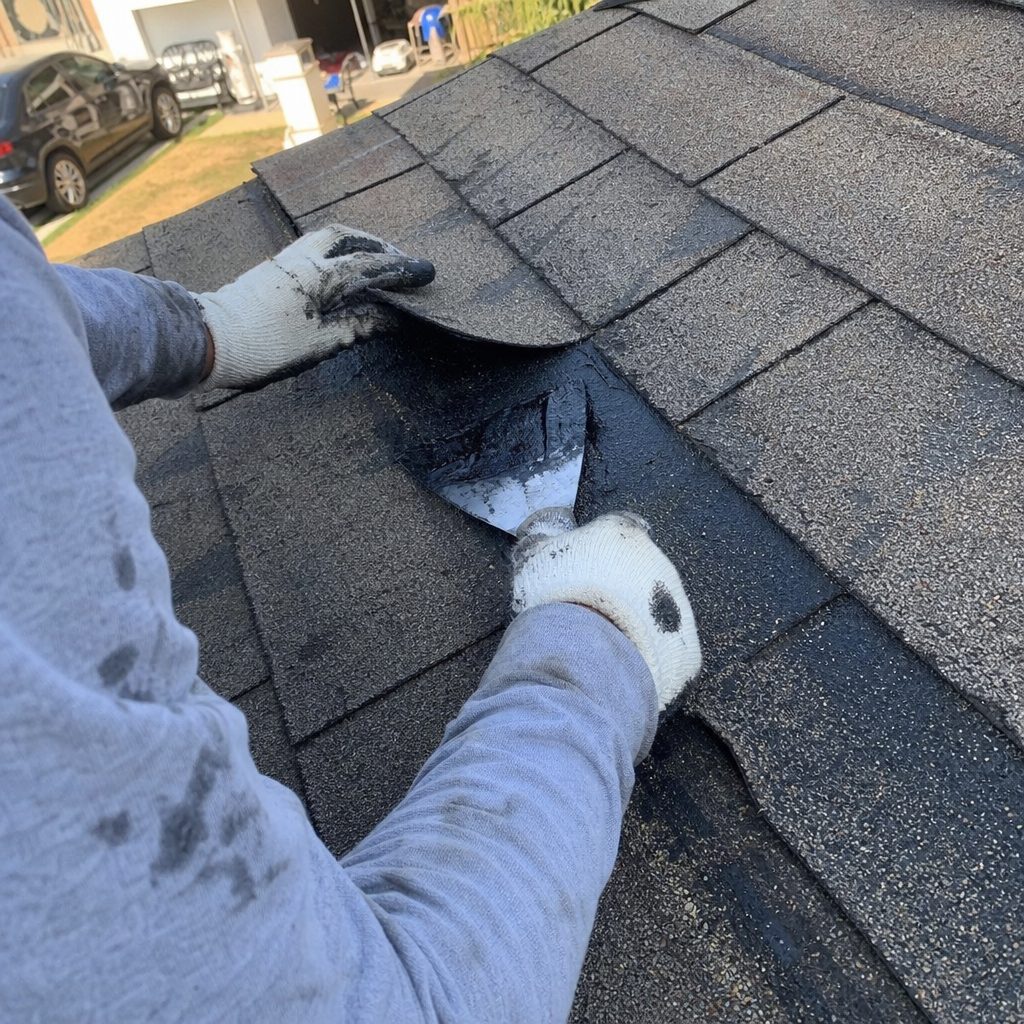
IKO Flashing Replacement: The Los Angeles Owner’s Guide
IKO flashing replacement in Los Angeles typically runs $340-$780 installed, depending on the location and how much surrounding material needs to be disturbed. We stock IKO-compatible step flashing, counter flashing, and drip edge profiles on every truck, and most replacements are completed in a single visit. Homeowners usually discover the problem during our first good rain - water stains appearing on interior walls or ceilings, often weeks after the actual failure.
A roof doesn’t lie - it just waits until the rain to tell you the truth. In Los Angeles, that wait can stretch through six dry months, which means flashing corrosion or separation goes unnoticed until the water finds its path. We’ve replaced IKO flashing from Pacific Palisades to Pasadena where the homeowner swore the roof was fine in October and called us in February with a bedroom ceiling the color of a tea stain.
Which IKO Models This Applies To
IKO flashing systems span their entire residential lineup - Cambridge, Dynasty, Nordic, and Royal Estate shingles all rely on the same fundamental profiles, though the dimensions and fastening patterns differ by installation era. The critical identifier is the existing flashing’s gauge and flange width: IKO’s OEM step flashing is typically 0.019-inch galvanized steel or 0.032-inch aluminum, with a 4-inch wall leg and 4-inch roof leg as the standard, though 5-inch versions appear on steeper pitches common in the Hollywood Hills and Mount Washington.
Here’s where compatibility gets tricky. IKO’s post-2015 installations often used a proprietary color-matched drip edge with a 2-inch face, while earlier work and third-party replacements frequently ran 1.5-inch. Mismatch the face width and you create a channel that funnels water behind the gutter instead of into it. We carry both profiles, plus the aftermarket equivalents from Lomanco and Air Vent that match IKO specs without the OEM markup. Our rule: if the existing flashing is intact enough to measure, we match it exactly. If it’s too corroded to tell, we default to the wider face - better a half-inch of overhang than a half-inch of exposed fascia.
Ridgeline Roofing Co. is an independent service provider, not affiliated with IKO. We source IKO-compatible flashing through authorized distributors and verified aftermarket channels, same as we do for GAF, Owens Corning, and CertainTeed systems.
Signs Your IKO Flashing Replacement Is Failing
- Water stains on interior walls or ceilings below roof-wall junctions. This is the classic symptom. The flashing’s seal has broken at the step or counter point, and water is traveling the path of least resistance - usually down a stud bay until it finds drywall. In Los Angeles, we see this most often on north-facing walls where morning dew lingers and accelerates corrosion at the flashing’s lower edge.
- Rust streaks or green oxidation bleeding from wall-to-roof transitions. Galvanized steel flashing develops a telltale rust bloom; aluminum shows white powder or green verdigris where it contacts dissimilar metals. Either way, the protective coating has failed, and the metal is thinning. We’ve pulled IKO step flashing in Silver Lake that was perforated like a tea strainer from the inside out.
- Lifted or separated shingles at valleys, chimneys, or dormers. Flashing that has pulled away from the wall creates a gap; wind-driven rain in Los Angeles winter storms drives straight through. The shingles themselves may look fine, but they’re no longer sealed at the critical junction. Pete Navarro learned this lesson early - his grandmother’s flat roof in Eagle Rock leaked for two years before anyone thought to lift the shingles and check the flashing beneath.
- Visible gaps or caulk failure at counter flashing reglets. IKO’s counter flashing is often embedded in mortar joints or fastened with lead plugs. When the sealant ages out - accelerated by Los Angeles UV exposure and thermal cycling - the reglet becomes a gutter. Homeowners sometimes try re-caulking, which buys months at best if the flashing itself has shifted.
- Granule accumulation in gutters below flashing points. This indicates water is running backward under the shingle edge, washing granules into the gutter. The flashing isn’t directing water out; it’s creating turbulence that pushes water uphill. We see this on shallow-pitch roofs in Mid-City and the flats of the San Fernando Valley, where IKO’s standard profile sometimes needs augmentation with a kick-out diverter.
Replacement Cost & What’s Included
| Service Component | Typical Range (Los Angeles) |
|---|---|
| Standard step flashing replacement (per linear foot) | $18-$32 |
| Chimney counter flashing (full surround) | $380-$650 |
| Valley flashing replacement (open valley, per valley) | $420-$780 |
| Drip edge replacement (per linear foot) | $12-$22 |
| Deck repair where flashing failure caused rot (per square foot) | $45-$85 |
What drives the range? Three things: accessibility (a two-story chimney in Brentwood costs more than a one-story garage in North Hollywood), the condition of what’s underneath (flashing failure often hides deck damage), and whether we’re matching existing IKO color profiles or transitioning to a compatible aftermarket. Our estimate includes removal, disposal, new flashing, sealants, and any necessary shingle manipulation - the number we quote is the number you pay. Every flashing job carries our 90-Day Done Right Promise: if water finds a path we missed, we come back and make it right, no paperwork, no arguing.
DIY or Call Us?
There’s a short list of what a homeowner can safely check from the ground or a sturdy ladder: visible gaps, rust streaks, granule deposits in gutters. Document it with photos. That’s where DIY should stop.
Flashing replacement requires removing shingles without tearing them, cutting and forming metal to precise angles, and fastening in a way that maintains the roof’s drainage plane. On a steep pitch, it’s height work with sharp metal and power tools. On any pitch, improper installation voids the shingle warranty and often makes the leak worse by creating new penetration points. We’ve been called to fix homeowner flashing jobs in Los Angeles where the repair attempt turned a $400 step flashing replacement into a $2,400 deck repair. The 5% Senior and Veteran discount applies either way - but we’d rather apply it to doing it right the first time.
Call (844) 563-1816 for a free estimate. A live person answers, including nights and weekends.
FAQs
Quality IKO-compatible flashing lasts 20-30 years in Los Angeles, but the coastal marine layer in Venice or San Pedro can cut that to 12-15 years through accelerated galvanic corrosion. Inland valleys with intense UV and thermal cycling - think Woodland Hills or Glendale - see sealant failure before metal failure. Call (844) 563-1816 and we’ll assess what’s actually failing on your roof.
Spot repairs with sealant or patching tape work temporarily for minor separation, but they don’t address the underlying metal fatigue or corrosion. We repair only when the flashing is structurally sound and the failure is strictly sealant-related - roughly one in ten cases we inspect. For a straight answer on your specific situation, call (844) 563-1816; estimates are free.
Most IKO flashing replacements are completed in two to four hours. A straightforward step flashing run along a single wall might take ninety minutes; a chimney surround with scaffold access in Los Angeles Hills terrain takes a half day. We photo-document before and after, and we don’t leave until the site is clean. Same-day scheduling is available when you call (844) 563-1816.
We stock IKO-compatible step flashing, counter flashing, and drip edge in standard dimensions on every truck. Color-matched IKO OEM or special-order profiles arrive within 24-48 hours through our Los Angeles distributor network. For a same-day assessment of what’s in stock for your specific job, call (844) 563-1816.
Written by Pete Navarro, Owner, Ridgeline Roofing Co. at Ridgeline Roofing Co., serving Los Angeles and nearby areas.