
Fast, Reliable Emergency & Storm Damage Across Peabody
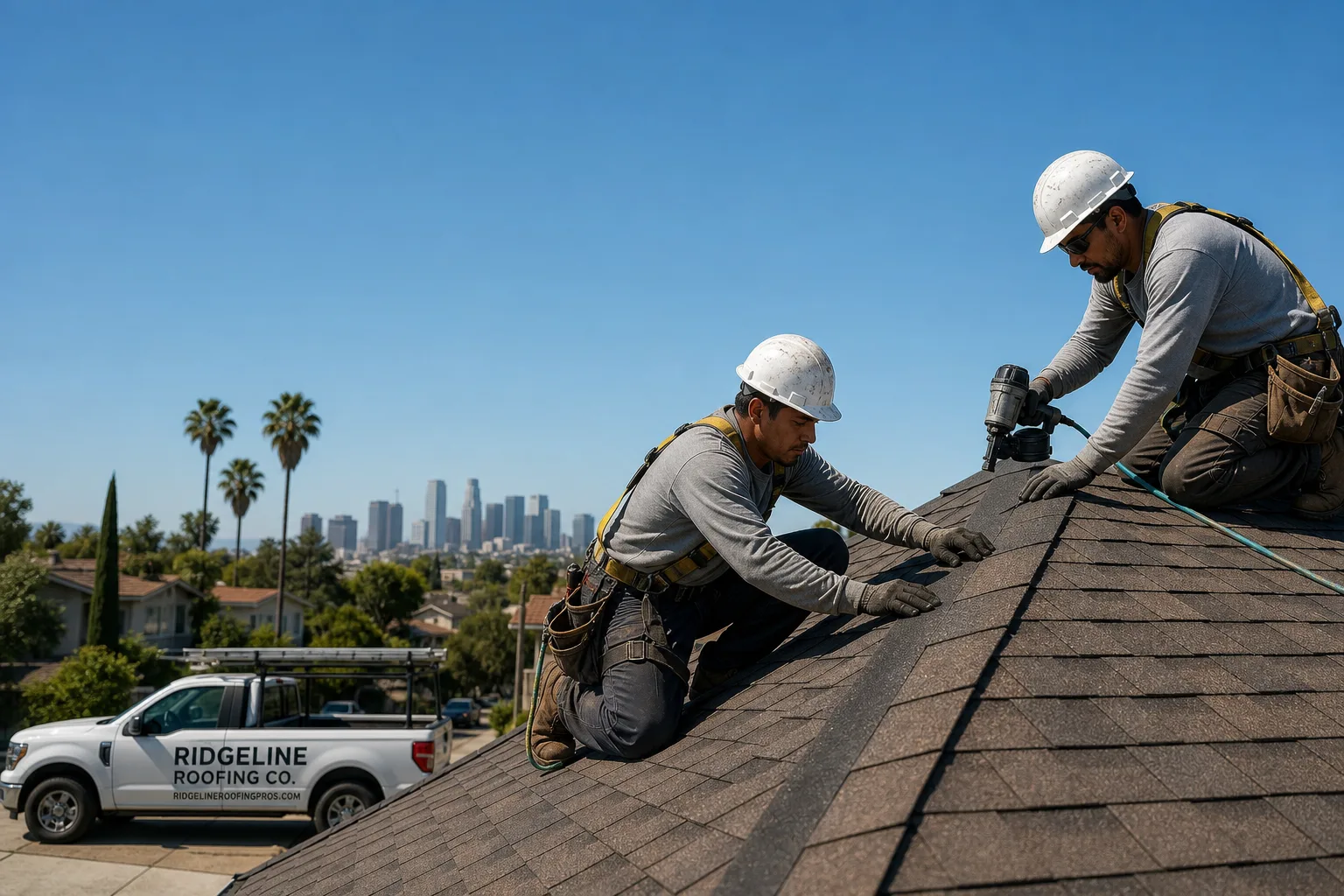
When a nor’easter tears through Peabody and water starts dripping through your ceiling, you need a roofer who knows this city’s roofs, not a storm chaser from three states away. Ridgeline Roofing Co. has answered emergency calls in Peabody since 2016, and our crews can usually reach homes in West Peabody, downtown near the old tannery district, or up along Route 1 within 45 minutes during daylight hours. Call (844) 563-1816 any time, day or night, and a live person will pick up. We don’t do voicemail trees. Not during a storm, not ever.
Peabody’s housing stock tells a story that out-of-town contractors rarely understand. The post-WWII suburban boom, fueled by workers leaving the collapsing leather-tanning industry, packed West Peabody with 1950s-1970s ranches and split-levels whose low-pitched roofs and undersized attic ventilation make them uniquely prone to ice dams during nor’easters that funnel up the North Shore, a problem far less acute in inland towns like Danvers. We’ve spent four decades learning how these houses fail, and more importantly, how to fix them so they stay fixed.
Why Ridgeline Roofing Co. Is Peabody’s Preferred Emergency & Storm Damage Company
We’ve been the Emergency & Storm Damage in Peabody homeowners call when they can’t afford to gamble. Pete Navarro started this company in 1984, and we’ve kept our headquarters within reach of the North Shore ever since. That means when you call us, you’re talking to people who drive these roads daily, who know that Lowell Street floods at the underpass, who understand why a ranch on Farm Avenue fails differently than a triple-decker near Main Street.
Our reputation here is built on showing up. Live person answers every call, 24/7, including nights, weekends, and the middle of a storm. Background-checked, uniformed technicians document every inspection with photos taken from your actual roof, not a scary speech in the driveway. The 90-Day Done Right Promise backs every job: if it’s not right, we come back and make it right, no paperwork, no arguing.
Response time to Peabody averages under an hour for true emergencies, water actively entering the living space. We keep emergency tarps, ventilation materials, and common flashing stock on our trucks because we’ve learned what this city’s houses need.
Our Emergency & Storm Damage Services in Peabody
Storm Damage Repair
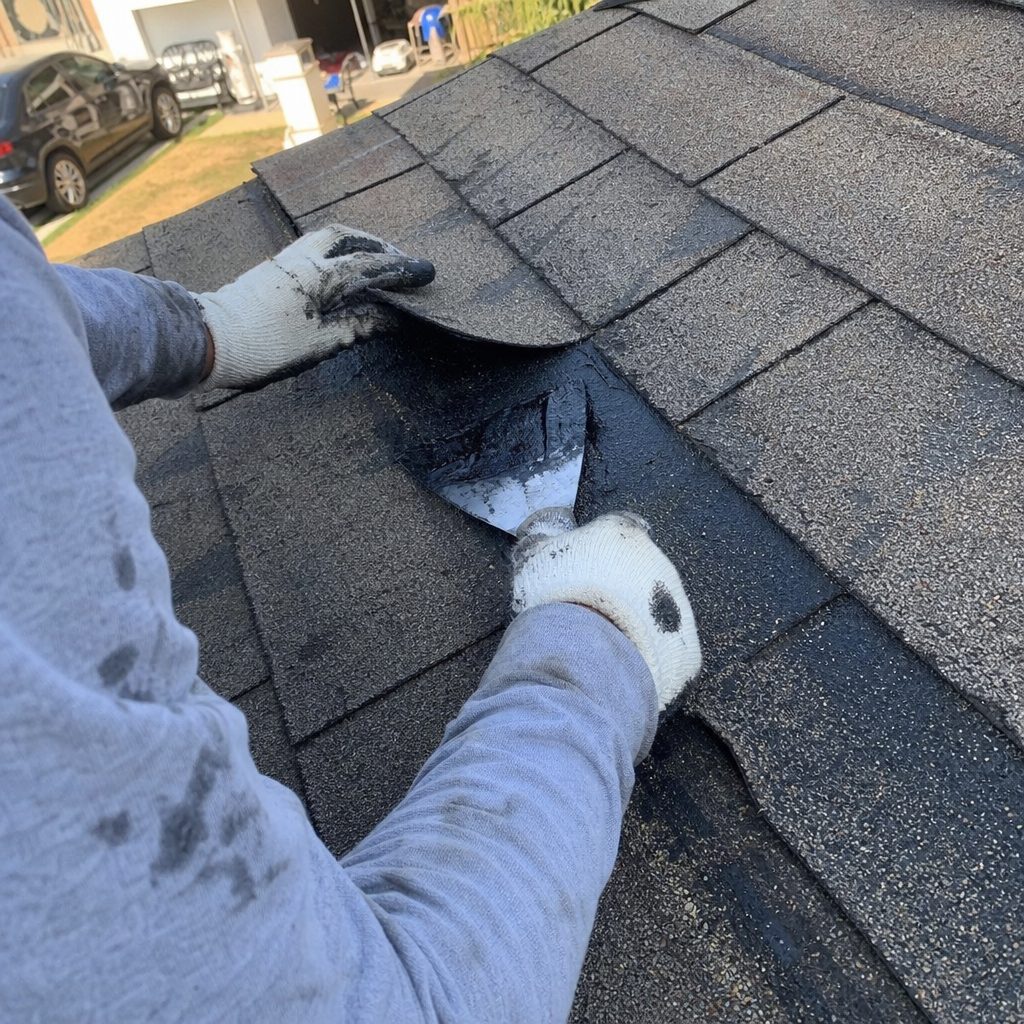
Nor’easters hitting Peabody don’t just tear off shingles. The combination of heavy, wet snow and rapid freeze-thaw cycles exploits every weakness in aging roofs. In West Peabody’s ranches, we regularly see storm damage that started as an ice dam working its way under properly nailed shingles, then peeling back entire courses when the wind hits. Our Emergency & Storm Damage team repairs the visible damage and traces back to the source, because patching shingles over a ventilation problem guarantees a callback.
Emergency Tarp
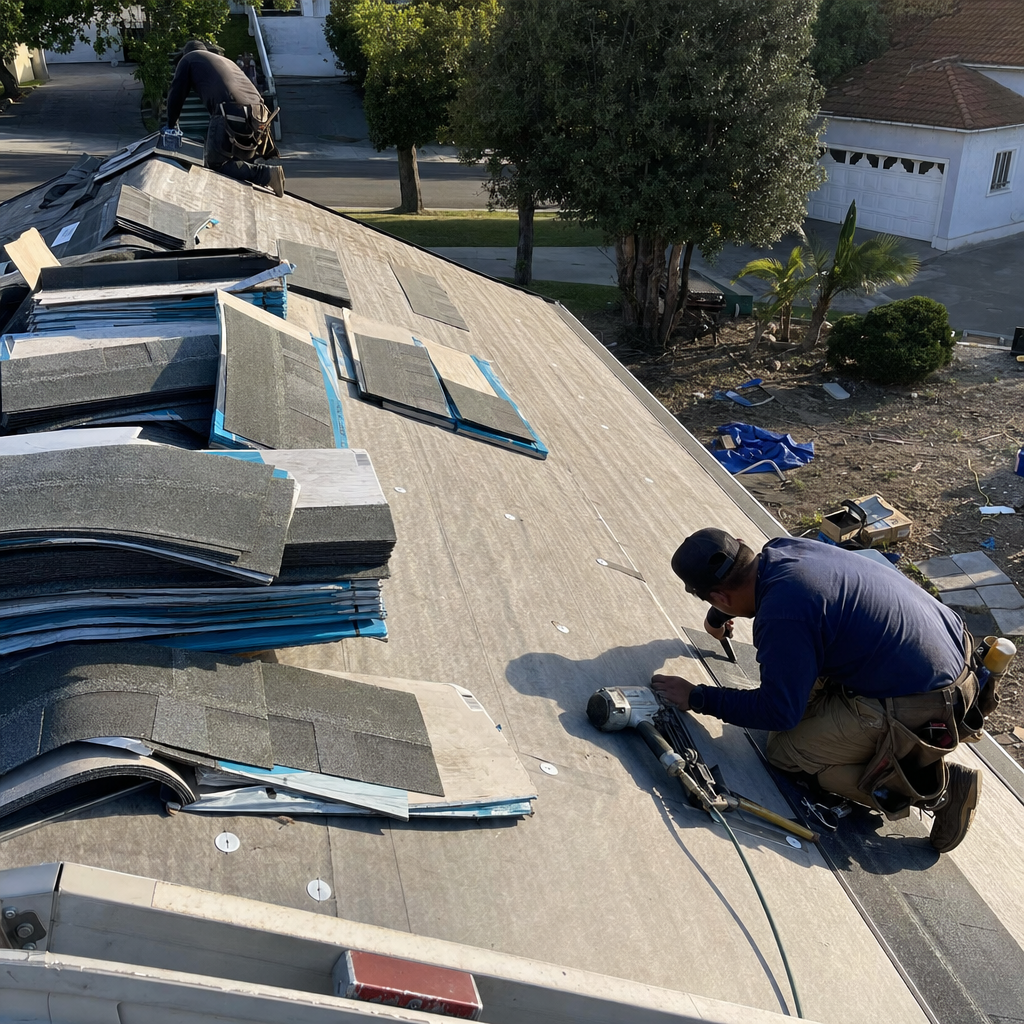
When water is pouring through your ceiling at 2 a.m., the first priority is stopping the bleed. We install emergency tarps that actually hold, secured with proper anchoring into structural members, not just weighted with sandbags that slide off in the next gust. During a February nor’easter, our crew responded to a ranch home on Lowell Street in West Peabody where a massive ice dam had formed at the eaves, forcing meltwater under the GAF shingles and soaking the attic insulation. We installed an emergency tarp, then returned for Roof Replacement & Installation - Peabody that included a soffit-and-ridge ventilation upgrade, now required by code for re-roofs in these neighborhoods, to prevent recurrence.
Ice Dam Remediation
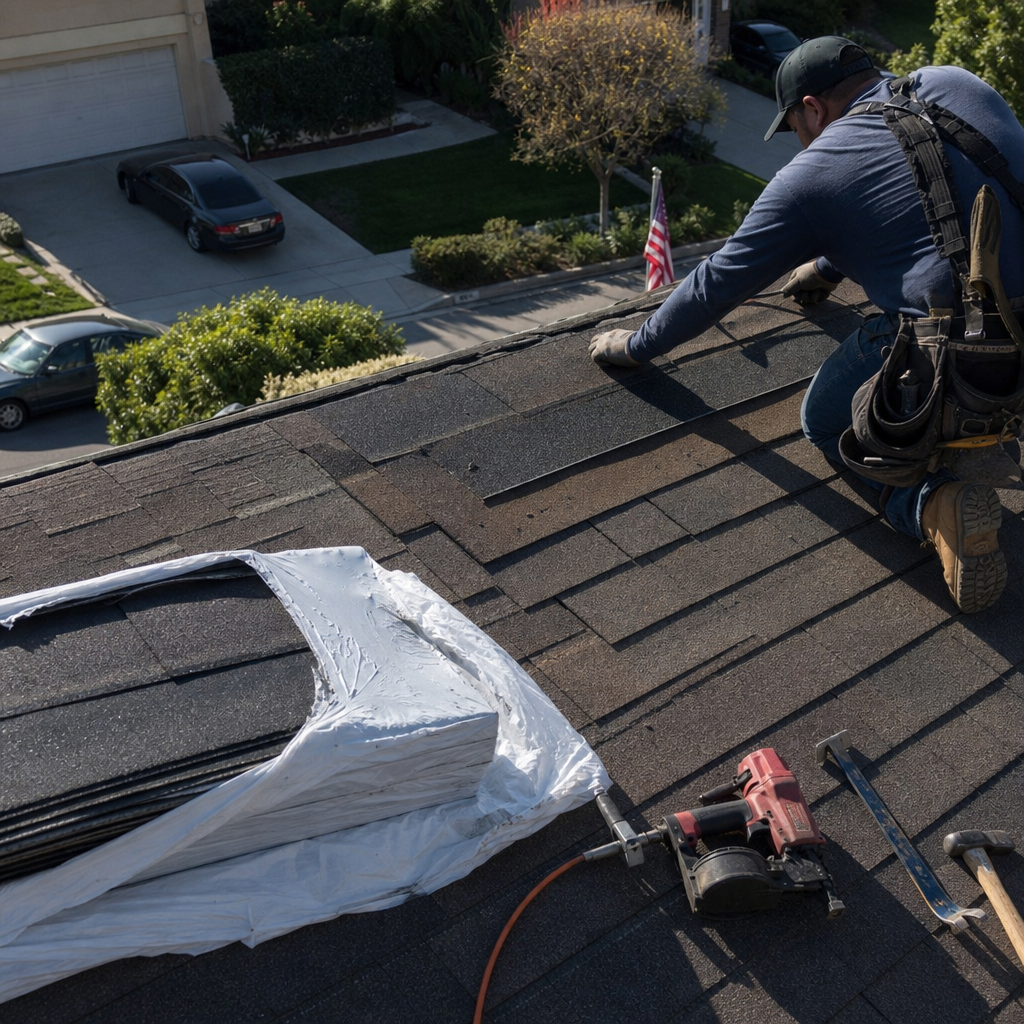
This is the emergency call we get most in Peabody, and it’s the one where local knowledge matters most. Ice dams form when heat escapes through an inadequately ventilated attic, melting snow from below; the water runs to the cold eaves and refreezes, building a dam that forces subsequent meltwater back under the shingles. Peabody’s 1950s-1970s ranches were built with minimal soffit venting and no ridge vent, standard for the era but now a known failure mode. Any re-roof permit in West Peabody triggers a Massachusetts State Building Code ventilation compliance review, making a soffit-and-ridge ventilation upgrade a near-mandatory add-on if the contractor wants to pass inspection and avoid ice-dam liability callbacks the following winter. We handle the emergency water intrusion and the permanent fix.
Insurance Claims Assistance
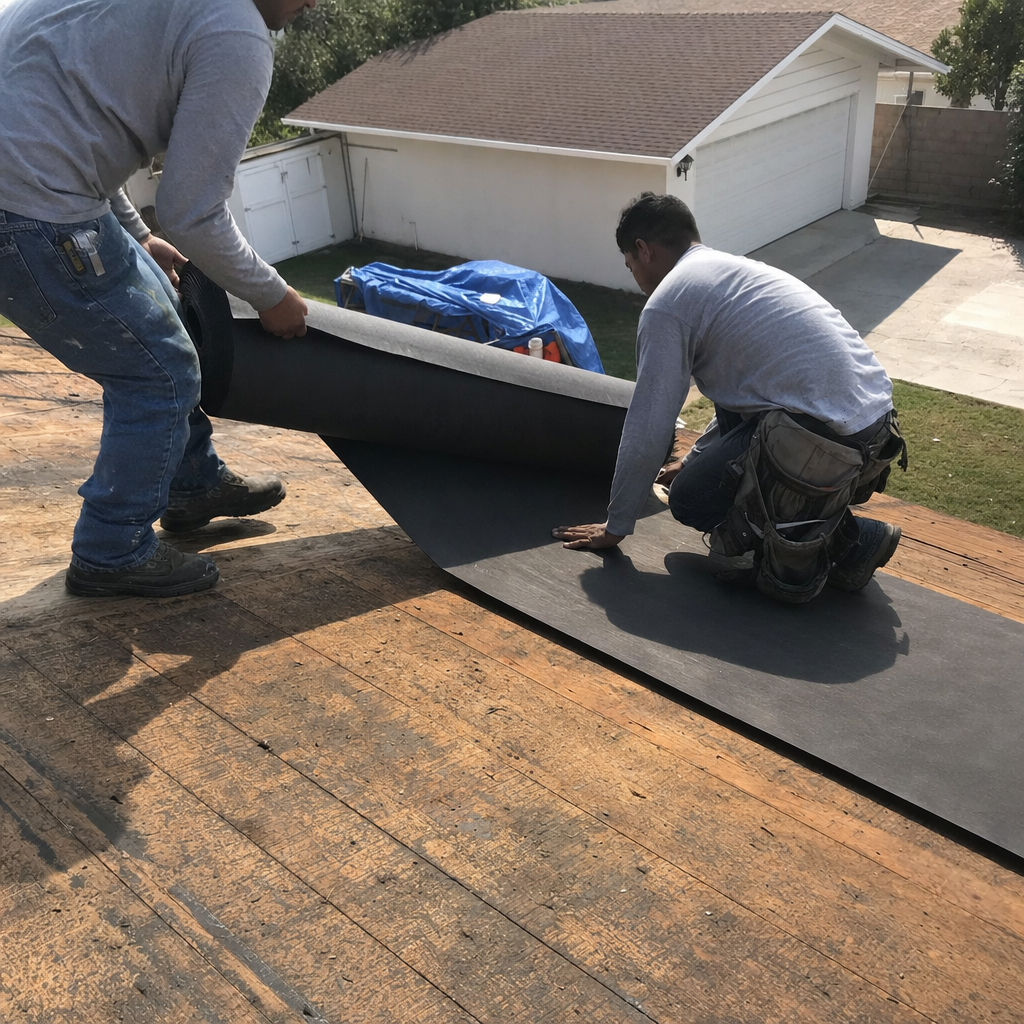
Storm damage claims confuse even experienced homeowners. We document everything with photos, provide line-item repair estimates that adjusters can work with, and explain the difference between sudden storm damage and long-term maintenance issues that carriers won’t cover. For Peabody’s older housing stock, this distinction matters. A 1960s ranch with original ventilation and corroded flashing may have multiple contributing factors; we tell you honestly what’s claimable and what isn’t.
What happens when you call
- 1
A real person answersNo phone trees - you reach a local pro.
- 2
You get an upfront price rangeHonest numbers before anyone is dispatched.
- 3
A background-checked tech heads outLicensed & insured, dispatched right away.
- 4
You approve before work beginsNothing starts until you say go.
Trusted Brands We Service in Peabody
We install and repair systems from GAF, CertainTeed, and Owens Corning, three of the seven manufacturer lines we’re authorized to handle. For Peabody’s specific conditions, we’ve found GAF’s Timberline HDZ performs well against wind uplift on low-pitched ranches, while CertainTeed’s ventilation accessories and our Specialty Roofing in Peabody integrate cleanly with the soffit-and-ridge upgrades code now demands. We stock common repair materials locally, so most Peabody emergency calls don’t wait on special orders. When your living room ceiling is sagging, that matters.
Common Emergency & Storm Damage Problems We See in Peabody Homes
- Ice dams overwhelming emergency tarps. Undersized attic ventilation from 1950s-1970s construction fuels ice dams that emergency tarps alone can’t stop. Water backs up under the shingles, bypasses the tarp edge, and keeps dripping into the insulation. The permanent fix is ventilation, not more tarps.
- Salt-air corrosion misdiagnosed as shingle failure. Peabody’s proximity to Salem Harbor introduces enough salt air to accelerate corrosion of metal step flashing, valley metal, and exposed fasteners faster than fully inland communities experience. Homeowners see a leak and assume failed shingles; we find paper-thin flashing with holes you could poke through with a pencil.
- Flat roof ponding on downtown triple-deckers. Older tenements and worker housing from the tannery era have built-up roofs that pond water after heavy rain. Emergency repairs with incompatible modified-bitumen patches often peel off in the next storm because the substrate wasn’t properly prepared or the wrong material was used for the temperature range.
- Wind-driven rain through gable-end vents on split-levels. The split-levels common in Peabody’s 1960s subdivisions often have gable-end louver vents that become entry points for wind-driven rain during nor’easters. The water runs down inside the wall cavity before anyone notices a ceiling stain.
Roofing in Peabody Built on the Ridge
From the heavy spring rains off the Atlantic to the freeze-thaw cycles that find every weak seam, Boston Metro roofs take a beating. Ridgeline crews know the housing stock here, from the triple-deckers to the post-war capes, and we know what fails first. Every inspection sends you photos from your own ridge line, not a sales pitch in the driveway. we coordinate through our Boston Metro service area
Our K.E.Y.S. code means your Peabody job is Krafted right by trained journeymen, Every time, with Your home first in mind, because we plan to be Standing behind it. The Keystone Standard: 90 days, in writing, no arguing. That’s a square deal, and that’s why we answer the phone with a person.
Roofing in Peabody Built on the Ridge
Massachusetts weather comes at your roof from every angle. Ice dams, driving rain, summer hail, and the nor’easters that test every seam. In Peabody, we see the same patterns: older stock, insurance adjusters who need clear evidence, and homeowners who want the job done right the first time. Our crews document everything, photos included, and we handle the claim paperwork without the pressure tactics. The Keystone Standard applies here too: 90 days, in writing, no arguing. we coordinate through our Boston Metro service area
Roofing in Peabody Built on the Ridge
Massachusetts weather comes at your roof from every angle. Ice dams, driving rain, summer hail, and the nor’easters that test every seam. In Peabody, we see the same patterns: older stock, insurance adjusters who need clear evidence, and homeowners who want the job done right the first time. Our crews document everything, photos included, and we handle the claim paperwork without the pressure tactics. The Keystone Standard applies here too: 90 days, in writing, no arguing. we coordinate through our Boston Metro service area
Pricing for Emergency & Storm Damage in Peabody, MA
Here’s what typical emergency and storm damage work costs in Peabody’s current market:
| Service | Typical Range |
|---|---|
| Emergency tarp installation (standard residential) | $350-$650 |
| Ice dam removal and temporary water mitigation | $450-$850 |
| Storm damage shingle repair (localized, 1-2 squares) | $550-$1,200 |
| Flashing replacement (valley or step, salt-damaged) | $400-$950 |
| Soffit-and-ridge ventilation upgrade (code-compliant) | $1,800-$3,400 |
| Flat roof emergency patch (compatible materials) | $600-$1,100 |
| Full insurance claim documentation and estimate | No charge with repair |
What moves you within these ranges: roof pitch (steeper costs more for safety and labor), accessibility (three-deckers with limited ladder access take longer), extent of hidden water damage, and whether the repair can wait for dry weather or needs immediate action in active precipitation. We give you the full number before any work starts. The price we quote is the price you pay. Call (844) 563-1816 for an exact quote on your situation, estimates are free.
We Also Serve Cities Near Peabody
Our emergency crews respond throughout the North Shore, including Peabody neighbors in Danvers, Salem, Beverly, and Beverly Cove. Each city has its own housing stock patterns and local conditions, we don’t apply a Peabody template to a Danvers cape or a Salem colonial. The same live-answer phone and same 90-Day Done Right Promise apply wherever we work.
Serving Peabody, MA - Our Local Coverage Area
We’re based in the Peabody area and know this community well. Use the map below to see our service coverage - if you’re nearby, we can almost certainly help.
FAQs - Emergency & Storm Damage in Peabody
The new shingles are rarely the problem. Most Peabody ranches were built with minimal soffit venting and no ridge vent, and the attic insulation was added later without addressing air sealing. Heat escapes, melts snow from below, and the water refreezes at the cold eaves. Massachusetts code now requires ventilation upgrades on re-roofs in these neighborhoods, and our Gutters & Accessories in Peabody help manage water flow, but not every contractor bothers, and not every homeowner understands why it matters. If your new roof didn’t include soffit-and-ridge ventilation, the ice dams will return. Call (844) 563-1816 and we’ll assess what you’re actually dealing with.
Yes, measurably. Peabody sits roughly 15 miles from open ocean, close enough that salt air accelerates corrosion of metal components faster than in fully inland communities. We regularly find valley metal and step flashing that have corroded through in 8-12 years instead of the 20+ you’d expect inland. The shingles look fine, but water finds the holes in the metal underneath. If you’re near downtown or east of Route 1, this is worth checking during any storm-damage inspection.
The homeowner initiates the claim, but we handle the documentation that makes it succeed. We photograph all damage from roof level, provide line-item repair estimates with manufacturer specifications, and distinguish true storm damage from pre-existing wear that the carrier won’t cover. For tree strikes, we also document structural impact to trusses or decking, not just the hole the limb made. Most Peabody homeowners we’ve worked with receive fair settlements when the paperwork is done right the first time. Call (844) 563-1816 and we’ll walk you through it.
We can, but flat roofs present specific challenges that peaked roofs don’t. Water ponds rather than runs off, so the tarp must create a temporary slope or the weight of trapped water will tear it loose. We also need to know the existing substrate, built-up, modified bitumen, or EPDM, because the anchoring method differs. Downtown Peabody’s triple-deckers often have limited roof access and parapet walls that complicate tarp installation. We’ve done enough of them to know what works and what doesn’t. Same-day response is usually possible for active leaks.
Emergency tarping and temporary water mitigation do not require a permit. Permanent repairs and any re-roof work do, and as noted, re-roofs in West Peabody’s 1950s-1970s neighborhoods now trigger a ventilation compliance review under current Massachusetts State Building Code. We pull permits for all permanent work and schedule inspections so you don’t have to manage the paperwork. If a contractor tells you permits aren’t necessary for substantial repair, that’s a red flag. Done right means done to code.
Written by Pete Navarro, Owner at Ridgeline Roofing Co., serving Peabody since 2016.