
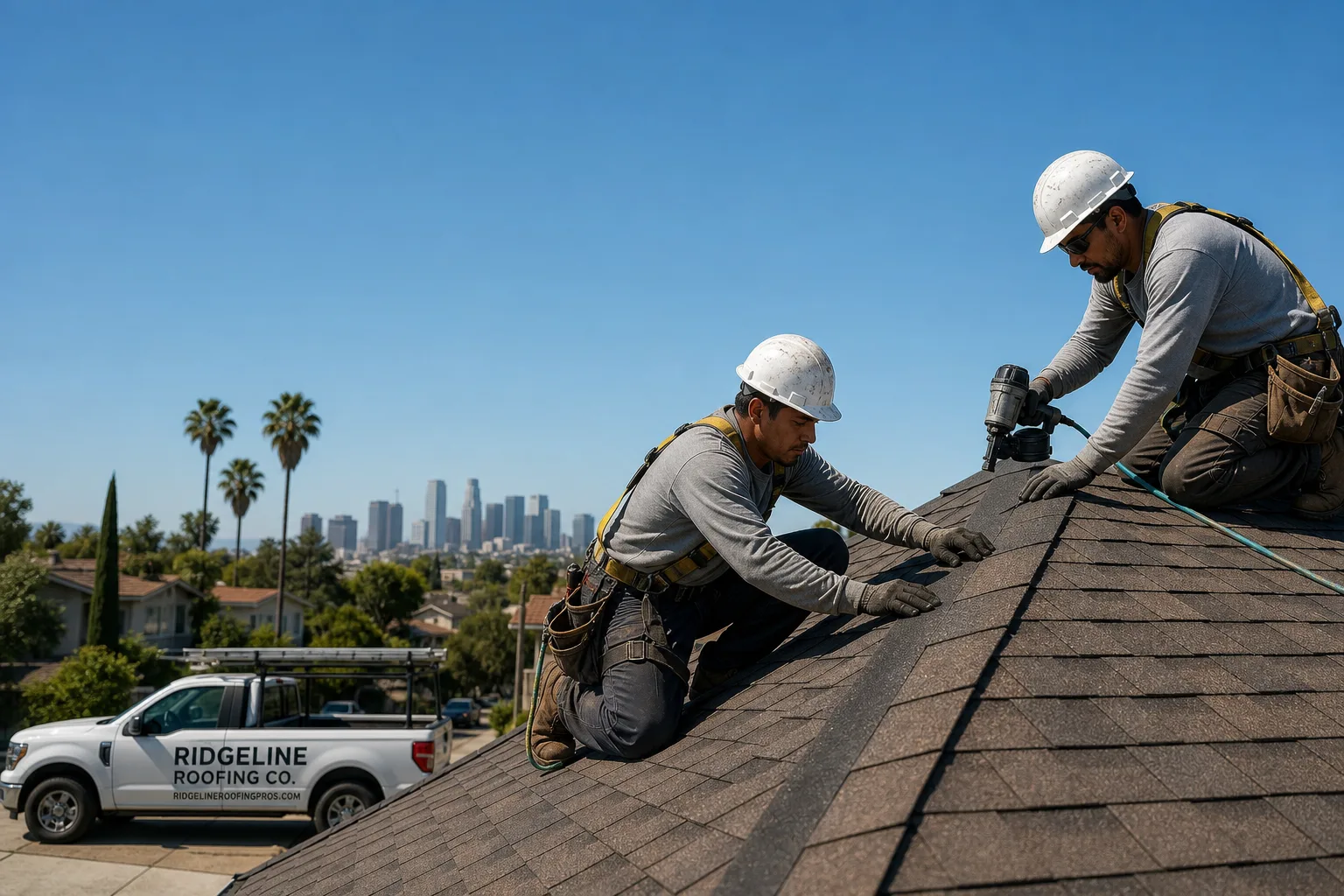
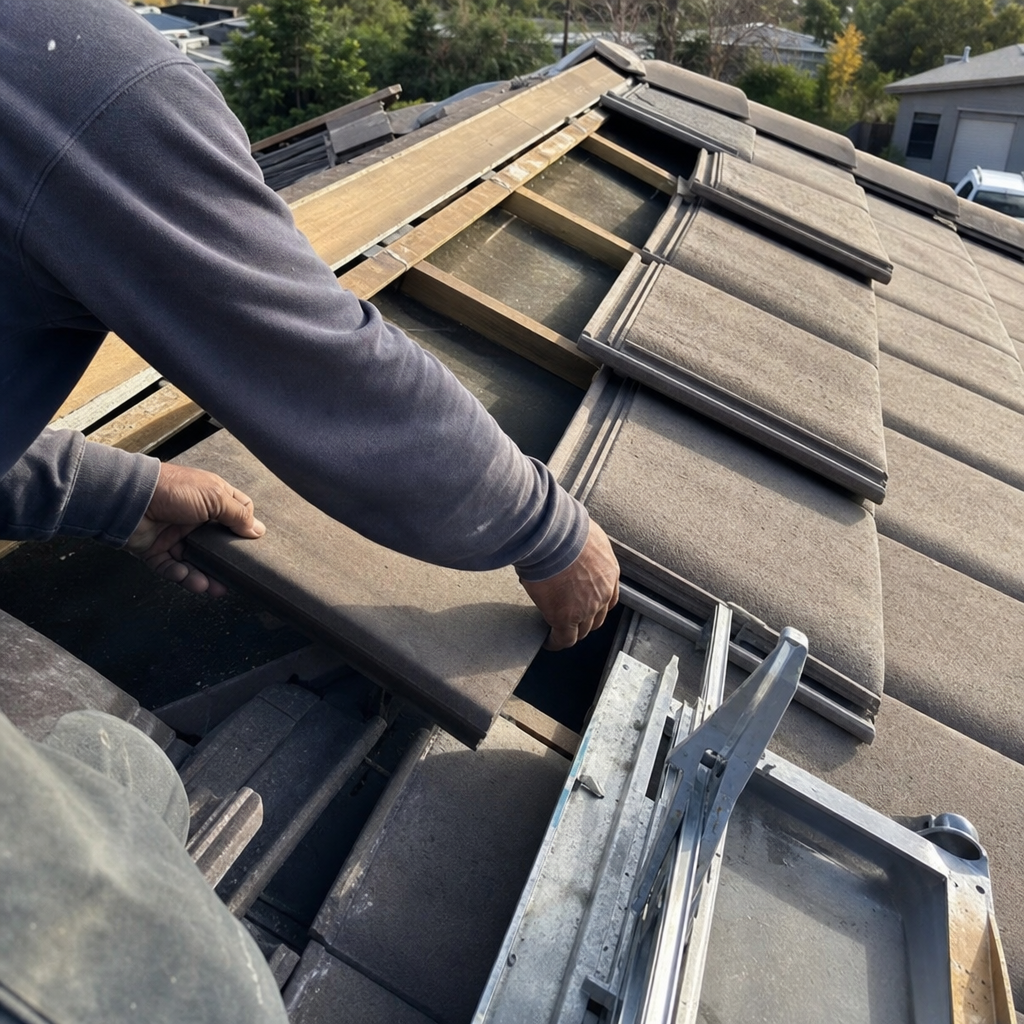
Fast, Reliable Emergency & Storm Damage Across San Francisco
When a windstorm lifts your cap sheet or marine fog finds its way through corroded parapet flashing, you need a crew that knows San Francisco roofs, not a storm chaser reading a map for the first time. Emergency roof damage in San Francisco typically runs $450-$1,800 for temporary tarping and immediate sealing, with most emergency calls in the 94102, 94103, 94127, and 94101 ZIP codes reached within 60-90 minutes during daylight hours. Call (844) 563-1816 and a live person will answer, 24 hours a day, including weekends and holidays.
We’ve worked on San Francisco roofs since 2016. We know the zero-lot-line constraints of Mission District Victorians, the scaffolding headaches on Nob Hill Edwardians, and the way the marine layer behaves differently block by block. Our Emergency & Storm Damage team is built for this city’s specific conditions, not generic storm response.
Why Ridgeline Roofing Co. Is San Francisco’s Preferred Emergency & Storm Damage Company
San Francisco homeowners remember contractors who disappeared after the check cleared. We’ve been here since 2016, over 10 years, and we plan to be here in thirty more. Our reputation in this city was built one roof at a time, from SoMa lofts to Presidio Heights homes, and it rests on the 90-Day Done Right Promise: if it is not right, we come back and make it right. No paperwork, no arguing.
Our phones are staffed by a live person around the clock. Not a voicemail tree, not a callback window. When fog-moisture is dripping through your parlor ceiling at 2 a.m., you talk to a human who dispatches our crew. Our technicians are background-checked, uniformed, and trained to document every inspection with photos from your actual roof, not a scary speech in your driveway.
We’re not storm chasers. We hire local crews, train apprentices into journeymen, and understand that a square deal in San Francisco means knowing the difference between a decorative parapet and the flat deck it hides. San Francisco deserves a roofer who knows why torch-down modified bitumen fails differently here than anywhere else in the Bay Area.
Our Emergency & Storm Damage Services in San Francisco
Storm Damage Repair
San Francisco’s storms rarely announce themselves with thunder. More often, a strong westerly wind off the Pacific lifts an aged cap sheet seam while you sleep, or months of fog saturation finally breaches a parapet flashing. Our storm damage repair addresses the specific failure modes of this city’s housing stock: hidden flat decks on Victorian and Edwardian row houses, multiple layers of legacy BUR felt, and the structural constraints of attached buildings with shared party walls. We assess total dead load before adding any new material, because San Francisco’s seismic codes restrict what an older roof structure can bear. Most repairs are completed in a single visit, with upfront pricing that does not change.
Emergency Tarp
When water is entering your home, speed matters, but so does method. On San Francisco’s attached row houses, we often cannot run a standard ladder up the street-facing facade due to zero-lot-line constraints, narrow rear yards, or historic preservation requirements. Our crews use boom lifts, swing stages, or interior roof access when available. We stock GAF WeatherWatch leak barrier membrane and heavy-duty reinforced poly tarps sized for the smaller footprints typical of 94102 and 94103 buildings. A standard emergency tarp in San Francisco runs $450-$850, including deployment and initial securing. Same-day service is standard when you call before 3 p.m.
Insurance Claims
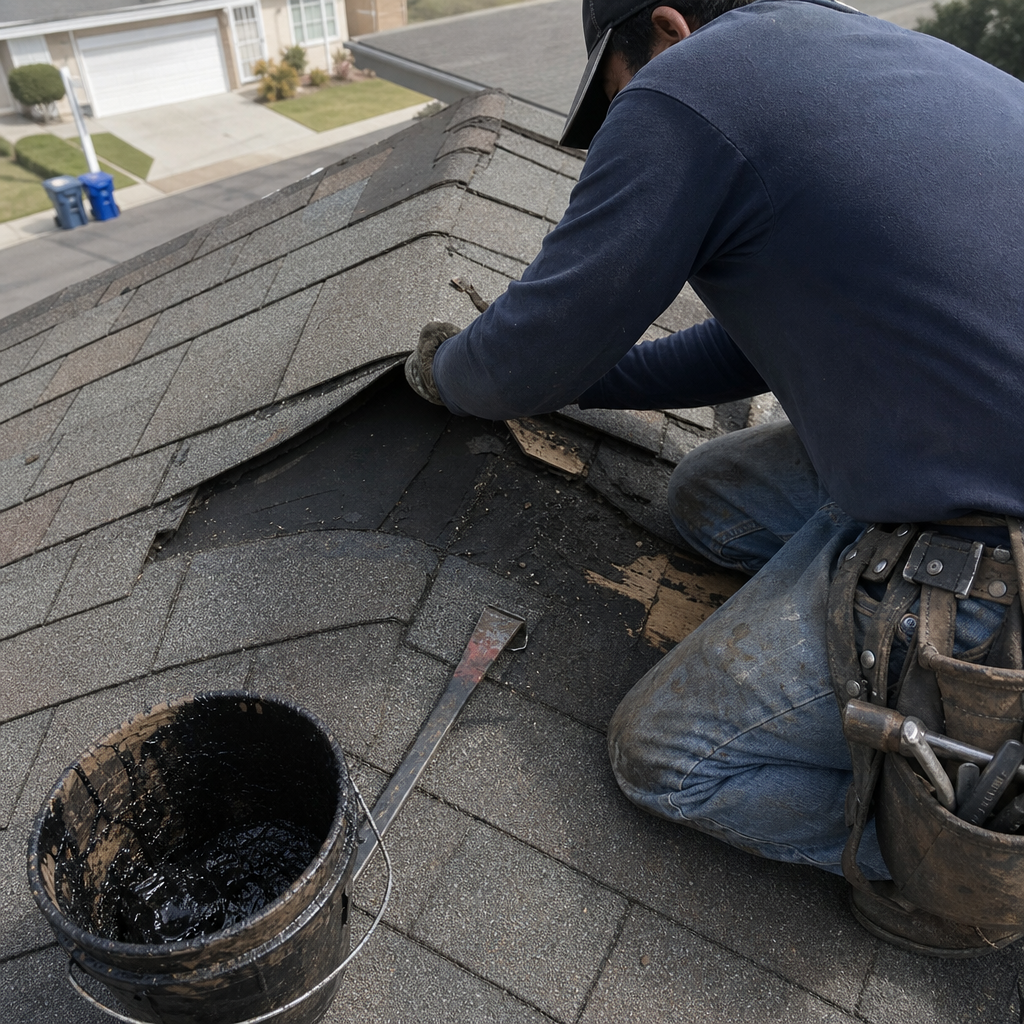
Fog-related damage confuses some adjusters. We document everything: photo evidence of parapet flashing corrosion, moisture readings from saturated decking, wind speed data from the National Weather Service for your specific storm date. Our estimates use standard Xactimate pricing for the San Francisco market, and we meet adjusters on-site when requested. We have worked with carriers on claims in the Mission, Nob Hill, and SoMa, and we know which documentation speeds approval for the unique failure modes this city presents.
Wind Damage
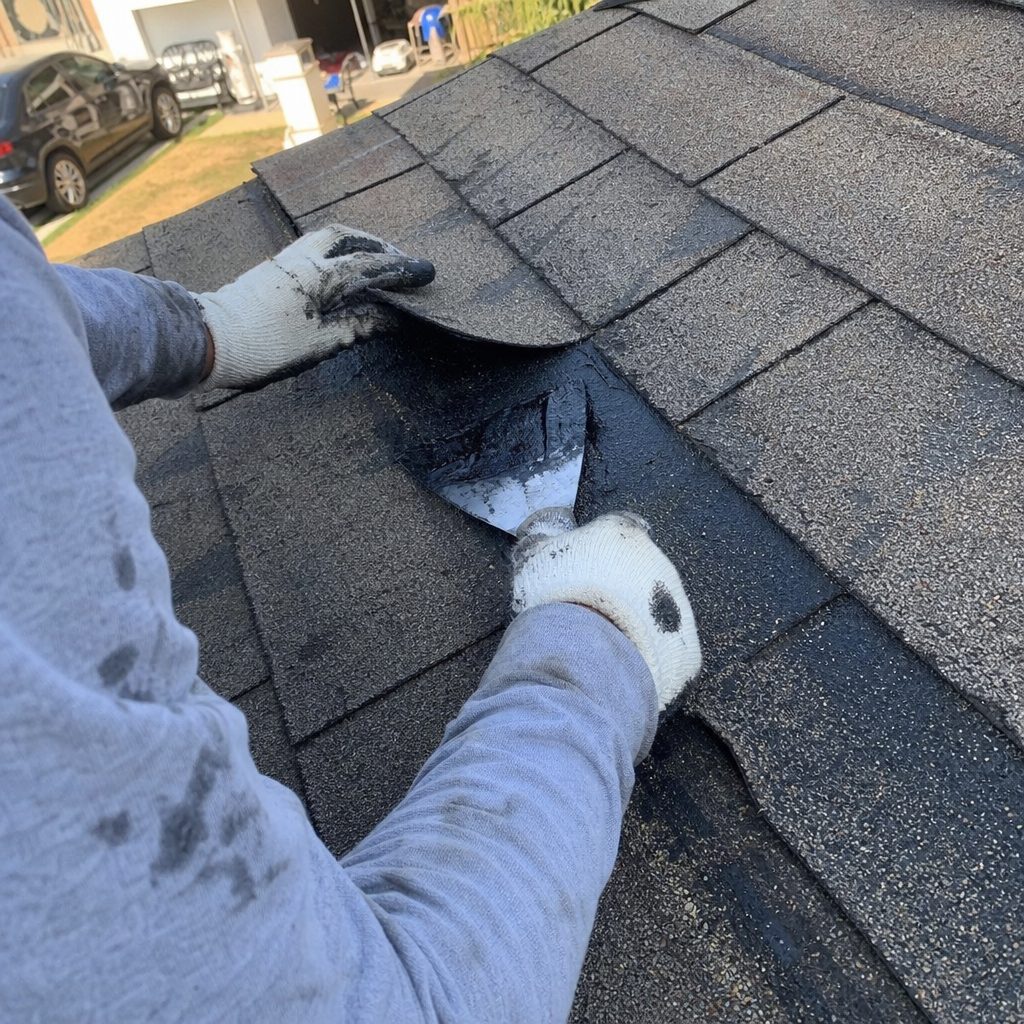
The prevailing westerlies off the Pacific drive fog-moisture under inadequate edge flashings and create uplift on cap sheet seams, particularly on older modified bitumen roofs with aged adhesives. Wind damage in San Francisco rarely tears off entire sections; it finds the weak seam, the corroded coping, the ponded area where adhesion has failed. Our wind damage response includes immediate sealing, structural assessment for seismic load compliance, and permanent repair using manufacturer-authorized materials from GAF, CertainTeed, or Owens Corning.
What happens when you call
- 1
A real person answersNo phone trees - you reach a local pro.
- 2
You get an upfront price rangeHonest numbers before anyone is dispatched.
- 3
A background-checked tech heads outLicensed & insured, dispatched right away.
- 4
You approve before work beginsNothing starts until you say go.
Trusted Brands We Service in San Francisco
We are authorized installers for seven manufacturer lines, and we keep GAF and Atlas materials stocked for San Francisco’s emergency calls. For flat and low-slope decks, we specify GAF modified bitumen systems and Atlas shingles where slope allows. We do not substitute materials without your written approval. Our relationships with these manufacturers mean warranty coverage transfers properly, and replacement parts are available without the multi-week delays that plague contractors who order job-by-job. When you need a permanent repair after emergency stabilization, the materials we install are the same ones specified by the manufacturer, installed to their standards, backed by our 90-Day Done Right Promise.
Common Emergency & Storm Damage Problems We See in San Francisco Homes
- Cap sheet seam uplift from westerly winds. The Pacific airflow finds aged adhesive on modified bitumen roofs, lifting seams gradually until fog-moisture penetrates. Most common on buildings last roofed in the 1990s or early 2000s, before current fastening standards.
- Parapet flashing corrosion from persistent marine fog. Not rain. Fog. Saturated air from June through September corrodes metal copings and flashings, creating hidden water entry paths behind decorative masonry. The leak appears inside with no visible roof damage from the street.
- Algae colonization and ponding on flat decks. Daily fog moisture feeds algae that retains water, accelerating deterioration of original BUR layers. Ponding worsens when decades of re-coats have reduced slope to near-zero, a common condition in SoMa and the Mission where full tear-offs were logistically impossible.
- Structural load concerns on multi-layer legacy roofs. Some Edwardians carry four or five BUR re-coat layers. Adding emergency materials or new roofing without calculating total dead load against seismic capacity risks code violation and genuine structural hazard.
Roofing in San Francisco Built on the Ridge
The Bay Area’s mix of salt air, sudden wind, and dry summers tests every roof differently. Ridgeline crews know the local stock, from postwar ranch homes to newer builds with complicated valleys. We document what we find, share the photos, and explain your options without a sales pitch. The Keystone Standard, applied to roofing: 90 days, in writing, no arguing. we coordinate through our San Francisco Bay Area service area
Our K.E.Y.S. code means your San Francisco home gets journeymen who treat it like their mother’s place, and a workmanship warranty that outlasts the truck’s paint. If you’re a senior or veteran, we take 5% off, always. No paperwork, no arguing.
Roofing in San Francisco That Stands the Ridge
The Bay Area’s salt air, sudden wind gusts, and aging wood-shake stock catch up with every roof eventually. We inspect with photos you keep, explain what matters and what can wait, and price it as a square deal with no surprises on the bill. If your insurer needs documentation, we help without the hustle. we coordinate through our San Francisco Bay Area service area
Every job follows our K.E.Y.S. code: Krafted right by trained journeymen, Every time with the same care, Your home first, and Standing behind it with The Keystone Standard guarantee in writing. We’ll be there when we say. Senior and veteran homeowners save 5%.
Roofing in San Francisco That Stands the Ridge
The Bay Area’s salt air, sudden wind gusts, and aging wood-shake stock catch up with every roof eventually. We inspect with photos you keep, explain what matters and what can wait, and price it as a square deal with no surprises on the bill. If your insurer needs documentation, we help without the hustle. we coordinate through our San Francisco Bay Area service area
Every job follows our K.E.Y.S. code: Krafted right by trained journeymen, Every time with the same care, Your home first, and Standing behind it with The Keystone Standard guarantee in writing. We’ll be there when we say. Senior and veteran homeowners save 5%.
Pricing for Emergency & Storm Damage in San Francisco, CA
Honest numbers for this market:
| Service | Typical Range in San Francisco |
|---|---|
| Emergency tarp deployment | $450 - $850 |
| Storm damage repair (minor, single area) | $680 - $1,400 |
| Storm damage repair (major, multiple areas) | $1,800 - $4,500 |
| Wind damage sealing and repair | $550 - $2,200 |
| Insurance claim documentation and coordination | No additional charge with repair |
What moves the number: access difficulty (boom lift rental adds $300-$600), number of BUR layers requiring removal, parapet rebuilding versus simple flashing replacement, and whether seismic load calculations require engineering review. We quote upfront. The number on the estimate is the number on the invoice. Estimates are free. Call (844) 563-1816 for exact pricing on your specific situation.
We Also Serve Cities Near San Francisco
Our emergency response extends throughout the immediate Bay Area. We regularly handle calls from Chinatown and Daly City, where housing stock and exposure conditions mirror central San Francisco, and from South San Francisco and Alameda, where marine influence still shapes roof failure modes but with different municipal codes and access constraints. Wherever you are in this service area, the same live-answer phone, same uniformed technicians, same 90-Day Done Right Promise applies.
Serving San Francisco, CA - Our Local Coverage Area
We’re based in the San Francisco area and know this community well. Use the map below to see our service coverage - if you’re nearby, we can almost certainly help.
FAQs - Emergency & Storm Damage in San Francisco
Your roof is leaking because marine fog, not rain, is the primary moisture threat in San Francisco. The persistent fog layer from June through September saturates parapet flashings and copings with moisture-laden air, then that moisture finds gaps in corroded metal or failed seams and migrates inward. This is a failure mode essentially absent in drier inland Bay Area cities like Walnut Creek or Fremont, where summer precipitation genuinely stops. If you’re seeing stains during the “dry” season, call (844) 563-1816 for a free inspection and we’ll show you exactly where the fog is getting in.
Sometimes, but often not safely. San Francisco’s attached Victorian and Edwardian row houses built to zero lot lines frequently lack the staging room for ladder deployment on the street face, and historic preservation or narrow rear yards block conventional access. We have used boom lifts on Nob Hill streets, interior stair access in SoMa buildings, and swing stages where facade work was already permitted. The right access method depends on your specific building, and we assess this before quoting. Call us and we’ll walk through your options, no charge for the assessment.
Most standard homeowners policies cover sudden and accidental water damage, including that caused by wind-driven fog infiltration through compromised roofing, but they typically exclude damage from long-term maintenance neglect. The key is documentation: we photograph the specific failure point, correlate it with National Weather Service wind and fog data for your date of loss, and demonstrate that the damage resulted from a specific storm event or sudden failure, not gradual deterioration. We have successfully assisted San Francisco homeowners with fog-related claims in the 94102 and 94127 ZIP codes. Call (844) 563-1816 and we can review your policy language and damage specifics.
San Francisco’s high Seismic Design Category restricts how much mass can be added to existing roof structures, so any emergency repair or temporary stabilization must account for total dead load against the building’s lateral force-resisting capacity. A roofer who does not calculate this risk on an older Victorian with multiple BUR layers could add enough weight to create a genuine structural hazard, or install materials that the city inspector will flag. We evaluate seismic load on every emergency repair involving structural modification or significant material addition. This is a code conversation that almost never comes up outside California’s highest-hazard zones, and it is why local expertise matters here.
A properly installed lightweight tarp will not cause structural issues, but a heavy tarp with water pooling, or a tarp installed over saturated existing layers, adds load that could stress an already marginal structure. We assess total roof load before deploying any emergency covering, and we use breathable, reinforced materials that shed water rather than retain it. If your building has four or five legacy BUR layers, as many in the Mission and SoMa do, we may recommend partial removal of saturated material before tarping, or we may specify a lighter membrane system. The right approach depends on your roof’s specific condition and the underlying structure’s capacity. Call (844) 563-1816 for an assessment, estimates are free.
We handled an emergency tarp on a Nob Hill Victorian after a windstorm lifted the cap sheet seam on its hidden flat roof, exposing decades-old BUR layers and causing a slow fog-moisture leak that saturated the parlor ceiling. Our crew worked in zero-lot-line constraints, using a boom lift instead of ladders, and installed a temporary GAF WeatherWatch membrane over the damaged section to stop the moisture intrusion.
Written by Pete Navarro, Owner at Ridgeline Roofing Co., serving San Francisco since 2016.