
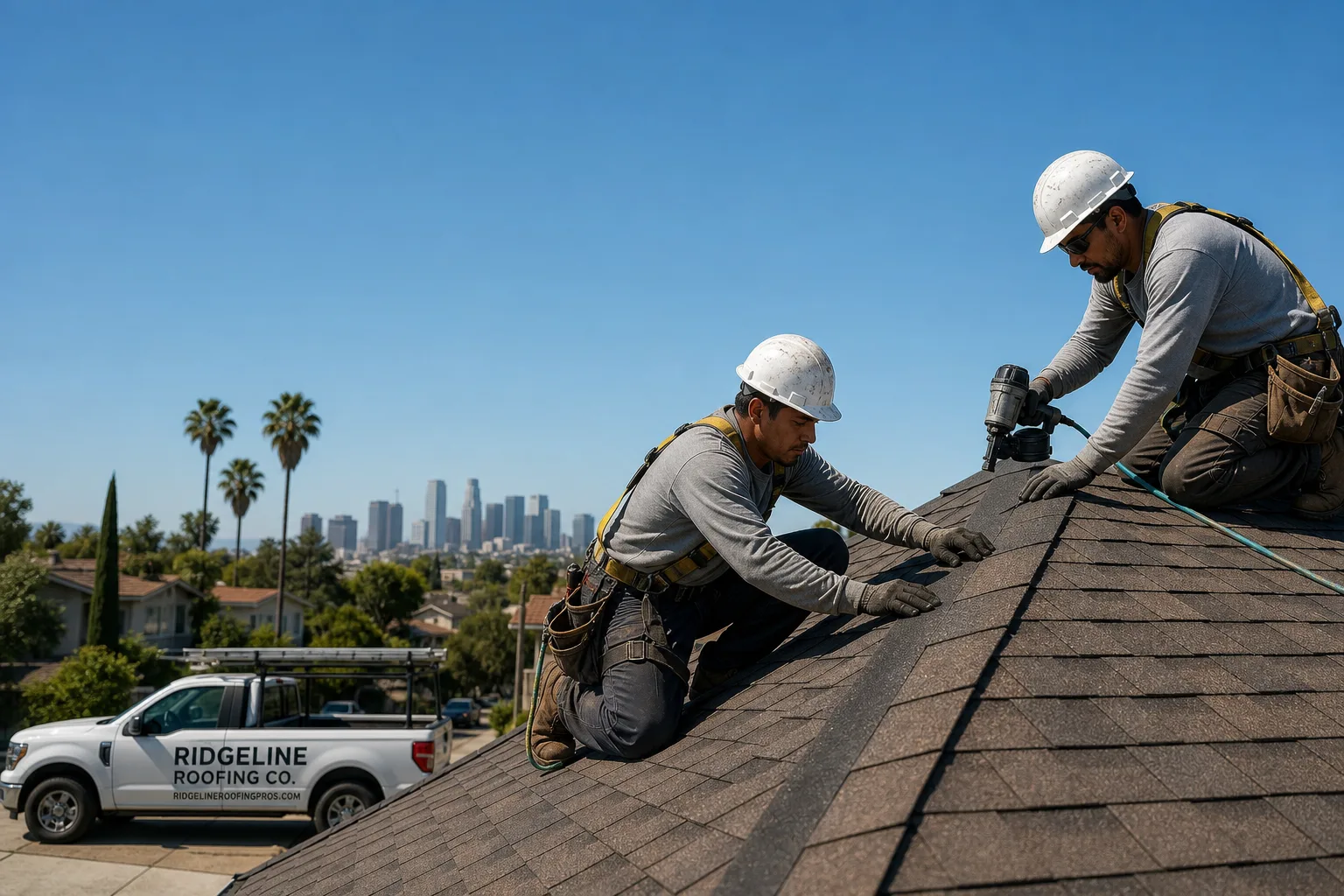
Sagging Roof Deck
You’re looking at a dip, a wave, or a visible sag in your roof – either from inside the attic or from the curb outside. That’s not a cosmetic problem. A sagging roof deck is one of the clearest signs that something structural is failing underneath the shingles, and it doesn’t get better on its own.
What’s Happening
A sagging roof deck almost always means the structural layer beneath your shingles – the sheathing, the rafters, or both – has lost the strength to hold the roof’s shape. This is usually caused by long-term moisture damage, rot, or a load the framing was never designed to carry. It is a structural problem, not a surface one, and it needs a professional assessment before it gets worse.
The shingles on your roof are a weather barrier, not a load-bearing surface. What holds everything up is the sheathing (the flat boards nailed to your rafters) and the rafters themselves. When either one weakens – from water that’s been sitting too long, from wood that’s rotted through, or from framing that’s fatigued or undersized – the roof starts to sag under its own weight. A small dip today can become a larger failure after the next heavy rain or snow load. The longer this sits, the more material typically needs to come out.
Why It Happens
Rotted or Waterlogged Sheathing
This is the most common cause by a wide margin. When a roof leaks – around a flashing, a vent, or a failing shingle – water gets into the sheathing and sits there. Wood that stays wet long enough rots, and rotted sheathing loses the stiffness it needs to hold its shape. If you press on the sagging area from inside the attic and it feels spongy or soft, rotted sheathing is almost certainly the issue.
Damaged or Broken Rafters
Rafters are the sloped framing members that run from the ridge down to the eaves. They can crack under excessive load – a heavy ice buildup, years of heavy snow that exceeded the original design, or a branch that came down hard. A broken rafter often shows up as a sag that’s concentrated in one narrow band rather than spread across a wide section. In the attic, you may actually see a rafter that’s visibly cracked or bent out of line.
Long-Term Moisture and Poor Attic Ventilation
A roof that doesn’t breathe properly traps heat and humidity in the attic. Over years, that moisture condenses on the underside of the sheathing and slowly degrades the wood without any visible leak ever appearing inside the house. If your attic feels unusually warm and damp, or if you notice dark staining on the sheathing without a clear drip point, poor ventilation is likely part of the story. The rot is slow, but it’s thorough.
Age and Accumulated Load
Wood framing doesn’t last forever. A roof installed in the 1980s or earlier was built to the codes and load assumptions of that era. If layers of shingles have been added over the years without stripping the old ones, the accumulated weight can stress framing that was sized for a single layer. You might notice the sag is gradual and spread evenly across a large section rather than localized – that’s a sign the whole structure has been working harder than it should for a long time.
What to Do Right Now
- Stay out of the attic for now. If the sag is significant, the framing above you is under stress. A roof that has started to fail structurally can fail further without much warning. Don’t go up there to investigate further until a professional has looked at it.
- Do not go onto the roof. Walking on a structurally compromised deck risks breaking through entirely. Serious injury follows. Call for a professional inspection – your local Ridgeline Roofing Co. team uses photos from the roof itself, not guesses from the driveway.
- Photograph what you can see from the ground and from the attic access point. A wide shot showing the sag line and a close shot showing any visible rot, staining, or cracked framing will help the technician understand what they’re walking into before they get on the roof.
- Move anything valuable out from under the affected area inside the house. If the sag worsens or if rain hits before repairs begin, the ceiling below is at risk. Get furniture, electronics, and anything irreplaceable out of the way.
- If you see active dripping or daylight through the deck, call immediately. Those are signs the situation has moved past early-stage. A live person answers at (844) 563-1816 around the clock – nights and weekends included.
How We Fix It
When your local Ridgeline Roofing Co. team arrives, the first thing we do is get eyes on the actual damage – from the roof surface and from inside the attic. We document everything with photos taken from your roof, not a summary delivered from your driveway. That’s how we give you an accurate picture of what’s failing and what’s still sound.
Once we know the scope, we’ll give you a written estimate with the full price before any work starts. No surprises on the bill – the number on the estimate is the number on the invoice. Depending on what we find, the fix typically falls under our Roof Repair service (replacing damaged sheathing panels and sistering cracked rafters while the surrounding structure is still intact) or our Roof Replacement and Installation service when the damage is more widespread. Both paths are covered by our 90-Day Done Right Promise: if it’s not right, we come back and make it right – no arguing, no paperwork. Most repairs of this kind are completed in a single visit, though larger structural work may take a day or two depending on the extent of the rot.
Frequently Asked Questions
A sagging roof deck is a structural failure in progress, and it generally should not wait. The wood holding your roof up has already been weakened, and any additional load – rain, wind, or the weight of the roof itself over time – can accelerate the collapse. We’ve seen situations that looked minor turn serious after a single wet weekend. If you’re seeing a visible sag, call (844) 563-1816 and let us take a look before the weather makes the decision for you.
Yes. A live person answers our phones 24 hours a day, seven days a week – including weekends – and your local Ridgeline Roofing Co. team will work to get a technician to you as quickly as the schedule allows. For situations that look urgent, tell the person who answers exactly what you’re seeing. Call (844) 563-1816 and we’ll figure out the fastest path forward together.
It depends entirely on how far the damage has spread. When rot or framing failure is contained to one section, we can often repair just that area – replacing the sheathing panels, sistering the damaged rafters, and reinstalling shingles over the repaired deck. If the moisture has traveled further than it looks, or if multiple sections are compromised, a full replacement may be the more sound long-term answer. We’ll show you exactly what we find, in photos, and give you a straight recommendation before any work begins.
The price depends on how much sheathing needs to come out, whether any rafters need reinforcing or replacing, and what’s happening with the roofing material on top. Because every situation is different, we don’t quote sagging roof repairs with a flat number – the range would be wide enough to be useless to you. What we do is provide a written estimate at no charge, with the full scope and exact price, before anything starts. Call (844) 563-1816 to schedule your free estimate.
Get It Fixed
A sagging roof deck doesn’t improve with time. Call (844) 563-1816 right now – a live person answers every call, day or night – or book online. Your local Ridgeline Roofing Co. team will get out, document what they find, and give you a straight written estimate before any work begins.
Written by Pete Navarro, Owner at Ridgeline Roofing Co., proudly serving local communities since 1984.