
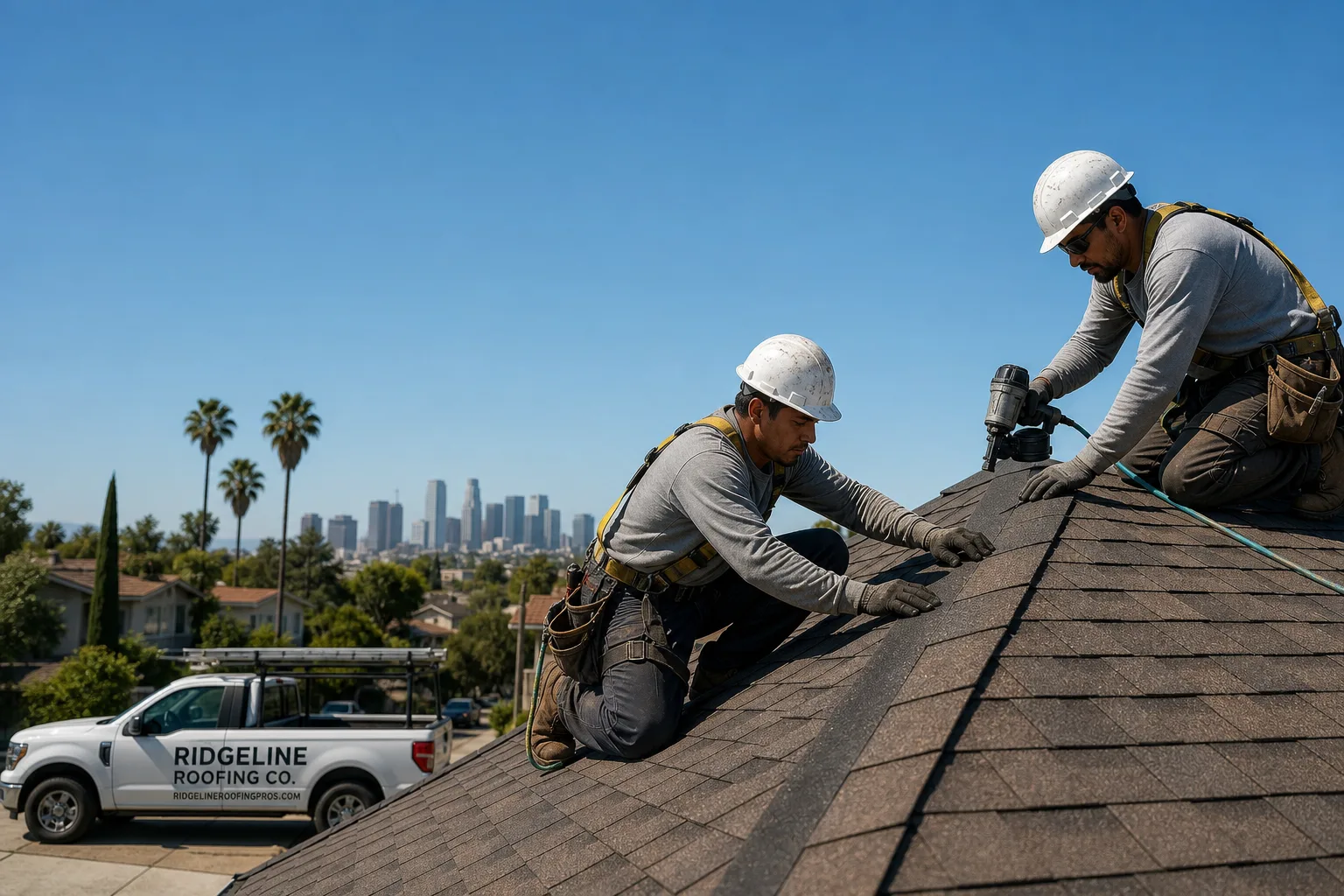
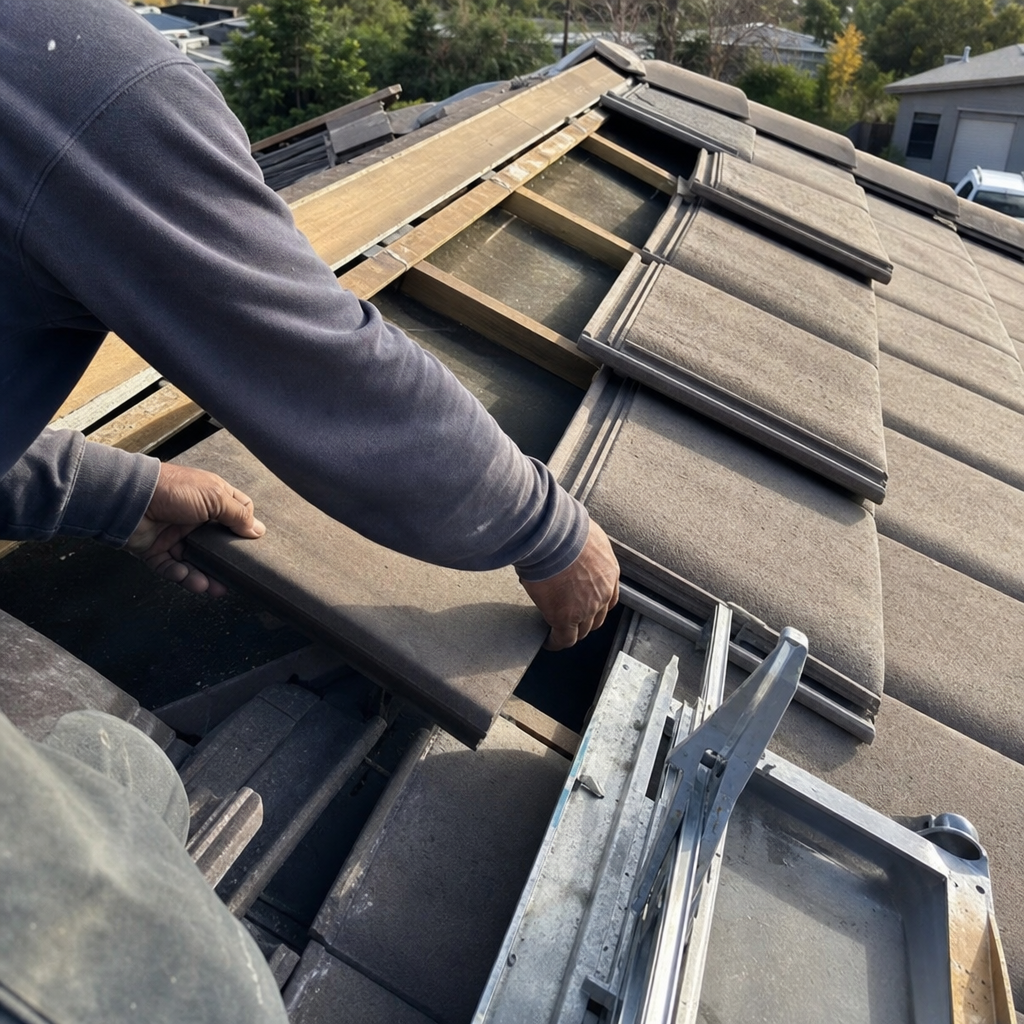
Fast, Reliable Specialty Roofing Across Milpitas
Specialty roofing in Milpitas runs $8,500-$24,000 depending on material and roof complexity, with most inspections scheduled same-day and repairs started within 48 hours. Our Specialty Roofing team has worked Milpitas roofs since the mid-1980s, from the original Sunnyhills ranches to the concrete tile subdivisions climbing the eastern foothills toward Calaveras Road. We know the difference between a roof that just needs patching and one that’s telling you to rethink the whole system. Call (844) 563-1816 - a live person answers, even at 2 a.m. when the wind off the Diablo Range has you worried about that loose ridge cap.
Why Ridgeline Roofing Co. Is Milpitas’s Preferred Specialty Roofing Company
We’ve been driving to Milpitas since 2016, back when the Calaveras Hills subdivisions were still new and those heavy concrete tile roofs were being laid by the truckload. Forty-two years later, we’re still here, still hiring local crews, still training apprentices into journeymen who know this city’s roofs by heart. Our technicians are background-checked, uniformed, and they photograph every inspection from your actual roof - not from the driveway with a scary speech.
Milpitas homeowners call us because we answer the phone. A live person, 24 hours a day, seven days a week. No voicemail trees, no “we’ll call you back between 8 and 5.” When fog rolls in off the baylands and you spot water staining the ceiling, that matters.
Our 90-Day Done Right Promise is written, not whispered. If it’s not right, we come back and make it right. No paperwork to file, no arguing, no runaround. That’s how we’ve stayed in business four decades - one honest job at a time.
We carry full authorization for GAF, CertainTeed, Owens Corning, Atlas, Tamko, and Boral. The materials we specify are the materials that arrive. No substitutions, no “equivalent” products you didn’t agree to.
Our Specialty Roofing Services in Milpitas
Solar Ready Roofing
Milpitas’s eastern foothills get steady sun exposure, and more homeowners are adding panels before NEM 3.0 rates make the math harder. Solar ready roofing means we install the underlayment, flashing, and structural prep so your panel mount doesn’t compromise the membrane. On the 1980s-2000s concrete tile homes common near Calaveras Hills, we often strip the heavy tile entirely and install a lighter, solar-optimized standing-seam metal or high-grade asphalt system - cutting roof weight by up to 60% while giving your installer a clean, warrantied surface to work from. The original tile was never designed for rack penetration, and the seismic load it adds near the Calaveras Fault is a real concern.
TPO Roofing
TPO - thermoplastic polyolefin - is the standard for low-slope commercial and multi-family roofing in Milpitas’s industrial corridors near Dixon Landing Road and the I-880 corridor. The white reflective surface cuts cooling loads, which matters when summer heat builds in the thermal pinch between the Bay and the Diablo Range. We install fully adhered and mechanically fastened systems from GAF and CertainTeed, with heat-welded seams that hold against Milpitas’s wind gusts better than taped or glued alternatives. For buildings near the baylands where overnight fog keeps surfaces damp longer, we specify thicker mil membranes and enhanced seam detailing.
EPDM Roofing
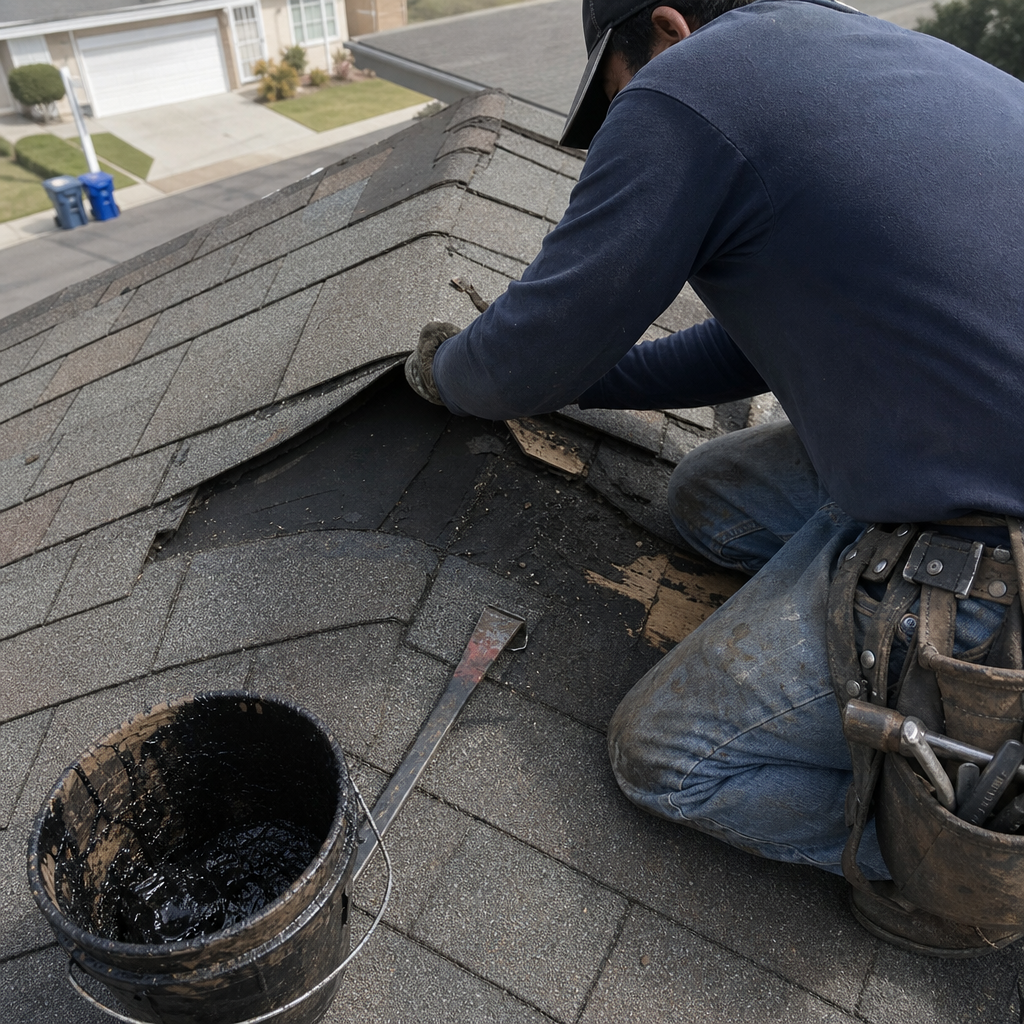
EPDM rubber roofing still has a place on Milpitas’s older commercial stock - the 1960s and 1970s warehouse and retail buildings where a black membrane’s thermal cycling tolerance outweighs reflectivity concerns. We handle full replacements and targeted repairs, including parapet wall flashing rebuilds where Milpitas’s marine moisture has degraded caulking and metalwork. Ballasted, mechanically attached, or fully adhered - we match the system to your building’s structure and your maintenance budget.
Modified Bitumen
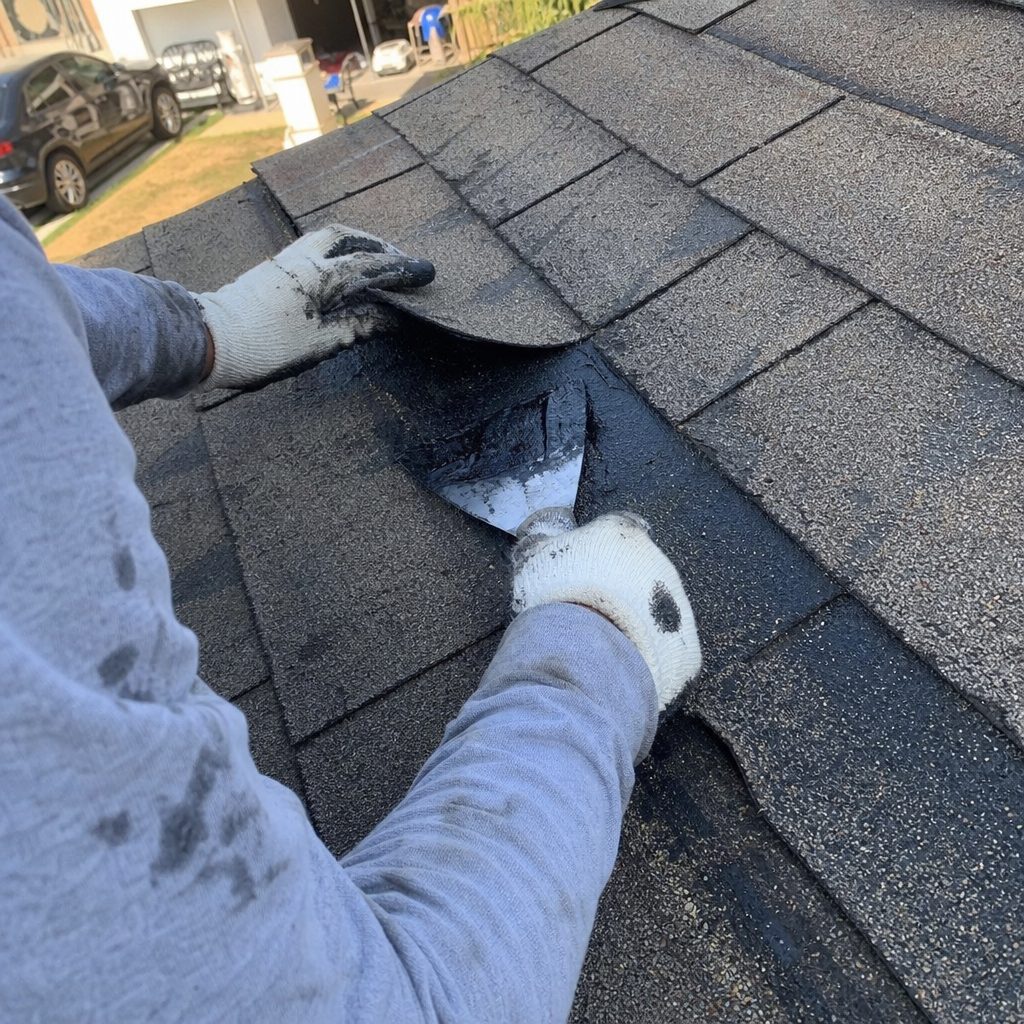
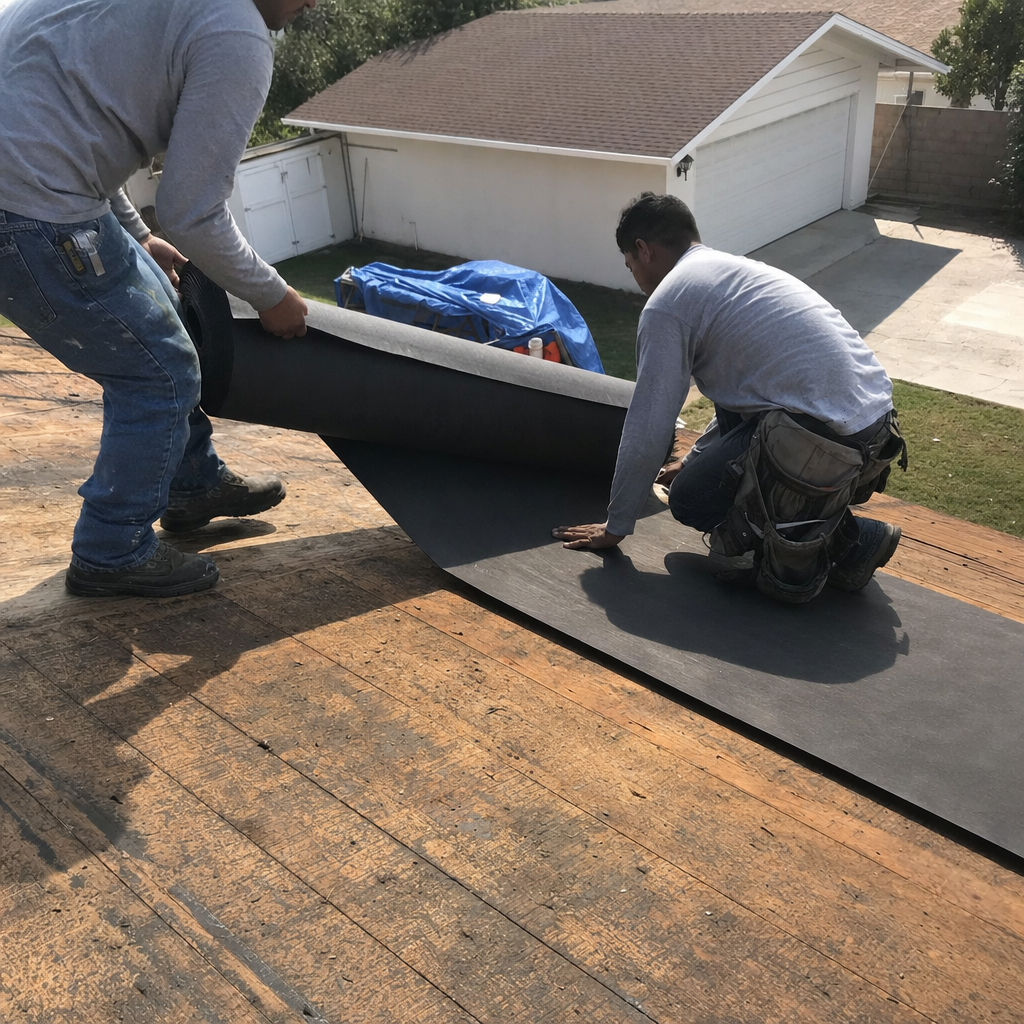
Modified bitumen remains a practical choice for Milpitas’s flat and low-slope roofs where foot traffic, equipment access, or budget constraints make single-ply less suitable. We install torch-applied, cold-applied, and self-adhering systems, often as a cap sheet over built-up roofing that’s reached the end of its service life. In the wetter western portions of Milpitas near the baylands, we pay particular attention to drainage design - ponding water on a modified system is a slow death sentence, and we’ve seen too many roofs fail from inadequate slope, not material defect.
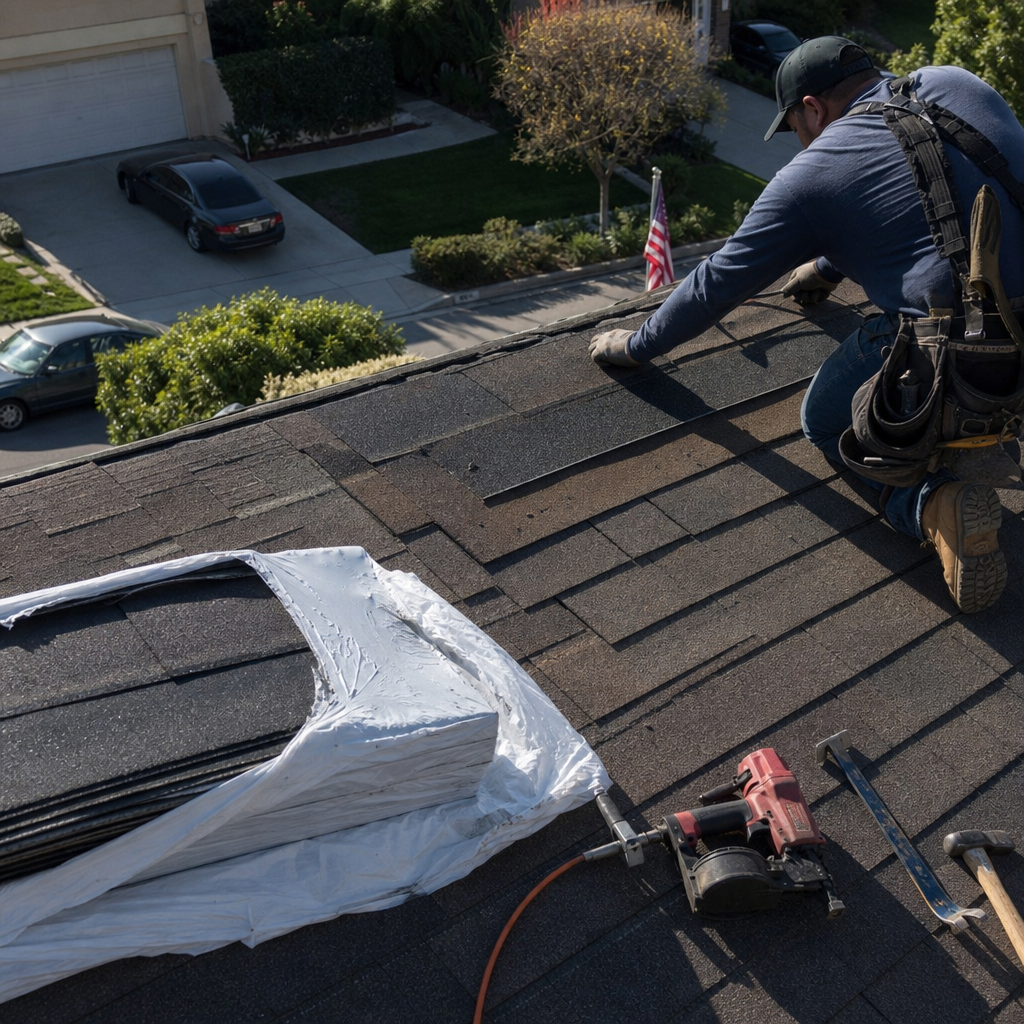
Green Roof & Built-Up Roofing
Green roofing is still emerging in Milpitas, but we’ve installed vegetated systems on commercial buildings where stormwater management and thermal mass are priorities. Built-up roofing - the old tar-and-gravel standard - persists on some 1960s and 1970s commercial stock in the industrial zones. We handle both full tear-offs and strategic recoveries, always with an eye toward what the structure can bear and what Milpitas’s wind and moisture patterns will do to the assembly.
What happens when you call
- 1
A real person answersNo phone trees - you reach a local pro.
- 2
You get an upfront price rangeHonest numbers before anyone is dispatched.
- 3
A background-checked tech heads outLicensed & insured, dispatched right away.
- 4
You approve before work beginsNothing starts until you say go.
Trusted Brands We Service in Milpitas
We stock and install GAF, CertainTeed, Owens Corning, Atlas, Tamko, and Boral - seven manufacturer lines, no substitutions. For Milpitas customers, that means we don’t order materials from a warehouse three counties away and hope they arrive. We maintain relationships with regional distributors who know our specs and our volume. When a Calaveras Hills homeowner needs matching tile for a 1995 installation, or a commercial property manager near Montague Expressway needs TPO membrane in a specific mil and color, we source it fast. Most repairs finish in a single visit. Most full replacements start within two weeks of estimate approval. The number on the estimate is the number on the invoice - a square deal, no surprises.
Common Specialty Roofing Problems We See in Milpitas Homes
- Cracked field tiles and failed underlayment on 1980s-2000s concrete tile roofs. The eastern foothills subdivisions - Calaveras Hills, the streets off Calaveras Road - are full of these roofs now hitting 25-35 years. The tile itself cracks from thermal cycling, but the real failure is the underlayment beneath, baked brittle and now leaking at every penetration. Afternoon winds off the Diablo Range knock ridge caps and hip tiles loose at rates we don’t see in flatland Milpitas.
- Sealant cracking and flashing separation from marine moisture and fog. Milpitas sits in a thermal pinch point. The marine layer pushes inland overnight, fog lingers in lower elevations near the baylands, and north-facing slopes stay damp enough to grow moss and lichen. That moisture accelerates sealant failure and metal corrosion at flashings - especially on tile roofs where the original installer used standard-grade caulk instead of polyurethane or silicone.
- Aging 3-tab asphalt shingles on 1950s-1960s Sunnyhills ranches. These homes carry original or once-replaced shingles with degraded underlayment underneath. Milpitas’s wind gusts - more frequent than in central San Jose - lift and tear the tabs, and the old felt beneath can’t shed water once the shingle layer is compromised. We see this pattern repeatedly in the streets between Calaveras Boulevard and the BART corridor.
- Seismic load concerns on heavy tile roofs near the Calaveras Fault. This one keeps us up at night more than the others. Milpitas’s 1980s-2000s concrete tile roofs were installed before modern seismic code updates fully addressed lateral roof load. The weight of that tile - 900-1,200 pounds per square - adds significant mass to a structure already sitting atop an active fault system. Insurance underwriters have noticed. We have conversations about retrofitting to lighter Class A materials that we simply don’t have in flat-valley San Jose neighborhoods a few miles south.
Roofing in Milpitas That Stands the Ridge
The Bay Area’s salt air, sudden wind gusts, and aging wood-shake stock catch up with every roof eventually. We inspect with photos you keep, explain what matters and what can wait, and price it as a square deal with no surprises on the bill. If your insurer needs documentation, we help without the hustle. we coordinate through our San Francisco Bay Area service area
Every job follows our K.E.Y.S. code: Krafted right by trained journeymen, Every time with the same care, Your home first, and Standing behind it with The Keystone Standard guarantee in writing. We’ll be there when we say. Senior and veteran homeowners save 5%.
Pricing for Specialty Roofing in Milpitas, CA
| Service | Typical Range in Milpitas | What Affects Cost |
|---|---|---|
| TPO membrane repair (patch, flashing, seam) | $450-$1,200 | Accessibility, membrane age, extent of water intrusion |
| Modified bitumen repair or partial recover | $800-$2,500 | Number of plies, drainage corrections needed |
| Solar-ready roof retrofit (strip and replace, asphalt or metal) | $12,000-$22,000 | Roof size, structural reinforcement, panel layout complexity |
| Full TPO or modified bitumen replacement (commercial) | $8,500-$18,000 | Square footage, insulation requirements, warranty term |
| Concrete tile removal + lightweight replacement | $18,000-$24,000 | Tile weight disposal, structural assessment, new material spec |
These are real numbers for the Milpitas market in 2025-2026. Your roof may fall outside these ranges if it’s unusually large, complex, or requires structural work we can’t assess until we’re on site. We don’t quote over a photo - we inspect, we measure, we explain what we found, and we give you a written estimate with one number on it. That’s the number on the invoice. Call (844) 563-1816 for a free estimate; most Milpitas inspections happen within 24 hours.
We Also Serve Cities Near Milpitas
Our crews work throughout Santa Clara County and the South Bay. We regularly handle Specialty Roofing in Milpitas and neighboring Santa Clara, Sunnyvale, San Jose, and Mountain View. Each city has its own roofing character - San Jose’s broader flat valleys, Mountain View’s tech-campus flat roofs, Sunnyvale’s mixed postwar and new construction - and we adjust our recommendations accordingly. But Milpitas’s seismic and wind exposure, its heavy tile legacy stock, and its thermal pinch-point moisture patterns make it a distinct market with distinct needs. We know the difference because we’ve been driving these roads for over four decades.
Serving Milpitas, CA - Our Local Coverage Area
We’re based in the Milpitas area and know this community well. Use the map below to see our service coverage - if you’re nearby, we can almost certainly help.
FAQs - Specialty Roofing in Milpitas
Yes - and for reasons beyond the roof itself. A typical 1990s concrete tile roof in Milpitas weighs 900-1,200 pounds per square, adding significant lateral load to a structure sitting near the active Calaveras Fault. Insurance underwriters have increasingly flagged this combination, and some carriers now require engineering assessment before renewal. Switching to a standing-seam metal or premium asphalt system cuts that weight by 50-60%, often satisfies updated seismic requirements, and can lower premiums. We completed exactly this retrofit on a 1988 Calaveras Hills home where cracked field tiles and failed underlayment met a chimney flashing - the heavy tile was compounding seismic risk, so we advised against like-for-like repair and installed a lighter metal system that met updated insurance standards. Call (844) 563-1816 and we’ll assess your specific structure; estimates are free.
Milpitas experiences more frequent wind gusts and longer overnight moisture retention than central San Jose due to its position between the Bay’s marine layer and the Diablo Range foothills. That thermal pinch means sealants dry slower, metal flashings corrode faster, and north-facing slopes grow moss that traps water against the membrane. On tile roofs, the afternoon winds off the hills near Calaveras Road and Ed Levin County Park consistently knock ridge caps and hip tiles loose - a failure pattern we quote for proactively, but out-of-area contractors routinely miss. For flat roofs, the extended damp periods mean we specify enhanced seam detailing and more aggressive drainage design than we would in drier San Jose neighborhoods. The difference is real, and it changes what we recommend.
Replacing individual tiles addresses the symptom, not the system. On a 1988 roof, the underlayment beneath those tiles is almost certainly degraded - baked brittle by decades of thermal cycling, now leaking at penetrations and along valleys even where tiles look intact. We’ve opened too many “just a few broken tiles” jobs to find saturated decking and mold inside the attic. The honest assessment: if your roof is original or near-original, you’re looking at underlayment replacement at minimum, and you should weigh that cost against full retrofit to a lighter, longer-lived system. For a 1988 concrete tile roof in Milpitas, we typically quote $18,000-$24,000 for strip-and-replace with lightweight Class A materials versus $8,000-$12,000 for underlayment replacement with new tile - but the lighter system cuts seismic load and often pays back in insurance and energy savings. We’ll give you both numbers and let you decide.
Yes - particularly if your building sits in the lower-elevation western portions of Milpitas near the baylands. Extended fog events and overnight dampness keep TPO surfaces wet longer, which accelerates oxidation and can degrade seam adhesives if the original installer used tape rather than heat-welding. We inspect for membrane chalking, seam lifting, and ponding areas where drainage is inadequate. For buildings in these microclimates, we often recommend thicker mil membrane (80 mil versus 60), fully adhered installation over mechanically fastened for better wind uplift resistance, and enhanced perimeter fastening. The material itself is sound - the specification and detail work need to match the location. Call (844) 563-1816 for an inspection; we’ll photograph what we find and explain it straight.
We typically specify GAF Timberline Solar or CertainTeed Apollo II for integrated solar-ready systems, or a standing-seam metal roof from Boral or Atlas that accommodates standard rack mounting. The right choice depends on your roof pitch, structural capacity, and whether you’re integrating now or prepping for future installation. For the heavy concrete tile homes common in eastern Milpitas, we almost always recommend stripping to a lighter substrate - the combined load of old tile plus panel rack plus wind uplift is more than most 1980s-1990s truss systems were designed to handle, especially near the Calaveras Fault. We coordinate with your solar installer on layout and penetration sealing, and we warranty our roof work independently of their panel work. Estimates are free; call (844) 563-1816 to schedule.
Written by Pete Navarro, Owner at Ridgeline Roofing Co., serving Milpitas since 2016.