
Last updated July 26, 2026
DIY vs Professional Roof Replacement & Installation: What’s Safe to Do Yourself
Here is a fact that stops most Los Angeles homeowners cold: in California, performing a full roof replacement without a C-39 roofing contractor license, even on your own home, can render the work unpermittable and create a material disclosure obligation that follows the property title indefinitely. We have seen this surface during escrow in neighborhoods from Encino to Eagle Rock, where sellers who replaced their own roofs fifteen years earlier suddenly face demands for retroactive permits, engineered letters, or price reductions that dwarf what professional installation would have cost. This guide explains what you can safely handle yourself, what legally requires a licensed professional, and how to protect your investment whether you climb the ladder or hire someone who does.
Quick Answer
Homeowners in Los Angeles can safely perform limited pre-replacement prep work, such as removing old shingles from a small section to inspect decking condition or gathering independent material bids. Full Roof Replacement & Installation, including decking repair, underlayment installation, and flashing integration, requires a C-39 licensed contractor in California and is not safe or legal to DIY. The permitting, warranty, and resale disclosure consequences of unlicensed full replacement far exceed any potential labor savings.
Table of Contents
- California’s C-39 License Requirement: What It Actually Means for Homeowners
- Owner-Builder Permits in LA County: What They Allow and What They Cost You at Resale
- The Three Components Even Experienced DIYers Underestimate
- The Narrow Category of Safe DIY Prep Work Before Replacement
- How to Evaluate a Replacement Bid Like Someone Who Understands the Work
- Common Mistakes to Avoid
- When to Call a Professional
- Frequently Asked Questions
- The Bottom Line
California’s C-39 License Requirement: What It Actually Means for Homeowners
California Business and Professions Code Section 7048 requires a C-39 Roofing Contractor license for any project exceeding $500 in combined labor and materials. This threshold is lower than most homeowners assume, and it applies to your own primary residence without exception. The Contractors State License Board enforces this not to create bureaucracy, but because roof failures in California’s seismic and fire-prone environment have historically caused disproportionate property damage and injury.
The C-39 classification covers more than nailing shingles. It encompasses:
- Decking repair and replacement, including structural sheathing
- Weatherproofing systems: underlayment, ice and water shield, and vapor barriers
- Flashing installation at walls, chimneys, vents, and valleys
- Low-slope and flat roof applications requiring heat welding or adhesive systems
- Fire-rated assembly compliance, critical in Los Angeles County’s wildland-urban interface zones
Here is where homeowners get caught. The $500 threshold is cumulative across the entire project, not per phase. Strip your own shingles, patch two sheets of rotted decking, and install underlayment yourself, and you have likely crossed into C-39 territory even if no single task seemed major. More critically, work performed without proper licensing cannot be permitted through LA County or city building departments. Unpermitted roof work must be disclosed on California’s Transfer Disclosure Statement, and buyers’ lenders increasingly require permit verification for roof replacements.
We have inspected homes in Silver Lake and Studio City where owners performed competent-looking DIY replacements in the 1990s. The work held up. But when those owners sold, the lack of permits triggered lender requirements for engineer certification or full re-roofing. The “savings” evaporated, with interest, decades later.
Owner-Builder Permits in LA County: What They Allow and What They Cost You at Resale
Los Angeles County and incorporated cities issue owner-builder permits that appear to offer a legal path for DIY roof replacement. They do not work the way most homeowners expect.
An owner-builder permit allows you to act as your own general contractor. It does not exempt you from hiring C-39 licensed subcontractors for roofing work. It does not eliminate the disclosure obligations. And it places full liability for workers’ compensation, site safety, and code compliance directly on you as the permit holder.
The specific obligations include:
- Workers’ compensation insurance for anyone performing labor, including day laborers you hire. Personal homeowners insurance excludes worksite injuries to hired workers in nearly all cases.
- Personal liability for code violations discovered later, with no contractor’s license bond to access for remediation.
- Mandatory disclosure on the Transfer Disclosure Statement that the property has an owner-builder permit, which triggers buyer scrutiny and often appraisal complications.
- Responsibility for all inspections, including mid-roof decking inspection, dry-in inspection, and final inspection, scheduled and passed in correct sequence.
In our experience across Los Angeles, from the hills of Pacific Palisades to the flat roofs of Mid-City, owner-builder permits for roofing make financial sense only for developers with existing contractor relationships and insurance infrastructure. For the homeowner planning to live in the house another twenty years, the permit creates a permanent file entry that complicates every future transaction.
The disclosure obligation is particularly sharp in California’s current market. Buyers and their agents have become permit-savvy. An owner-builder roof permit from 2018, even with final inspection passed, now prompts requests for lien releases, workers’ comp certificates, and sometimes re-inspection. The burden falls on the seller to produce documentation that a licensed contractor would have maintained as routine business records.
The Three Components Even Experienced DIYers Underestimate
We have met capable homeowners in Los Angeles who have built decks, rewired kitchens, and plumbed bathrooms. Roofing replacement defeats them at three specific points that do not respond to general handiness.
Decking Assessment
Removing shingles reveals plywood or plank decking that may look sound from the attic below but proves compromised underfoot. In Los Angeles, decades of Santa Ana wind-driven rain, combined with original construction using lower-grade sheathing in many 1950s-1970s neighborhoods, creates rot patterns that are not visible until you walk the surface. Stepping through rotted decking six feet from the eaves is a common injury point for DIYers. More subtly, partial decking replacement requires matching thickness exactly, engineering proper fastening patterns into rafters or trusses, and integrating with existing ventilation baffles. A gap of even 1/8 inch at a plywood seam telegraphs through to the finished roof surface.
Code-Compliant Underlayment Sequencing
Los Angeles adopted enhanced underlayment requirements following the 2017 wildfire season and subsequent insurance market contraction. Current code in most LA County jurisdictions requires:
- Two layers of underlayment in specific overlap patterns, or
- Self-adhering membrane at eaves, valleys, and penetrations, with specific temperature-rated installation conditions
The sequencing matters. Underlayment installed in the wrong order, or with inadequate overlap at horizontal joints, creates water intrusion paths that may not leak for months or years. We have torn off DIY roofs in Los Feliz where the homeowner used quality materials, including Atlas and Tamko products, but installed the ice-and-water shield after the felt underlayment rather than beneath it at valleys. The result was a $14,000 remediation of perfectly good shingles to fix an invisible sequencing error.
Flashing Integration at Walls
Step flashing, counterflashing, and headwall flashing require coordination with siding, stucco, or masonry that most DIY guides treat as an afterthought. In Los Angeles, where many homes have second-story additions with irregular wall-to-roof junctions, improper flashing is the single most common source of interior water damage we encounter. The work demands understanding of how the wall system drains, where to terminate flashing without creating a new penetration, and how to seal without relying on caulk that will fail in UV exposure. C-39 contractors train for years on these junctions. A weekend of YouTube videos does not substitute.
The Narrow Category of Safe DIY Prep Work Before Replacement
There is legitimate money-saving work a homeowner can perform before calling a professional. The key is stopping before you cross into licensed territory or create liability exposure.
What You Can Safely Do
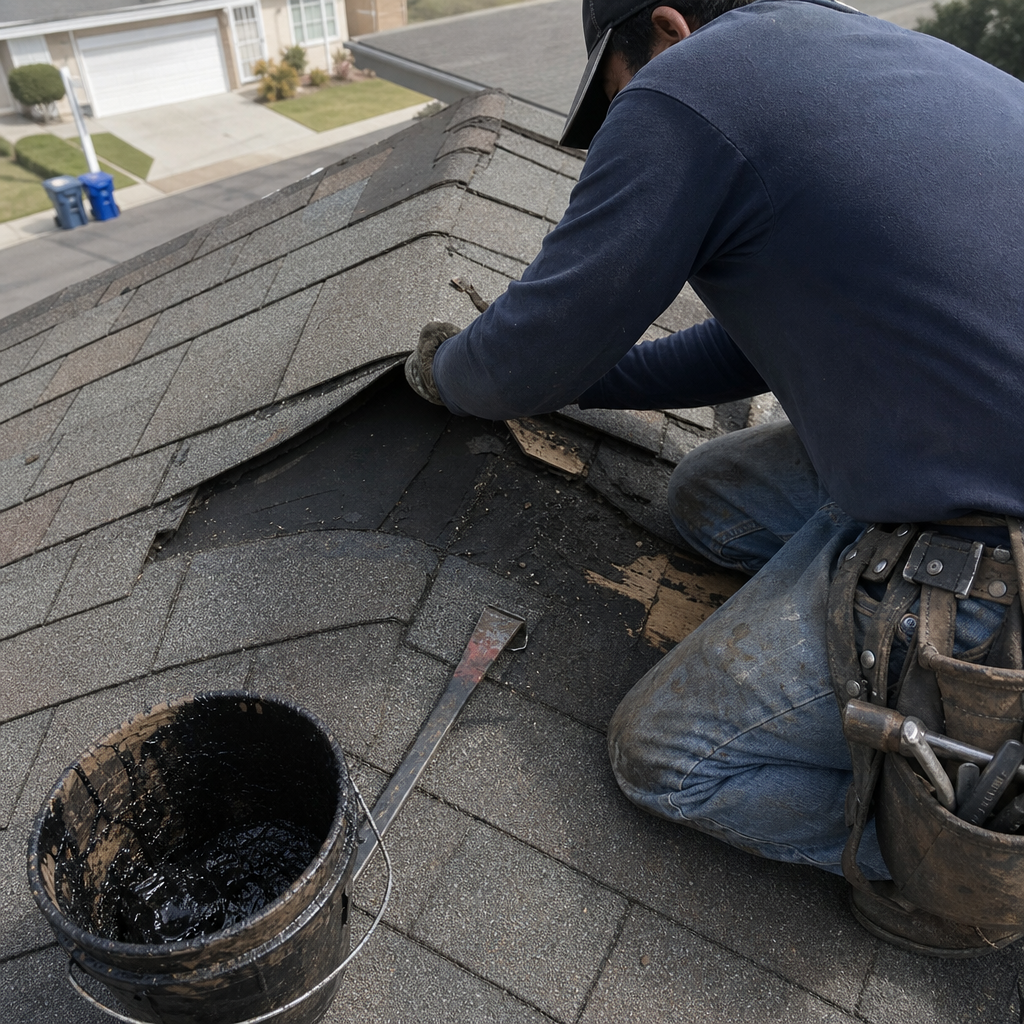
- Strip a test section for decking inspection. Remove shingles from a 4×8 foot area at a suspected weak point, typically near a valley or below a vent. Examine the decking from above for delamination, punkiness, or prior patchwork. Photograph everything. This gives you information to discuss with contractors and prevents surprises in their bids.
- Document interior water trails. Map stains on drywall or plaster to roof penetrations using attic access. Mark corresponding exterior locations with temporary tape. This saves contractor diagnostic time and ensures your concerns are addressed in scope.
- Source independent material bids. Contact suppliers for shingle, underlayment, and accessory pricing on the brands your contractor proposes. You will rarely beat a contractor’s volume pricing, but you will understand whether substitutions are occurring and whether proposed upgrades are priced fairly.
- Clear attic access and protect stored items. Roof replacement creates vibration and dust. Moving valuables before work begins is your responsibility regardless, and doing it early prevents rushed damage.
What Crosses the Line
Removing more than 25% of your roof surface, even for inspection purposes, triggers permit requirements in many LA jurisdictions. Performing any decking repair, even “just a few sheets,” enters C-39 territory. Installing any underlayment, even as a “temporary” measure, creates inspection and warranty complications. If you are unsure where your prep work sits, call us before proceeding. A five-minute conversation prevents a five-figure problem.
How to Evaluate a Replacement Bid Like Someone Who Understands the Work
The gap between a complete replacement scope and a lowball that costs more to finish correctly is visible in five line items. We encourage Los Angeles homeowners to request itemized bids and verify each point.
| Line Item | What Complete Scope Includes | What Lowball Bids Omit |
|---|---|---|
| Decking | Full inspection, replacement of all compromised sheets, matching thickness, proper fastening pattern | “Replace as needed” with no unit price for additional sheets; visual-only inspection from attic |
| Underlayment | Two-layer system or self-adhering membrane per current LA County code, with manufacturer-specified fasteners and overlap | Single layer felt; omission of ice-and-water shield at valleys and penetrations |
| Flashing | New step flashing at all walls, new pipe boots, valley metal replacement | Reuse of existing flashing; caulk-dependent repairs at headwalls |
| Ventilation | Calculation of intake and exhaust balance per manufacturer warranty requirements | No analysis; same vents back in same locations regardless of attic conditions |
| Cleanup and protection | Magnetic nail sweep, gutter clearing, landscaping protection, dedicated disposal container | General debris removal only; no specific protection or cleanup standards |
A bid missing any of these line items, or listing them vaguely, will cost more before the job is done right. The lowest initial price often becomes the most expensive path. We have repaired too many “completed” Los Angeles roofs where the homeowner paid twice: once for the cheap replacement, again for us to strip and reinstall correctly.
When comparing bids, ask each contractor to specify manufacturer and product line for shingles and accessories. Ridgeline Roofing Co. is an authorized installer of GAF, CertainTeed, Owens Corning, IKO, Atlas, Tamko, and Boral. We do not substitute equivalent products without written approval because manufacturer warranties require complete system installation, including specified underlayment, starter strips, and ridge caps. A bid proposing “architectural shingles, contractor’s choice” is a bid with no warranty.
Common Mistakes to Avoid
- Assuming your homeowners insurance covers DIY roofing injuries. It almost certainly does not. Falls from single-story roofs cause permanent injury. Workers’ compensation for a hired helper requires a policy you cannot legally obtain without a license.
- Believing a passed final inspection cures all permit defects. In Los Angeles, inspectors verify visible code compliance at the moment of inspection. They do not certify that the permit was properly pulled, that the correct license holder performed the work, or that owner-builder disclosures will not affect resale.
- Installing synthetic underlayment in direct summer sun without immediate shingle coverage. Los Angeles heat degrades exposed synthetic underlayment rapidly. We have seen DIY installations where underlayment wrinkled and delaminated within 48 hours of installation, requiring full removal.
- Reusing old flashing to “save money.” Flashing has a service life. Reused step flashing with existing nail holes creates leak paths that manifest during the first winter storm, typically after any workmanship warranty has expired.
- Neglecting manufacturer system requirements. Installing Atlas or Tamko shingles with non-specified underlayment voids the warranty regardless of installation quality. The shingle is only one component of a warranted roof system.
- Failing to coordinate gutter removal and reinstallation. Full replacement requires gutter drop and rehang. Bids that omit this create $800-$2,400 surprise charges mid-project.
- Working without understanding LA County’s specific fire rating requirements. Homes in Very High Fire Hazard Severity Zones require Class A assembly ratings. Unrated or improperly documented assemblies affect insurance renewals and resale.
When to Call a Professional
Call a C-39 licensed contractor when your project involves decking, underlayment, flashing, or more than cosmetic shingle repair. Call when your home sits in a Very High Fire Hazard Severity Zone and fire-rated assembly documentation matters for insurance. Call when you intend to sell within fifteen years and clean title transfer matters. Call when the roof is steep enough that a fall would cause serious injury, which describes most Los Angeles hillside construction from Hollywood Hills to Mount Washington.
Ridgeline Roofing Co. offers free estimates in Los Angeles. A background-checked, uniformed technician will photograph your actual roof, explain what we find, and provide upfront pricing with no surprise additions. If you are weighing DIY against professional replacement, see our DIY vs Professional Roofing: The Los Angeles Homeowner’s Decision Guide or call us-we will tell you honestly what your specific roof requires. Call (844) 563-1816. A live person answers, including nights, weekends, and the middle of a storm.
Frequently Asked Questions
No, not legally for a full replacement. California requires a C-39 roofing contractor license for any roofing project exceeding $500 in combined labor and materials, and full replacement always exceeds this threshold. Performing unlicensed work makes permitting impossible and creates permanent disclosure obligations that affect resale. For a free assessment of what your roof actually needs, call Ridgeline Roofing Co. at (844) 563-1816.
Penalties vary by jurisdiction but include stop-work orders, fines, and mandatory removal of unpermitted work. The more common consequence is non-disclosure liability: California law requires sellers to disclose unpermitted work, and buyers can pursue damages for failure to disclose. Retroactive permitting of unlicensed work is often impossible, requiring full replacement to establish legal compliance.
Typical Los Angeles roof replacement ranges from $15,000 to $35,000 for standard asphalt shingle on a single-family home, with variables including decking condition, accessibility, and fire rating requirements. Tile, specialty, and low-slope systems range higher. Ridgeline Roofing Co. provides exact, itemized, upfront pricing before work begins. Call (844) 563-1816 for a free estimate.
Removing a limited test section, up to approximately 25% of roof area, is generally permissible for inspection purposes. Removing the full roof surface triggers permit requirements and may expose decking to weather damage if contractor scheduling slips. We recommend photographing the exposed decking and covering with tarp if rain is forecast, rather than proceeding with full removal.
Insurance policies vary, but most exclude coverage for damage resulting from unpermitted or unlicensed work. More critically, personal injury to you or anyone assisting you is typically excluded from standard homeowners coverage. Workers’ compensation for hired help requires a policy unavailable to unlicensed homeowners. The financial exposure exceeds any labor savings.
Verify active C-39 license through the Contractors State License Board. Confirm local presence and longevity, not storm-chaser status. Request manufacturer authorization letters for the products specified. Demand itemized bids with unit pricing for decking replacement. Ask about workmanship warranty terms and whether they are written. Ridgeline Roofing Co. has served Los Angeles since 2016 with a written 90-Day Done Right Promise, no paperwork, no arguing. Call (844) 563-1816 to verify our license and schedule inspection.
The Bottom Line
DIY roof replacement in Los Angeles is not a question of skill or willingness to work hard. It is a question of legal compliance, financial exposure, and long-term property value. California’s C-39 requirement exists because roof failures have outsized consequences in our climate and seismic environment. Owner-builder permits do not provide the shortcut they appear to offer. The legitimate DIY contribution to roof replacement is preparation, information gathering, and informed contractor selection, not performance of the work itself. For specialty systems, read our DIY vs Professional Specialty Roofing: What’s Safe to Do Yourself. Done right, a professional replacement protects your home, your liability exposure, and your ability to sell without complication. And if it is not right, we make it right.
Written by the team at Ridgeline Roofing Co., serving Los Angeles since 2016. Explore more guides & resources on our blog.