
Last updated July 26, 2026
How Long Does Roof Repair Take? Timelines and What to Expect
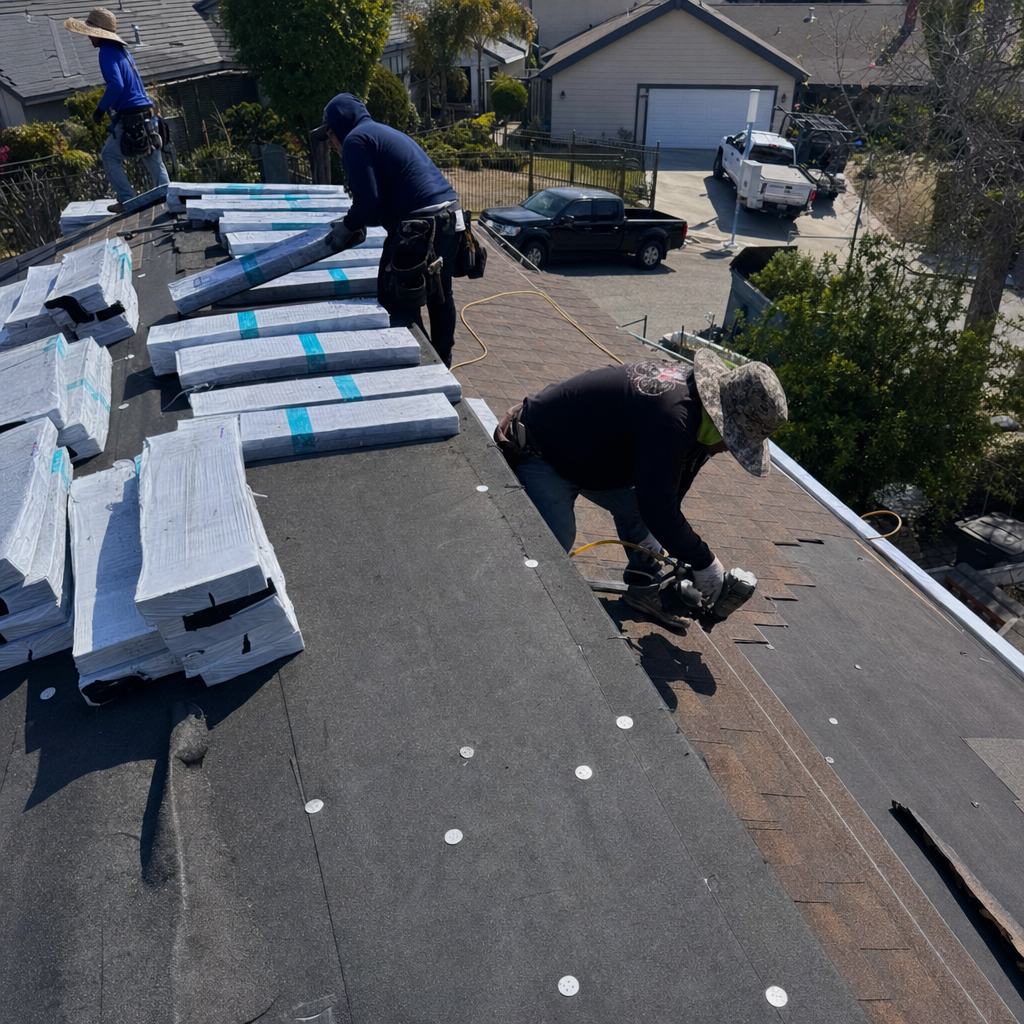
The phrase that should make you pause is “We’ll have it done by noon.” In forty-two years of roofing across Los Angeles, we’ve learned that no reputable crew commits to a completion clock before they’ve opened the damaged area and seen what’s underneath. A two-hour shingle patch can stretch to two days once you discover saturated decking, corroded valley flashing, or a previous repair that was papered over instead of fixed right. This guide explains what actually drives Roof Repair timelines, why the hidden variables matter more than the visible damage, and how Los Angeles homeowners can plan with realistic expectations instead of optimistic guesses.
Quick Answer
Most residential roof replacement and installation repairs in Los Angeles take between two hours and two full days. Simple shingle patches or pipe boot replacements often finish in a single morning, while valley repairs, flashing replacement, or any job requiring decking replacement typically need one to two days. The critical variable is not the size of the visible damage but the condition of the underlying structure, which only becomes clear once the crew opens the roof.
Table of Contents
- Realistic Timelines for Five Common Repair Types
- Why Decking Condition Is the Biggest Schedule Variable
- Los Angeles Permitting and How It Affects Your Schedule
- Weather Windows and the LA Climate Advantage
- What Your Written Scope of Work Should Specify
- What Actually Slows Down Roof Repairs
- Common Mistakes to Avoid
- When to Call a Professional
- Frequently Asked Questions
Realistic Timelines for Five Common Repair Types
Homeowners understandably want a straight answer. Here is what we tell people who call our office, based on jobs we’ve completed from Pasadena to Pacific Palisades.
1. Shingle Patch or Tab Replacement
Best case: 1-2 hours
Discovery case: Half day to full day
A few wind-torn shingles or a cracked tab is the repair every homeowner hopes for. If the decking beneath is sound and the surrounding shingles flex without cracking, a skilled crew removes the damaged pieces, slides new Atlas or Tamko shingles into place, and seals the work. The discovery case usually involves brittle shingles that break during removal, requiring a larger replacement area, or decking that has taken on moisture from a slow leak. In older Los Angeles neighborhoods like Highland Park or Eagle Rock, where roofs from the 1980s and 1990s are common, brittle shingles are the norm rather than the exception.
2. Pipe Boot Replacement
Best case: 1-2 hours
Discovery case: 3-4 hours
The rubber collar around plumbing vents cracks after about ten to fifteen years in the Southern California sun. Swapping a boot is straightforward unless the surrounding shingles have conformed to the old boot’s shape, making clean resealing difficult. We keep multiple boot sizes on our trucks, so there is rarely a material delay.
3. Flashing Replacement (Wall, Chimney, or Dormer)
Best case: Half day
Discovery case: 1-2 days
Flashing work is where timelines diverge most dramatically. Step flashing tucked behind siding requires careful removal and replacement of siding courses. Counter-flashing on a chimney may need grinding and resealing, which cannot be rushed. The discovery case almost always involves rot in the framing or sheathing behind the flashing, especially on north-facing walls in Los Angeles where morning dew lingers. We’ve replaced flashing on homes in Los Feliz where the underlying framing had been deteriorating for years, invisible until the metal came out.
4. Valley Repair
Best case: Half day
Discovery case: 1-2 days
Valleys channel the most water, so they fail most dramatically. A simple W-valley replacement with new metal and shingles is manageable. The discovery case involves decking saturation along the valley line, sometimes extending several feet up each slope. In Los Angeles, where intense sun follows winter rains, valley decking can cycle between wet and baked, accelerating decay.
5. Ridge Vent or Ridge Cap Work
Best case: 2-4 hours
Discovery case: Full day
Ridge work seems simple because it is at the top, but it is also where roof planes meet and where wind uplift concentrates. Removing ridge caps exposes the peak decking, which in older homes may be the original skip sheathing rather than solid plywood. Matching existing ridge cap profiles for a clean look takes time.
| Repair Type | Best Case | Discovery Case | Primary Delay Factor |
|---|---|---|---|
| Shingle patch | 1-2 hours | Half to full day | Brittle shingles, decking moisture |
| Pipe boot replacement | 1-2 hours | 3-4 hours | Shingle conformity around old boot |
| Flashing replacement | Half day | 1-2 days | Hidden framing/sheathing rot |
| Valley repair | Half day | 1-2 days | Extended decking saturation |
| Ridge vent or cap work | 2-4 hours | Full day | Skip sheathing, profile matching |
Why Decking Condition Is the Biggest Schedule Variable
The single most important fact about roof repair timelines is this: you cannot see the decking from the ground, from the attic in most cases, or even from the roof surface. You see it only when the roofing material above it is removed.
Decking, also called sheathing, is the plywood or OSB layer between your rafters and your shingles. When water gets past the roofing, decking absorbs it. It may feel firm from below and still be compromised. We’ve opened roofs in Brentwood where the homeowner reported a “small leak for a few weeks” and found four-by-eight sheets of plywood that crumbled at the touch. We’ve opened roofs in South Gate with apparent catastrophic staining where the decking was sound and the leak had run along the surface without soaking in.
This unpredictability is why Roof Repair in Los Angeles should always begin with a photo-documented inspection. At Ridgeline Roofing Co., our technicians photograph the full roof surface, the attic where accessible, and any suspect areas. These photos go to the homeowner before work begins, with a clear explanation of what we expect to find and what we’ll do if we find something different. No surprises, no arguments, no pressure to proceed before you understand the scope.
The 90-Day Done Right Promise applies here specifically: if we open a roof and find decking damage we did not anticipate, we document it, explain it, and fix it. The promise is written, not verbal. There is no paperwork to file, no manager to escalate to, no runaround. If it is not right, we make it right.
For homeowners, the practical implication is to build contingency into your schedule. A repair scheduled for Tuesday morning with “we’ll be done by lunch” is a red flag. A repair scheduled for Tuesday with “we expect to finish Tuesday, and we’ll call by 2 PM if discovery changes the timeline” is the voice of experience.
Los Angeles Permitting and How It Affects Your Schedule
Not every roof repair needs a permit in Los Angeles, but the ones that do can face timeline impacts that have nothing to do with the crew’s skill or the weather.
The Los Angeles Department of Building and Safety (LADBS) generally requires permits for:
- Repairs exceeding 25 percent of the total roof area in any twelve-month period
- Any structural modification, including rafter or truss repair
- Changes to roof pitch or drainage paths
- Installation of new roof-mounted equipment (solar, HVAC) requiring structural attachment
For standard repairs under the 25 percent threshold, no permit is required, and work can proceed on schedule. For jobs that cross the threshold, the permitting timeline in Los Angeles typically runs:
- Plan submission and intake: 1-2 business days if submitted online through LADBS’s Electronic Plan Check system
- Initial plan review: 2-5 business days for simple residential reroof or repair plans
- Corrections and resubmission: 1-3 business days if the plan checker requests changes
- Permit issuance: Same day once approved
- Required inspections: Typically a mid-roof inspection if decking is exposed, and a final inspection; each must be scheduled with LADBS and can add 1-2 days depending on inspector availability
The practical impact: a repair that requires permitting can add one to two weeks to the overall timeline before work begins, plus inspection holds during the work. A reputable contractor in Los Angeles will know the threshold before starting and will tell you explicitly whether your job requires a permit. If a contractor says “we don’t bother with permits for repairs,” that is a liability transferred to you, and it may complicate future home sales or insurance claims.
At Ridgeline Roofing Co., we verify permit requirements during our initial inspection and handle submission ourselves. The homeowner sees the permit posted on the job site and receives inspection results. No guesswork, no shortcuts.
Weather Windows and the LA Climate Advantage
Los Angeles roofing contractors operate under weather conditions that would be the envy of Seattle, Miami, or Chicago. But the LA climate still imposes constraints that affect repair scheduling.
The rainy season runs roughly November through March, with January and February bringing the highest concentration of wet days. Even in dry months, marine layer mornings in coastal neighborhoods like Venice or San Pedro can leave roofs damp until 10 or 11 AM. A crew cannot safely work on wet shingles or wet decking, and sealants require dry surfaces to bond properly.
A legitimate hold-for-weather policy looks like this:
- The contractor monitors conditions and calls the homeowner by 7 AM if a scheduled start is delayed
- Delays are rescheduled within 48 hours, not bumped indefinitely
- Crews do not work on visibly wet surfaces or during active precipitation
- Partially completed work is protected with tarps or temporary seals if weather interrupts
The advantage in Los Angeles is that weather delays are measured in hours or single days, not weeks. A storm-chasing outfit from out of state may not understand local patterns, may not have relationships with suppliers for emergency materials, and may not return if rain pushes them behind schedule. A local company with decades in the market knows that January rain gives way to February sun, and plans accordingly.
We schedule repair work year-round in Los Angeles, with slightly more flexibility in spring and fall. Summer heat in the San Fernando Valley can make asphalt shingles too pliable to handle cleanly, so we start those jobs earlier in the day. These are the kinds of local scheduling judgments that come from doing the work in the specific neighborhoods we serve.
What Your Written Scope of Work Should Specify
A handshake and a verbal estimate are not enough protection when timelines matter. The written scope of work from your contractor should address time explicitly, not just money.
Here is what to look for:
- Expected duration with discovery clause: “Approximately X hours/days, subject to conditions visible upon opening.” This protects both parties from the fiction of certainty.
- Notification protocol: “Contractor will notify homeowner by [specific time] if discovery extends timeline beyond [specific buffer].” This prevents you from waiting at home for a crew that will not finish.
- Weather rescheduling terms: How soon before a weather hold, and how quickly rescheduled.
- Access requirements: Whether you need to be present, whether pets need to be secured, whether driveway access is needed for material delivery. These affect your schedule directly.
- Completion verification: How the job is signed off, including final photos or walkthrough.
At Ridgeline Roofing Co., our estimates include an expected timeline, a discovery buffer, and our direct office number answered by a live person 24 hours a day. If a job runs long, you call and you reach someone who knows your job and can tell you exactly where things stand. No voicemail tree, no callback window, no wondering.
The 90-Day Done Right Promise also has a timeline dimension: if a repair fails within ninety days, we return and fix it. The clock starts at completion, not at payment. This is a written guarantee, not a verbal assurance that evaporates when the crew leaves town.
What Actually Slows Down Roof Repairs
Beyond decking and permitting, several factors routinely extend repair timelines in Los Angeles. Knowing them helps you distinguish a legitimate delay from contractor disorganization.
Material availability for specialty products. Standard dimensional shingles from major manufacturers are generally available next-day in Los Angeles; for specialty roofing timelines and what to expect, see our dedicated guide. But color-matching a discontinued line, sourcing clay tile for a Spanish Colonial in Hancock Park, or matching a specific Boral concrete tile profile can add days. We maintain relationships with distributors across the region, but some products simply cannot be rushed.
Access constraints. Steep pitches, multiple stories, zero-lot-line homes in dense neighborhoods, or landscaping that cannot accommodate scaffolding all add setup and takedown time. A repair that takes two hours of actual roofing may take four hours including safe access work.
Multiple leak sources. Water travels. The stain on your ceiling may originate ten feet away on the roof, or there may be two separate entry points contributing to one visible symptom. Diagnosis takes time, and fixing only the obvious source leaves the real problem untouched.
Previous substandard repairs. A roof that has been “repaired” multiple times by multiple contractors often contains layers of mismatched materials, improper flashing, and hidden shortcuts. Undoing this work to do it correctly takes longer than working on a roof with a clean history.
Homeowner decision delays. When discovery reveals additional needed work, some homeowners need time to decide, to consult family, or to arrange financing. This is entirely reasonable, and a good contractor builds space for it without pressure. We provide photo documentation and a clear revised estimate, then wait for your go-ahead.
Common Mistakes to Avoid
- Accepting a firm completion time before the roof is opened. Any contractor who guarantees “done by noon” without seeing the decking is either inexperienced or preparing to cut corners when discovery complicates the job.
- Scheduling repairs during predicted rain without a weather contingency plan. In Los Angeles, checking the ten-day forecast before committing to a start date is basic prudence, especially December through February.
- Ignoring permit requirements to save time. Unpermitted work can void insurance coverage, complicate home sales, and expose you to penalties. The time “saved” upfront is borrowed at high interest later.
- Hiring based on availability alone. The contractor who can start tomorrow may be available because their last job went wrong, or because they are chasing storms and will not be in Los Angeles when follow-up is needed. Founded in 1984, we have seen this pattern repeat.
- Not requesting photo documentation. Without photos, you have no verification of what was found, what was done, or whether the repair addressed the actual problem. Our technicians photograph every inspection and every completed repair.
- Paying in full before work is complete and verified. Standard practice is partial payment at material delivery or start, with balance due at satisfactory completion. Full upfront payment removes your leverage if timelines slip or quality falls short.
- Assuming all repairs are one-day jobs. This assumption leads to frustrated schedules and rushed decisions. Build flexibility into your planning, especially for older homes in neighborhoods like Los Angeles’s West Adams or Windsor Square where original construction and decades of modifications create unpredictable conditions.
When to Call a Professional
Some roof conditions demand immediate professional assessment, not a wait-and-see approach. Active leaks during rain, visible sagging in the roof plane, daylight visible through the roof boards in your attic, or shingles scattered across your yard after a wind event all indicate that the protective barrier has been compromised. Water intrusion accelerates damage exponentially; what requires a patch today may require full replacement if left unaddressed.
Homeowners aged fifty-five and older, particularly those who have lived in their homes for decades, often tell us they postponed calling because they feared being pressured into unnecessary work. That concern is valid and precisely why we structure our process around documentation, clear explanation, and homeowner decision-making without sales tactics. Ridgeline Roofing Co. offers free estimates in Los Angeles. Call (844) 563-1816, and a live person will answer, day or night, including weekends and storm periods. We will schedule a photo-documented inspection, explain what we find in plain language, and provide an upfront price with no obligation.
Frequently Asked Questions
Most repairs take between two hours and two days, depending on repair type and hidden conditions. Simple shingle patches or pipe boot replacements often finish in a morning, while flashing or valley work with decking damage can extend to two days. Call (844) 563-1816 for a free estimate with a realistic timeline based on your specific roof.
Yes, many common repairs are completed in a single day, but this should not be assumed before inspection. Shingle patches, pipe boot replacements, and minor ridge cap work routinely finish in four hours or less. The key is verifying decking condition first, which only happens once work begins.
Repairs under 25 percent of total roof area in a twelve-month period generally do not require permits. Larger repairs, structural modifications, or drainage changes do require LADBS permits, typically adding one to two weeks for plan review and inspection scheduling. Your contractor should verify this before starting and handle submission if required.
Legitimate contractors monitor conditions and reschedule or protect partial work with tarps. In Los Angeles, rain delays are usually brief, and rescheduling should happen within 48 hours. Ask your contractor for their specific weather policy in writing before work begins.
Repair is more economical when damage is localized and the roof has substantial remaining service life. Replacement becomes the better investment when repairs exceed roughly 25 percent of replacement cost, when multiple areas are failing, or when the roof is near end of expected lifespan. We provide honest assessments with photos so you can make this decision with full information. Call (844) 563-1816 for a free evaluation.
Realistic estimates include a discovery clause, specify what happens if hidden damage is found, and do not promise completion before the roof is opened. Ask how the contractor has handled previous jobs where decking was worse than expected, and request references from similar repairs in your area of Los Angeles.
The Bottom Line
Roof repair timelines are determined less by the visible damage than by what lies beneath it. A written scope with discovery contingencies, photo-documented inspection before work begins, and a contractor with decades of local experience provide the clarity that optimistic promises cannot. In Los Angeles, where weather permits year-round work and material availability is generally strong, the remaining variables are honesty and preparation. We have been doing this since 1984. The ridge is where a roof proves itself, and the same holds true for the contractor you choose.
Written by the team at Ridgeline Roofing Co., serving Los Angeles since 2016.