
Last updated July 26, 2026
DIY vs Professional Roof Repair: What’s Safe to Do Yourself
Falls from roofs send roughly 150,000 Americans to emergency rooms every year, and the majority happen to people doing what seemed like a simple job - cleaning gutters, replacing a single shingle, checking after a storm. In Los Angeles, where hillside homes in neighborhoods like Silver Lake and Mount Washington sit on steep pitches with clay tile or composite surfaces, the margin for error is even thinner than the statistics suggest. This guide draws the line at three factors that matter more than how handy you are: liability exposure, fall risk, and whether a repair done incorrectly will void your roof’s remaining warranty. You’ll learn which tasks sit safely on the homeowner side of that line, which ones don’t, and how to protect yourself when you need to hire the work out.
Quick Answer
Homeowners can safely handle ground-level maintenance, gutter cleaning from a secured ladder, and visual inspections from the ground or attic. Anything requiring you to step onto the roof surface - shingle replacement, flashing repair, sealing around vents - carries fall risk and potential warranty consequences that make our Roof Repair services the wiser choice. In Los Angeles, steep hillside pitches and brittle clay tiles move that safety line even lower.
Table of Contents
- Where the Line Is: A Two-Column Decision Framework
- What ‘Warranty-Safe’ Maintenance Actually Means
- Why Los Angeles Hillside Homes Change the Math
- The Real Cost Comparison: What DIY Actually Costs
- How to Vet a Contractor for the Jobs You Shouldn’t DIY
- Common Mistakes to Avoid
- When to Call a Professional
- Frequently Asked Questions
Where the Line Is: A Two-Column Decision Framework
The DIY vs Professional Roof Replacement & Installation: What’s Safe to Do Yourself question isn’t really about whether you own a drill or can follow a YouTube video. It’s about three factors that don’t care how handy you are: how far you can fall, what happens to your warranty if you get it wrong, and whether your homeowner’s insurance will cover the damage when it leaks later.
Here’s how we separate the two columns after forty-two years of looking at what goes right and what goes wrong on Los Angeles roofs.
Tasks a Careful Homeowner Can Handle
- Ground-level debris removal: Clearing leaves and branches from valleys visible from a ladder, keeping drains and scuppers open on flat roof sections
- Gutter cleaning from a secured ladder: Using a ladder with standoff arms, never reaching past your belt buckle, keeping three points of contact
- Attic inspection for leaks: Looking for water stains, mold, or daylight through the roof deck during daytime hours
- Documentation: Taking dated photos of any visible damage from the ground or a secured ladder for insurance or contractor review
- Seasonal maintenance: Checking and clearing vent screens, inspecting chimney caps from the ground with binoculars
Tasks That Belong to a Professional
- Any work on the roof surface itself: Shingle replacement, tile repair, membrane patching - the fall risk begins the moment you step off the ladder
- Flashing repair or replacement: Metal work around chimneys, walls, and penetrations; improper installation guarantees leaks
- Sealant and caulk work: Modern roofing requires manufacturer-approved compounds applied to specific thicknesses; generic caulk voids warranties
- Structural repairs: Sagging decking, rafter issues, anything involving the roof’s load-bearing elements
- Valley and ridge work: The lines where water concentrates and where a roof proves itself; errors here cascade quickly
The dividing principle is simple. If the task requires you to leave the ladder, you’re in fall territory. If the task involves a waterproofing layer that a manufacturer warranties, you’re in warranty-void territory. And in Los Angeles, where many homeowners carry roofing warranties from GAF, CertainTeed, or Owens Corning installations, that second territory can cost you tens of thousands in denied claims.
We’ve seen homeowners in Pasadena and Sherman Oaks replace a handful of wind-lifted shingles themselves, only to discover two years later that their entire 30-year warranty was voided by that single unapproved repair. The manufacturer doesn’t care that the job looked fine from the street. They care that a certified installer didn’t do the work and didn’t document it.
What ‘Warranty-Safe’ Maintenance Actually Means
Most major manufacturers - GAF, CertainTeed, Owens Corning, Tamko - explicitly permit a narrow band of homeowner maintenance without voiding their system warranties. The key is knowing where that band ends.
Manufacturer warranties typically cover two things: material defects and workmanship. Material defect coverage usually runs 20 to 50 years and is rarely affected by homeowner maintenance. Workmanship coverage, which protects against installation errors, is where DIY activity becomes dangerous to your protection. Most workmanship warranties require that repairs be performed by a contractor certified by that manufacturer.
What Most Manufacturers Explicitly Permit
- Keeping the roof free of debris, leaves, and accumulated organic matter
- Cleaning gutters and downspouts, provided no roof surface is walked on
- Visual inspection from the ground or from a secured ladder
- Reporting damage promptly to a certified contractor for documented repair
What Typically Voids Workmanship Coverage
- Walking on the roof surface for any purpose other than documented professional inspection
- Applying non-approved sealants, caulks, or patching materials
- Removing or disturbing shingles, tiles, flashing, or underlayment
- Installing aftermarket products (solar mounts, satellite dishes, holiday hardware) without manufacturer-approved methods
The documentation standard matters. When we perform a roof repair in Los Angeles, we photograph every layer - deck condition, underlayment type, fastener pattern, final installation. If a manufacturer ever questions a claim, that photo record is the difference between coverage and denial. A homeowner repair comes with no such record.
Some manufacturers, including CertainTeed and GAF, offer enhanced warranty tiers that require periodic inspection by a certified contractor. Homeowners who skip these inspections - or substitute their own ladder-check - can find themselves dropped to a base coverage level they didn’t know they’d lost.
Why Los Angeles Hillside Homes Change the Math
Los Angeles isn’t flat. From the Hollywood Hills to Echo Park to the slopes above Highland Park, thousands of homes sit on pitches that would be considered aggressive even by roofing standards. The city’s geology and climate add variables that don’t appear in DIY vs Professional Roofing: The Los Angeles Homeowner’s Decision Guide.
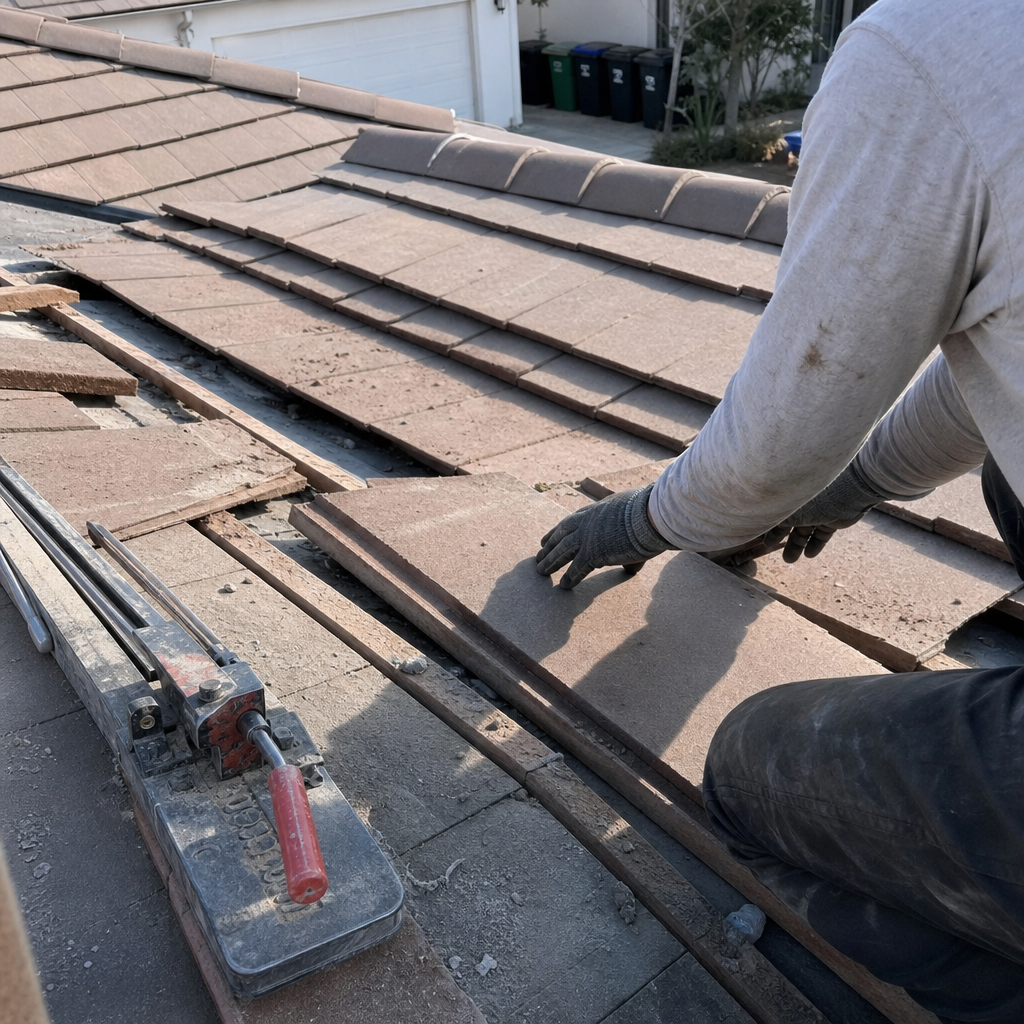
Pitch and surface type. A 6:12 pitch - six inches of rise per twelve inches of run - is walkable with care and proper footwear. Many Los Angeles hillside homes run 8:12, 10:12, or steeper. At 8:12, a slip becomes a fall before you can react. At 10:12, even experienced roofers use roof jacks and safety harnesses. Clay tile, common in Spanish Revival homes throughout Los Feliz and Atwater Village, is brittle underfoot and slick when damp. Concrete tile is heavier and cracks differently but still punishes misplaced weight.
Soil and foundation movement. Los Angeles sits on expansive clay soils that swell with winter rains and shrink through dry summers. This seasonal movement stresses roof structures differently than in stable-ground regions. We’ve seen ridge lines shift and valleys open in homes from Eagle Rock to Baldwin Hills, creating leak paths that look like simple flashing failures but are actually structural movement issues. A homeowner patching what appears to be a small gap can mask a progressive problem until the damage is extensive.
Santa Ana wind exposure. The dry, high-velocity Santa Ana winds that arrive each fall test every weakness in a roof system. A repair that holds through gentle weather can fail catastrophically under 60-mph gusts. Professional installation accounts for this with specific fastener patterns, adhesive applications, and uplift-rated materials that vary by Los Angeles wind zone.
Heat and UV degradation. Los Angeles receives more annual solar radiation than most U.S. cities. Asphalt shingles here age faster than in cooler climates, becoming brittle and prone to cracking underfoot. A shingle that feels firm in morning cool can crumble under weight by afternoon. We schedule sensitive repair work for early morning hours, and we know which neighborhoods - those with full southern exposure in the San Fernando Valley, for instance - accelerate this brittleness.
The practical effect: a task that might be genuinely low-risk on a 4:12 pitch in Ohio becomes high-risk on an 8:12 clay tile roof in Los Angeles. We don’t say this to discourage capable homeowners. We say it because we’ve responded to emergency calls where the homeowner was capable, careful, and unlucky - and the slope or surface didn’t care.
The Real Cost Comparison: What DIY Actually Costs
Homeowners calculating DIY savings typically count materials and stop there. The full accounting includes several categories that don’t appear in the initial math.
The Hidden Cost Categories
- Equipment rental: Proper roofing requires more than a hammer. Nail guns, compressor systems, roof jacks, safety harnesses, and ladder stabilizers add $75-$200 per day in rental fees for a multi-day job
- Disposal: Los Angeles County charges for construction debris by weight at permitted facilities. A partial shingle tear-off generates 500-1,500 pounds. Self-hauling requires a truck, tarps, and time; dumpster rental in LA runs $350-$600 for a small container
- Re-repair when wrong: The most expensive repair is the one done twice. Incorrect shingle installation, misaligned valleys, or inadequate flashing typically reveal themselves in the first significant rain - after the homeowner’s work is complete and the materials are non-returnable
- Warranty loss: As discussed above, voiding a 20- or 30-year workmanship warranty over a $200 repair is a cost that doesn’t show up until years later
- Insurance implications: Damage from unpermitted or unlicensed work may be excluded from homeowner’s coverage; check your policy’s workmanship exclusion clauses
- Time value: A professional crew completes in hours what takes a homeowner days, often with weather windows that don’t cooperate
Here’s a concrete Los Angeles example. A homeowner in Studio City notices three missing composition shingles after a wind event. Material cost: approximately $45. Tool rental for a day: $85. Dumpster or disposal run: $75 in fees and fuel. Time invested: six hours across two days, including learning curve. Total out-of-pocket: $205, plus the risk of warranty voiding.
A professional repair by Ridgeline Roofing Co. for the same scope, with warranty-safe materials and documentation: typically $250-$400, depending on access and height. The difference is $45-$195 for guaranteed workmanship, preserved warranty coverage, and no fall exposure. For many homeowners, especially those in the 55-75 age range who have lived in their homes for decades, that math tilts toward professional work.
The gap widens with complexity. A small flashing repair around a chimney might cost $400-$700 professionally. DIY materials are $80. But incorrect flashing installation is the leading cause of chimney-related leaks, and the water damage path can run through walls and ceilings for months before visible symptoms appear. We’ve opened up drywall in Los Angeles homes where a $600 flashing repair, done right, would have prevented $8,000 in interior restoration.
How to Vet a Contractor for the Jobs You Shouldn’t DIY
When the task crosses into professional territory, the quality of the contractor matters as much as the decision to hire. After forty-two years in this trade, we’ve learned that three documents separate reliable operators from the rest. Request them every time, without exception.
Document One: Current License and Insurance Certificates
California requires a C-39 Roofing Contractor license for any job over $500. Verify the license number at cslb.ca.gov; check that it’s active and that the contractor’s name matches exactly. Request a certificate of insurance showing general liability coverage of at least $1 million and workers’ compensation if the contractor has employees. The certificate should name you as the certificate holder for the project duration. Storm-chasing outfits often carry insurance that lapses between states or jobs; the certificate date tells the story.
Document Two: Manufacturer Certification
If your roof carries a GAF, CertainTeed, Owens Corning, or other brand warranty, ask for the contractor’s current certification letter from that manufacturer. Certification means the contractor has completed factory training, maintains insurance and licensing standards, and can offer warranty coverage that a non-certified contractor cannot. It also means the manufacturer has vetted their workmanship. Ridgeline holds authorized installer status with seven manufacturer lines, including GAF, CertainTeed, Owens Corning, and Tamko, specifically so we can honor and extend the warranties our Los Angeles customers already carry.
Document Three: Written Scope and Guarantee
A verbal estimate is a wish, not a contract. The written scope should specify materials by manufacturer and product line, fastener type and pattern, areas of removal and replacement, and cleanup responsibilities. The guarantee should be separate from the manufacturer’s material warranty and should specify what workmanship is covered, for how long, and what the remedy process is. Our 90-Day Done Right Promise is simple: if it’s not right, we come back and make it right. No paperwork to file, no argument, no runaround. That standard exists because we’ve seen too many homeowners left holding a leaking roof and a contractor who won’t return calls.
Beyond documents, trust your instincts about behavior. Does the contractor arrive on time for the estimate? Do they climb the roof or stand in the driveway with binoculars? Do they photograph what they found and walk you through it? Our technicians are background-checked, uniformed, and trained to document every inspection with photos from your actual roof - the same standard we’d hold for work done in our own mother’s home. A contractor who treats your home with casual familiarity before you’ve hired them will treat the work the same way.
Common Mistakes to Avoid
- Walking a wet or dew-covered roof. In Los Angeles, morning marine layer moisture can linger until 10 a.m. on north-facing slopes. A surface that looks dry from the ground isn’t. We’ve responded to falls that happened at 8 a.m. on what the homeowner thought was a dry tile surface.
- Using generic caulk on roof penetrations. Plumbing vents, furnace flues, and electrical masts require manufacturer-approved sealants rated for UV exposure and thermal cycling. Standard silicone or latex caulk degrades in months and voids most system warranties.
- Matching shingles by sight alone. Asphalt shingles weather and fade. A “close enough” match from the hardware store creates a visual patch and potential leak point. Proper repair requires matching the existing product line, often from a supplier who doesn’t sell to the public.
- Ignoring permit requirements. Los Angeles building code requires permits for roof repairs exceeding 100 square feet or involving structural elements. Unpermitted work must be disclosed in home sales and can trigger insurance issues.
- Working alone. Every roofing safety protocol requires a ground spotter. A fall unnoticed is a fall compounded. Even ground-level ladder work should have someone present to stabilize the base and call for help if needed.
- Delaying professional assessment after DIY discovery. Many homeowners find more damage than expected once they start a small repair, then patch over it hoping for the best. Water paths in roofing systems are deceptive; what looks contained often isn’t.
When to Call a Professional
Call when the task requires leaving your ladder. Call when your roof is under warranty and the repair touches any waterproofing layer. Call when you’re uncertain about the underlying cause - a stain on the ceiling can originate ten feet from where it appears. Call when your home sits on a Los Angeles hillside with pitch over 6:12, clay or concrete tile, or a history of foundation movement.
Call when you simply don’t want to climb a roof, which is a perfectly valid reason. We’ve built our business on homeowners who value their time, their safety, and their sleep during the first rain after a repair. Ridgeline Roofing Co. offers free estimates in Los Angeles - call (844) 563-1816. A live person answers every call, 24 hours a day, including nights, weekends, and the middle of a storm. No voicemail trees, no callback windows, no leaving you stranded.
Frequently Asked Questions
You can, but you probably shouldn’t. The replacement requires lifting surrounding shingles, removing the damaged piece without tearing adjacent fasteners, sliding a new shingle into place, and sealing it with manufacturer-approved adhesive. Done incorrectly, you’ll create a wind-lift vulnerability and likely void your workmanship warranty. For the cost difference, most homeowners find professional repair safer. Call (844) 563-1816 for an exact quote - estimates are free.
Minor repairs - a few shingles, small flashing work, vent sealing - typically run $250-$600. Moderate repairs involving multiple areas, decking exposure, or chimney work range $800-$2,500. Major structural repairs or partial re-roofing can exceed $5,000. Hillside access, tile type, and height add variables. We provide no-hassle upfront pricing: the number on the estimate is the number on the invoice. Call for a specific assessment.
Generally no, if the damage resulted from faulty workmanship. Most policies exclude damage caused by unlicensed or unqualified work. If a DIY repair fails and causes interior water damage, you may face denial of both the roof and interior claims. Document everything and call your insurer before attempting significant repairs.
Repair is cheaper when the damage is isolated, the roof is under 15 years old, and the underlying structure is sound. Replacement becomes more economical when repairs exceed 30-40% of the roof area, when multiple layers already exist, or when the roof is near end of expected life. In Los Angeles, where replacement costs run $8-$15 per square foot depending on material, this threshold matters. We offer free second opinions on any written estimate to help you make this call.
Yes, with proper equipment and technique. Use a ladder with standoff arms to avoid crushing gutters, maintain three points of contact, never reach past your belt buckle, and work with a ground spotter. In Los Angeles, where dry season debris becomes fire risk and wet season debris becomes overflow damage, twice-yearly cleaning is essential. If your home exceeds single story or sits on uneven ground, consider professional service. Our $89 Seasonal Tune-Up includes gutter cleaning, inspection, and minor adjustments.
Verify the C-39 license at cslb.ca.gov, request current insurance certificates naming you as holder, ask for manufacturer certification letters, and check how long they’ve operated at the same local address. Ridgeline Roofing Co. has served Los Angeles since 1984 - same community, same phone number, same commitment to being here when you need us. Storm chasers use VOIP numbers and mail drops; legitimate contractors have physical local presence.
The Bottom Line
The DIY-vs-pro question resolves to this: for more guides & resources,: ground-level maintenance is yours, roof-surface work is ours, and the warranty implications make that distinction expensive to ignore. In Los Angeles, steep pitches, brittle tiles, and expansive soils add local factors that generic advice doesn’t address. The money you might save on a small DIY repair is dwarfed by the cost of a fall, a voided warranty, or a leak that runs unseen for months. When you’re uncertain, call. A free estimate costs nothing; a mistake costs plenty. Done right - and if it’s not, we make it right.
Written by the team at Ridgeline Roofing Co., serving Los Angeles since 2016.